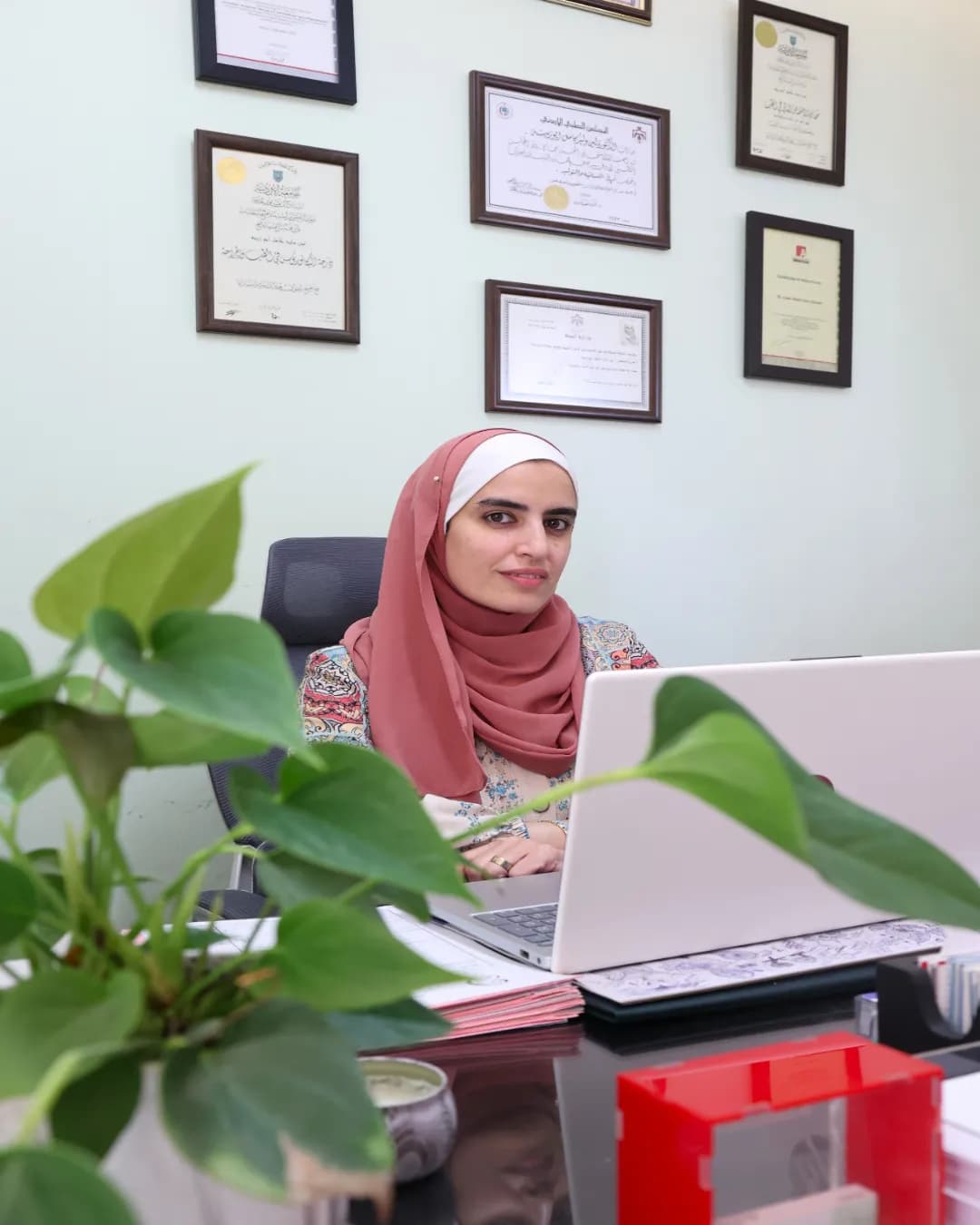
Dr. Tamara Tashtoush Obstetrics and Gynaecology Clinic
Sign in to the platform to view the phone number
Trusted medical platform in Jordan

If you searched for the best uterine fibroid doctors in Jordan, this page lists six obstetrician-gynaecologists in Amman who publish uterine fibroid treatment among their services. They are ordered by how complete and checkable their profiles are, not by skill or outcomes. Compare qualifications, procedures, insurers and hours, then use our guide on symptoms, first visits and questions to ask before you book.
| # | Doctor | Area | Suits | Profile score |
|---|---|---|---|---|
| 1 | Tamara Hussein Mohammad Tashtoush | Khalda | Women wanting fibroid care alongside fertility or pregnancy follow-up in Khalda | 47/100 |
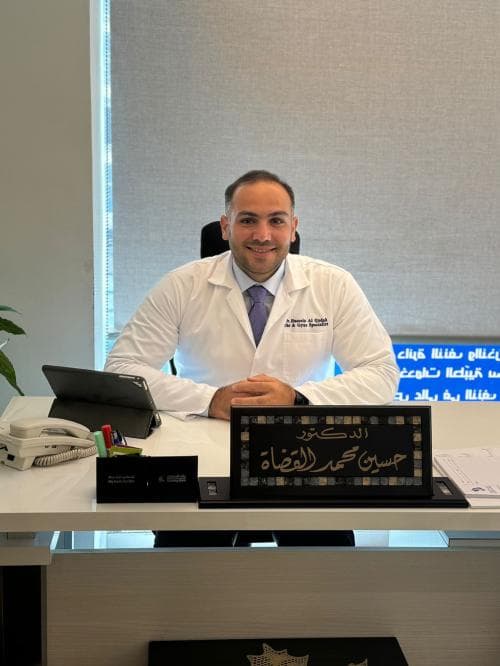
| 2 | Hussein Mohammad Hussein Al Qudah | Fifth Circle | Fibroids with prolapse or bladder symptoms; endoscopic procedures near Fifth Circle | 47/100 |
| 3 | Rania Mahmoud Mohammad Dudeen | 7th Circle | Afternoon visits; fibroids with heavy bleeding or recurrent miscarriage concerns | 47/100 |
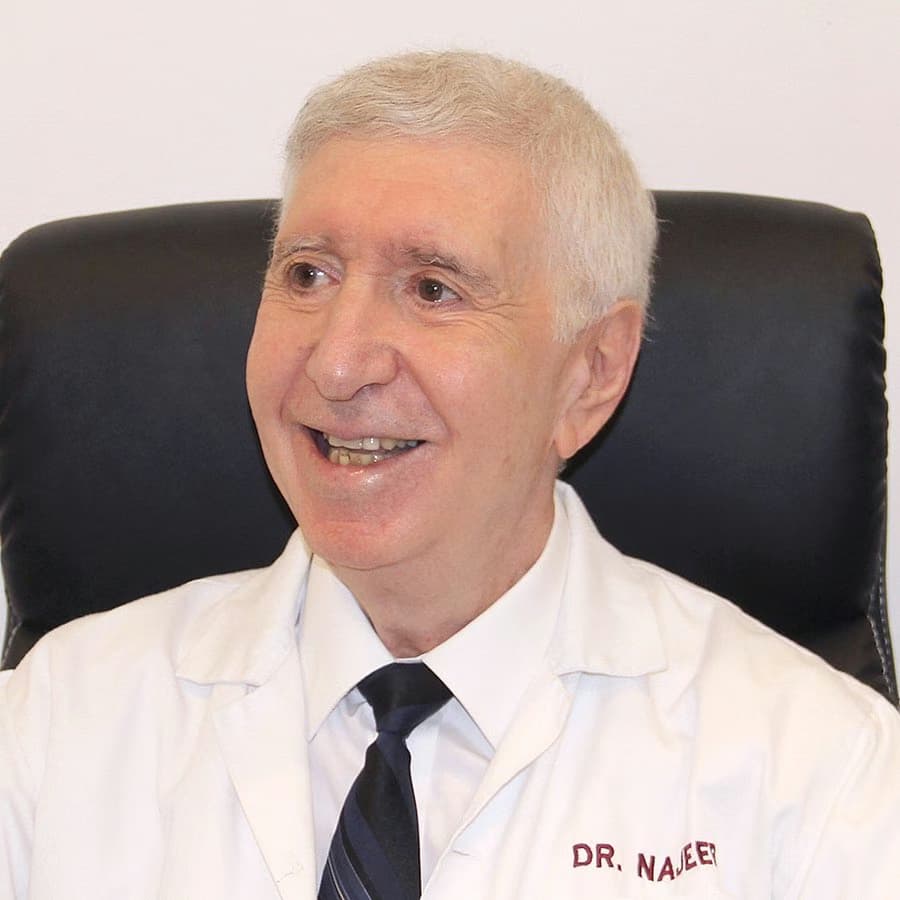
| 4 | Najeeb Layyous | Jabal Al Hussein | Women whose fibroids may be affecting fertility or IVF plans | 45/100 |
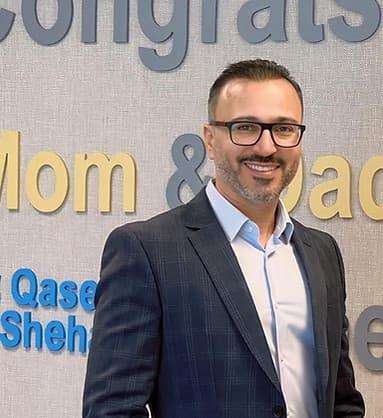
| 5 | Qasem Shehab | Abdali | Discussing laparoscopic options for fibroids or endometriosis in Abdali | 43/100 |
| 6 | Leen Waleed Abu Zeineh | Tla' Al Ali | Evening appointments for heavy periods or fibroid assessment in Tla' Al Ali | 40/100 |
Dr. Tamara Tashtoush is a Jordanian board-certified obstetrician and gynaecologist (Jordan Medical Council). She earned her medical degree and a Higher Specialty in Obstetrics and Gynaecology at the University of Jordan and completed specialist training at Jordan University Hospital. Her published services include management of uterine fibroids, ovarian cyst assessment, fertility assessment, high-risk pregnancy follow-up, vaginal and caesarean delivery, and cervical screening. Her clinic is in Khalda, Amman, and is open Saturday to Thursday, with Monday hours starting at 14:00. She lists twelve insurers, including Arab Orient Insurance, Middle East Insurance Company (MEICO), Al-Manara Insurance Company and several NatHealth-administered plans.
Suits: Women wanting fibroid care alongside fertility or pregnancy follow-up in Khalda
Dr. Hussein Al Qudah is a Jordanian board-certified obstetrician and gynaecologist and a University of Jordan medical graduate. His previous experience includes the Royal Medical Services and private hospitals. His published services include hysteroscopy, gynaecological laparoscopy, uterine polyp removal, management of uterine fibroids, ovarian cyst assessment, uterine prolapse assessment and management of female urinary incontinence. He sees patients at Khalaf Medical Complex near the Fifth Circle in Amman, Saturday to Wednesday 10:00–17:30 and Thursday until 14:00. His listed insurers include Bupa, Jordan French Insurance Company (JOFICO), MEICO, Arab Orient Insurance and several NatHealth-administered plans.
Suits: Fibroids with prolapse or bladder symptoms; endoscopic procedures near Fifth Circle
Dr. Rania Dudeen is a consultant obstetrician and gynaecologist with the Jordanian Board in Obstetrics and Gynaecology and a medical degree from the University of Jordan. Her previous practice includes Al Bashir Hospital and Dr. Sulaiman Al Habib Hospital in Saudi Arabia. Published services include uterine fibroid management, pelvic ultrasound, hysteroscopy, endometrial biopsy, recurrent miscarriage evaluation and polycystic ovary syndrome management. She consults at JoSante Healthcare Center's Amman branch near the 7th Circle on Saturday, Sunday, Tuesday and Wednesday afternoons (14:00–18:00), with appointments arranged through the centre's reception. Listed insurers include GlobeMed, MedNet, OmniCare and Arab Orient Insurance.
Suits: Afternoon visits; fibroids with heavy bleeding or recurrent miscarriage concerns
Dr. Najeeb Layyous is a consultant in obstetrics, gynaecology, infertility and IVF. He studied medicine at Alexandria University and holds the Jordanian Board in Obstetrics and Gynaecology, membership and fellowship of the Royal College of Obstetricians and Gynaecologists (MRCOG, FRCOG), and a Jordan Medical Council subspecialty certificate in infertility and IVF. His biography states that he uses hysteroscopy and laparoscopy to address polyps, fibroids, uterine septa, adhesions and endometriosis, alongside IVF, ICSI and IUI. His clinic is in Jabal Al Hussein, Amman, open Saturday to Thursday from 09:00, closing at 13:00 on Sunday and 15:30 on other days. His listed insurer is Arab Orient Insurance.
Suits: Women whose fibroids may be affecting fertility or IVF plans
Dr. Qasem Shehab is an obstetrics and gynaecology consultant with a listed subspecialty in gynaecologic endoscopy. His record notes training in advanced gynaecological laparoscopy and urogynaecology in the United Kingdom, and his biography mentions British, European and Jordanian boards, a British fellowship, UK practice from 2006 with training in London and Bristol, experience in France, infertility training in Germany and teaching at Yarmouk University. Published services include uterine fibroid assessment and treatment, gynaecological laparoscopic surgery, endometriosis care and pelvic organ prolapse treatment. He practises on floor 24 at Abdali Medical Center, Saturday to Wednesday 09:00–17:30 and Thursday until 14:00. His listed insurer is Arab Orient Insurance.
Suits: Discussing laparoscopic options for fibroids or endometriosis in Abdali
Dr. Leen Abu Zeineh is an obstetrics and gynaecology consultant at Al Qasr Medical Complex, behind Ibn Al Haytham Hospital in Tla' Al Ali, Amman. She completed her medical degree and higher specialty training at the University of Jordan, obtaining the Jordanian Board in Obstetrics and Gynaecology in 2011 and the higher specialty qualification in 2012. Her previous experience includes women's health care with the Jordan Health Aid Society. Published services include uterine fibroid assessment and treatment, obstetric and gynaecological ultrasound, assessment of menstrual disorders, polycystic ovary syndrome care and delivery care. Hours are 10:00–16:00 on Sunday, Monday, Wednesday and Thursday, and 16:00–19:00 on Saturday and Tuesday.
Suits: Evening appointments for heavy periods or fibroid assessment in Tla' Al Ali
Every matching doctor profile in this country was scored out of 100 for how complete and checkable its published information is, and the highest scores appear here in order. Featured placement does not change a profile's score, and the score does not measure treatment quality or outcomes — it tells you how much you can check before you call.
Ties are broken by the number of approved reviews, then published years of experience. Confirm the service, branch, appointment, fees and insurance coverage with the practice before visiting.
Uterine fibroids are non-cancerous growths of the muscle of the womb. They are very common during the reproductive years, and many women have them without any symptoms. A fibroid found by chance on an ultrasound does not automatically need treatment; care is usually guided by symptoms, the fibroid's position and your plans for pregnancy.
Book a visit with an obstetrician-gynaecologist if you notice:
Position often matters more than size. A small fibroid bulging into the womb cavity can cause heavy bleeding and affect fertility, while a large one on the outside may only cause pressure. That is why mapping the fibroids, usually by pelvic ultrasound and sometimes by further imaging or hysteroscopy, comes before any treatment decision.
Call 911 or go to an emergency department straight away if you have very heavy bleeding that soaks through a pad or tampon every hour for several hours, dizziness or fainting, sudden severe pelvic or abdominal pain, pain with fever, or any bleeding during pregnancy. Bleeding after the menopause is not an emergency in most cases but should be checked promptly.
All six are obstetrician-gynaecologists in Amman who publish uterine fibroid treatment as a service. The list is sorted by profile completeness, so treat it as a starting point rather than a verdict on who is best. Useful ways to narrow it down:
A first consultation with imaging usually takes 30 to 45 minutes. Expect questions about your periods, pain, bladder and bowel symptoms, pregnancies, contraception and plans for children, followed by an examination and often a pelvic ultrasound.
If an operation is advised, removal surgery usually takes between 45 minutes and two hours depending on the number and position of the fibroids. A second opinion before major surgery is reasonable and common.
Most listed doctors publish the insurers they work with, and several plans are administered through NatHealth, GlobeMed, MedNet or OmniCare. Before booking:
All six clinics are in Amman, Jordan, spread across Khalda, the Fifth Circle area, the 7th Circle area, Jabal Al Hussein, Abdali and Tla' Al Ali. Each profile gives the clinic's district and, where published, the building or floor. Before setting off, check the map location on the profile, ask the clinic about parking, and allow extra time at busy afternoon hours. If you are travelling from another governorate or visiting Jordan, ask for the earliest slot and bring all your reports so imaging does not need repeating unnecessarily.
This page helps you compare published profiles; it is not medical advice and does not rank clinical skill. In an emergency call 911 or go to the nearest emergency department.