

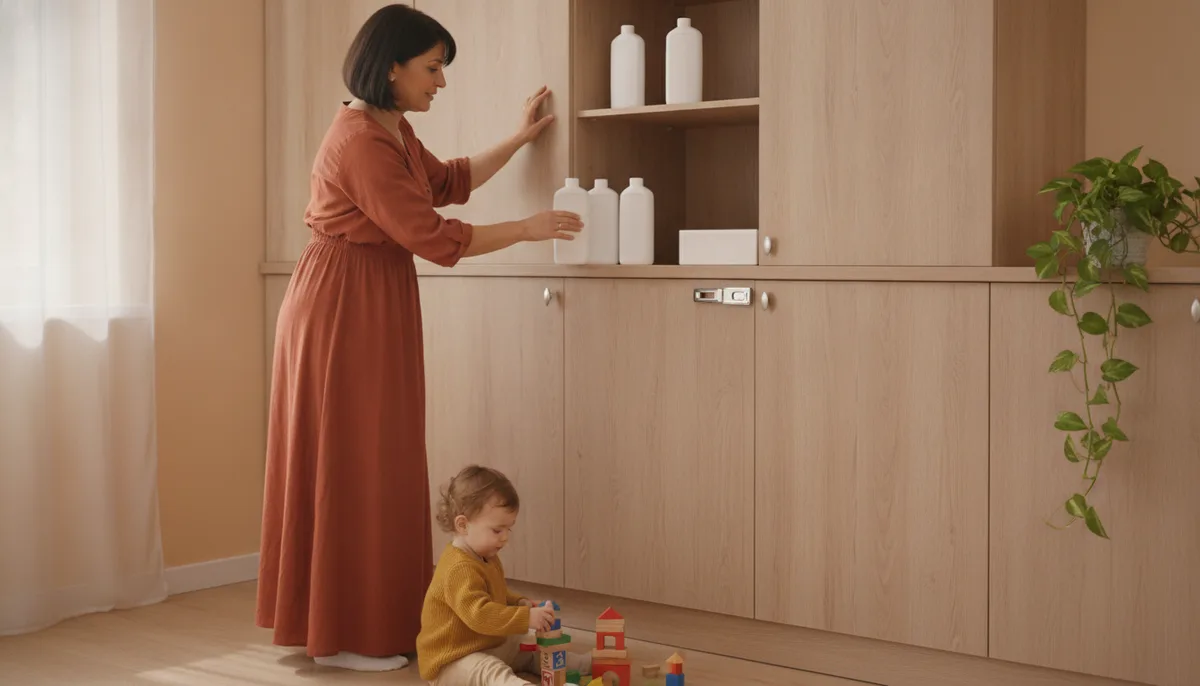
Child poisoning from medicines and cleaning products is an emergency that requires immediate action. Call 911 or go to the nearest emergency room, and take the container or what remains of it with you. Do not try to make the child vomit, and do not give the child any food or drink [2]. Symptoms can be delayed by hours or days, so do not wait for them to appear. Prevention starts with storing medicines and chemicals out of children's reach [1].
Child poisoning from medicines and cleaning products can happen in a matter of moments, often in homes where the family believes these products are safe. A poison is any substance harmful to the body. It can enter through swallowing, inhalation, injection, or absorption through the skin. Prescribed medicines or medicines sold without a prescription can also become poisonous if taken in excessive amounts [1]. The effects of poisoning range from a short-term illness to brain damage, coma, and death [1]. For this reason, every household with children should know what to do in the first few minutes.
What should you do immediately if a child is poisoned by medicine or cleaning products?
If you suspect that your child swallowed, touched, or inhaled something harmful, treat the situation as an emergency, even if the child appears well. Health authorities recommend seeking medical help immediately whenever there is any doubt [2]. These are the steps, in order:
- Stay calm and move the child away from the source. If there are visible traces of pills or liquid in the child's mouth, remove them carefully, and keep the rest of the container out of the child's reach.
- Call 911 or go to the nearest emergency department. If the child shows symptoms, ask for an ambulance. Do not drive to the emergency department alone. Ask another person to drive you [2].
- Monitor the child's consciousness and breathing constantly. If the child is awake, talk to them to make sure they have not lost consciousness. If the child is unconscious but breathing, place them in the recovery position (on their side). If the child is unresponsive and not breathing, begin cardiopulmonary resuscitation (CPR) [2].
- Look for the cause of the poisoning. Search around you for containers, wrappers, and medicines. If possible, take a sample of the substance or its container to show the doctors [2].
- Keep a sample of the vomit if the child vomits on their own, in a clean container, as it may help the medical team identify the substance [2].
- Do not give the child anything to eat or drink [2].
We do not list a specific poison control center number here, because we do not have a confirmed number within the sources for this article. The confirmed number available to everyone in Jordan is 911. You can also go directly to the nearest emergency department.
Why do we not induce vomiting or give the child anything before the ambulance arrives?
A common belief in homes is that removing the substance from the stomach is the fastest solution, and that drinking milk or water reduces its effect. However, medical guidelines are clear: do not try to make the person vomit if you think they have swallowed something harmful, as they may choke and stop breathing [2]. Do not give them anything to eat or drink either [2].
This is especially important with cleaning products. Some of them burn the esophagus on the way down, and may burn it again on the way back up with vomit. Children also choke more quickly if vomit enters the airway. It is also worth knowing that symptoms can appear after hours or days [2], so the absence of symptoms does not mean the child is safe.
| Do | Do not |
|---|---|
| Call 911 or go to the emergency department immediately | Do not wait for symptoms to appear before deciding |
| Take the container, wrapper, or whatever remains of the substance | Do not throw away the container before a doctor sees it |
| Monitor breathing and consciousness | Do not leave the child alone |
| Keep a sample of the vomit if it occurs on its own | Do not try to force the child to vomit |
| Leave instructions to the medical team | Do not give the child water, milk, food, or any home remedy |
When should you go to the emergency department, and when is it enough to seek advice?
The simple rule: if there is a possibility that the child swallowed, touched, or inhaled something harmful, seek help immediately [2]. If you are not even sure that the substance is harmful, consult a doctor, a pharmacist, or the emergency department instead of guessing.
Signs that require calling 911 immediately
- Loss of consciousness or difficulty waking the child [2].
- Stopped breathing or severe difficulty breathing, such as being unable to speak, choking, or gasping [2].
- Seizures (convulsions) [2]. For managing seizures, you can read our guide on first aid for seizures in children, but note that a seizure after poisoning has a different cause and requires emergency care.
Other symptoms that may appear
These may include nausea or vomiting, diarrhea, drowsiness, blurred vision, fever or feeling cold and shivering, and confusion [2]. Symptoms vary depending on the substance, and they may be delayed by hours or days, so do not wait for them to appear before seeking help [2].
What should you take with you to the emergency department, and what will happen there?
Take the container or wrapper, even if it is empty, and any medicine the child or family members take [2]. Write down what you know: what the child swallowed, the estimated amount, when it happened, the child's age and approximate weight, and whether symptoms appeared. This information helps the doctor assess the danger quickly.
Treatment depends on the type of poison. It may include antidotes, a charcoal drink that prevents the absorption of some poisons, treatment of symptoms such as intravenous fluids for dehydration, or removal of the substance from the body [2]. This treatment takes place in a hospital because poisoning can be life-threatening [2]. If no symptoms appear, the child may not need treatment, but they may need to be monitored for several hours in case their condition worsens [2]. Do not consider being kept under observation an overreaction.
Why are paracetamol and iron dangerous in child medicine poisoning?
Common medicines found in every home are among the most frequent causes of poisoning. References cite paracetamol, ibuprofen, and antidepressants as examples [2]. We single out paracetamol and iron for two reasons: their wide availability in homes, and the possibility that a child may appear well at first even though the danger is present.
Paracetamol
Paracetamol is a fever reducer and pain reliever found in almost every home, in syrup, tablet, and suppository forms, which makes it easy to swallow in excessive amounts. It is medically known that an overdose can damage the liver, and clear symptoms may not appear in the first hours. This is consistent with the fact that poisoning symptoms can be delayed [2]. So do not wait to see whether the child becomes unwell. For more information, read the page on paracetamol poisoning.
Also be aware of unintentional repetition: more than one person in the house giving the dose to the same child, or using more than one medicine that contains the same active ingredient. The usual dose for children is based on weight and prescribed by a doctor or advised by a pharmacist, and it must not be estimated by guesswork.
Iron
Iron supplements and multivitamins containing iron, including medicines for pregnant or breastfeeding mothers, can be extremely dangerous for a young child if a large amount is swallowed, because the child's body is small. This is a problem because some tablets are colored or coated, so they look like candy. If your child swallows iron supplements, treat the situation as an emergency even if no symptoms appear, and take the container to the emergency department [2].
What about cleaning products, household substances, and gases?
Household cleaners such as bleach (chlorine) and laundry detergents, as well as pesticides, plants, and metals such as lead, are documented examples of substances that cause poisoning [1] [2]. The general principle is the same: seek help immediately, take the container, and do not induce vomiting [2].
- If the substance touches the skin or eyes: remove contaminated clothing and rinse the area with running water while seeking medical advice.
- If the child inhales gas or fumes: move them immediately to fresh air and call 911. Every home that uses gas or fuel-burning appliances needs a carbon monoxide alarm [2]. Details are available on the page on carbon monoxide poisoning.
- Alcohol: if a child swallows products containing alcohol, such as some disinfectants, perfumes, and mouthwashes, treat it as poisoning. You can find information on alcohol poisoning.
- Lead: lead poisoning is slow and its symptoms may not appear right away. Its household sources are explained in our article on lead poisoning in children.
How do you prevent child poisoning from medicines at home?
Prevention is cheaper and easier than treatment. References confirm that products must be used and stored exactly as the labels instruct, and that hazardous products must be placed where children cannot reach them [1]. These are practical steps:
- Store medicines and chemicals out of children's reach, preferably in a locked cabinet [2].
- Install child safety locks on low cabinets that contain cleaning products and other harmful substances [2].
- Keep liquid cleaners and chemicals in their original containers so they are not mistaken for drinks [2]. Never pour cleaner into a beverage bottle or juice container.
- Read the medicine leaflet carefully to confirm the correct dose [2], and use the measuring device that comes with the medicine.
- Wear gloves, protective goggles, or a mask when using harmful chemicals [2].
- Be careful with medicines in visitors' bags, bedroom drawers, and bedside tables, as these are places children can easily reach, especially at grandparents' homes or during visits.
- Do not call medicine "candy" and do not encourage a child to take it that way.
Are child-resistant caps enough?
Child-resistant caps make it harder for young children to open a container, but they do not mean the container is completely safe, as some children manage to open them over time. They are an additional layer of protection, not a replacement for high or locked storage. Return the cap to its fully closed position until you hear the click or feel it seal, and do not transfer tablets to ordinary boxes or open pill organizers within a child's reach.
Disposing of leftover medicines
Expired medicines or those left over after treatment ends become a danger with no benefit. Read when to dispose of leftover or expired children's medicine. Buy your medicines from licensed pharmacies. The reasons this matters are explained in the importance of buying medicines from licensed pharmacies. In Jordan, medicines and their advertised prices are regulated by the Jordan Food and Drug Administration (JFDA).
For more on storing children's medicines and their doses, read children's medicine: safe dosing and proper storage. For general safe medication use, see the drug safety consumer guide.
How do I find the right doctor or clinic in Jordan after an incident?
During a poisoning, do not search articles or websites: call 911 or go to the emergency department. Once the situation is stable, you will likely need follow-up with a pediatrician to review what happened, examine the child, and discuss how to make the home safer.
- Specialty: start from the page pediatricians in Jordan.
- Governorate: choose the one closest to you, such as pediatricians in Amman, pediatricians in Irbid, or pediatricians in Zarqa. Pages for other governorates are available in the same directory.
- What to verify in the listing: the stated specialty, the location and working hours, and the contact or booking method if available.
- Questions to ask the doctor: Is an examination or follow-up needed after the incident? What signs should I monitor in the following days? How should I store the family's medicines? Do any of our current medicines pose a specific danger to my child?
Ministry of Health primary health centers and mother and child health centers are also available across the Kingdom's governorates, and you can ask them about general preventive guidance. ClinicsJo's role is limited to listing doctors and clinics and facilitating contact with them. It does not provide remote consultations or medical prescriptions.
Summary: what should the family remember?
- Suspicion alone is enough to seek help: call 911 or go to the nearest emergency department [2].
- Take the container and a sample of vomit if available [2].
- Do not induce vomiting and do not give anything by mouth [2].
- Symptoms may be delayed, and the child may need monitoring for hours even without symptoms [2].
- Prevention: high, locked storage, original containers, and reading labels [1] [2].
This article is for general awareness and does not replace assessment by a doctor or emergency services. In any suspected case of poisoning, call 911 or go to the nearest emergency department.
Frequently asked questions
What should I do if my child swallowed a pill and I don't know what it is?
Call 911 or go to the nearest emergency department immediately, and do not wait for symptoms to appear. Take with you the container or the medicines found in the place to help the medical team identify the substance, monitor the child's consciousness and breathing, and do not give the child any food or drink.
Should I make my child vomit after swallowing a medicine or cleaning product?
No. Trying to force a child to vomit may cause choking and stopped breathing, and may increase the damage with some cleaning products. If the child vomits on their own, keep a sample of the vomit in a clean container and take it with the container to the emergency department.
Should I give my child milk or water after swallowing a cleaning product?
Do not give the child anything to eat or drink before a doctor assesses them, unless the medical team instructs otherwise. Call 911 or go to the emergency department, and take the cleaning product container with you so the doctors can see it.
My child seemed fine after swallowing the medicine. Should I wait?
Do not wait. Symptoms of poisoning can be delayed by hours or even days, and some medicines such as paracetamol may not show effects immediately. Go to the emergency department, as the child may need monitoring for several hours even if no symptoms appear.
Are child-resistant caps enough to protect my child?
No, they are not enough on their own. They make it harder for small children to open a container but do not prevent it completely. It is best to store medicines and cleaning products in a high or locked cabinet, in their original containers, and to close the cap tightly after each use.
What should I take with me to the emergency department?
Take the container or wrapper, or what remains of the medicine or cleaning product, even if it is empty, along with any medicines the child takes. Write down what you know about the approximate amount, the time of the incident, the child's age and weight, and any symptoms that appeared, and keep a sample of the vomit if it occurred.
Sources and references
- Poisoning: MedlinePlus — MedlinePlus — U.S. National Library of Medicine. Accessed: 2026-10-26.
- Poisoning — NHS (UK National Health Service). Accessed: 2026-10-26.