

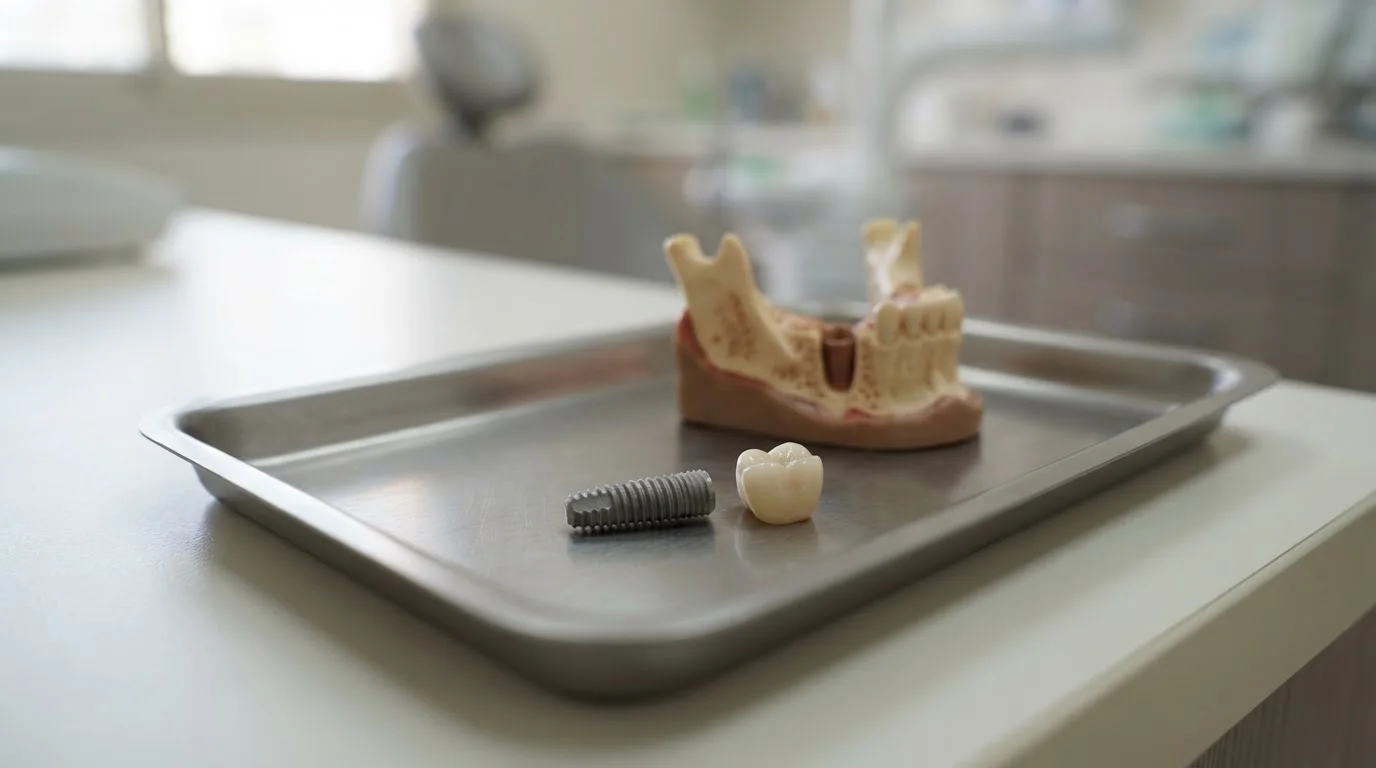
How much does a dental implant cost in Jordan? A single dental implant in Jordan costs 300-700 JOD in 2026 based on clinic prices listed on ClinicsJo, usually covering the implant fixture and abutment. The crown may be billed separately at 100-250 JOD, so always ask for the all-inclusive price in writing. The full treatment typically takes 4-9 months, and booking through ClinicsJo is free — you pay at the clinic.
The real cost of a dental implant in Jordan (2026)
Based on clinic prices listed on ClinicsJo in 2026, a single dental implant in Jordan costs 300-700 JOD. That figure usually covers the implant fixture (the post placed in the bone) and the abutment that connects it to the crown. The crown itself — the visible tooth you chew with — may be billed separately at 100-250 JOD, so the price quoted over the phone is not always the final one. Always request the all-inclusive price in writing: fixture, abutment, crown, imaging, and follow-up visits. Dental consultation fees in Jordan typically run 10-50 JOD, and many clinics deduct the fee from your treatment plan if you proceed. For context on other procedures, see our guide to dental treatment prices in Jordan.
Who is a good candidate?
Implants need adequate jawbone volume and density — confirmed by panoramic or 3D imaging, not a visual check — plus healthy gums, with any active gum disease treated first. Non-smokers do best: smoking slows bone healing and significantly raises failure rates. Chronic conditions such as diabetes should be well controlled before surgery. If your bone is insufficient, grafting can still make an implant possible, at extra cost and time.
Steps and timeline
A typical implant journey takes 4-9 months from first visit to final crown:
| Treatment stage | Approximate duration |
|---|---|
| Assessment and imaging (panoramic or 3D) | 1-2 visits within a week |
| Bone grafting (if needed) | 1 visit + 3-6 months extra healing |
| Implant placement surgery | One 30-60 minute visit per tooth |
| Healing (osseointegration) | 3-6 months |
| Abutment and final crown | 2-3 visits over 2-4 weeks |
Why prices vary — and what to ask before you agree
The gap between 300 and 700 JOD usually comes down to four factors: the implant brand and its country of origin, the dentist's experience and specialization, whether bone grafting is needed, and the clinic's technology (3D imaging, digital implant planning). The cheapest quote is not always the cheapest outcome — an implant that fails after two years costs far more than the difference you saved. Before signing, ask: Which implant brand exactly, documented in the treatment plan? Is there a warranty, and does it cover re-implantation? Is the final all-inclusive price in writing? Who actually performs the surgery? What is the follow-up plan?
Alternatives exist. A fixed bridge is faster and initially cheaper, but requires grinding down the two neighboring teeth. A removable denture is the lowest-cost option but the least stable. An implant is the only option that preserves the jawbone under the missing tooth and leaves neighboring teeth untouched.
How to choose your implant dentist on ClinicsJo
There is no single "best" implant dentist for everyone — compare on what actually matters: verified reviews (on ClinicsJo they come only from patients who actually booked and visited), years of experience, clearly published consultation fees, location (an implant means several visits over months), and insurance. The platform covers all 12 governorates, offers an insurance filter and a female-doctor filter, and lets you contact clinics directly by WhatsApp. Rankings update automatically with every new verified review, so what you see reflects real, recent patient experience. Browse dentists on ClinicsJo, compare profiles, and book for free — you pay at the clinic.
FAQ
Does insurance cover implants?
Coverage varies widely between insurers and policies; many classify implants as cosmetic and exclude them. Check with your insurer directly, and use the insurance filter to find contracted clinics.
Is the procedure painful?
Placement is done under local anesthesia, so you feel no pain during the visit. Mild soreness and swelling for a few days afterward are normal and usually managed with simple painkillers.
What happens if I leave the gap untreated?
Neighboring teeth can drift into the space, the opposing tooth can over-erupt, and the jawbone under the gap gradually resorbs — making a future implant harder and more expensive.
This guide is for general information only and does not replace a consultation with your dentist.


