

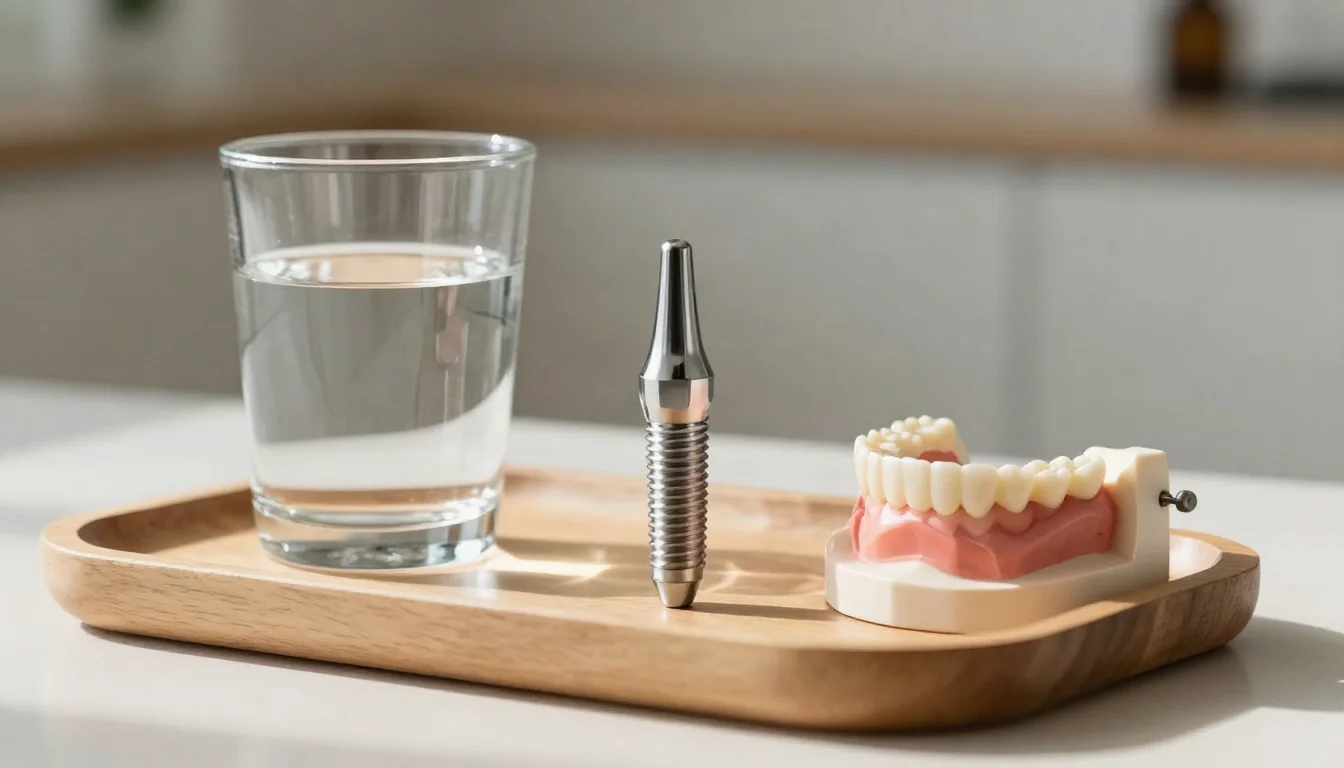
Dental implants have become the gold standard for replacing missing teeth, closely mimicking the look and function of natural teeth. With clinics in Jordan offering the latest German and Swiss technologies, Amman has become a recognized destination for dental tourism in this field. This comprehensive guide from the ClinicsJo Editorial Team covers everything you need to know before deciding.
What Is a Dental Implant?
A dental implant is a surgical procedure that places a titanium screw into the jawbone to act as an artificial root for a missing tooth. After the implant integrates with the bone (osseointegration) over 3–6 months, an abutment is attached, then a ceramic crown that mimics the natural tooth in shape and color.
When Is an Implant the Right Choice?
- Loss of one or more teeth due to fracture, severe decay, or extraction.
- Desire for a fixed alternative to removable dentures.
- Avoiding the grinding of adjacent teeth required for a bridge.
- Loss of back teeth causing chewing difficulty.
Types of Dental Implants
Immediate Implant
The implant is placed on the same day as tooth extraction, shortening treatment from a year to a few months. Requires sufficient healthy bone.
Conventional (Delayed) Implant
Placed 2–3 months after extraction once the bone has healed. Suitable for most cases with high success rates.
Immediate Implant with Temporary Crown
Implant plus a temporary crown placed in the same visit — ideal for front teeth where aesthetics matter during the integration period.
All-on-4 and All-on-6
An advanced technique replacing an entire arch with 4 or 6 implants supporting a fixed bridge — a permanent alternative to removable dentures, perfect for older patients who've lost most of their teeth.
Implant Procedure: Step by Step
- Examination and diagnosis: panoramic X-rays and 3D CT scan to assess bone density and nerve/sinus locations.
- Digital planning: specialized software determines the ideal implant position and depth.
- Surgery: a straightforward procedure under local anesthesia, 30–60 minutes per implant.
- Integration period: 3–6 months for titanium to fully fuse with bone.
- Abutment placement: minor surgery to expose the implant and place the part that will support the crown.
- Crown fitting: ceramic crown matched in color and shape to neighboring teeth.
Dental Implant Costs in Jordan
Prices vary by implant type and country of origin:
- Korean implants (Dentium, Osstem): JOD 300–500.
- Israeli implants (MIS, Alpha Bio): JOD 400–600.
- German implants (Camlog, BEGO): JOD 600–800.
- Swiss implants (Straumann, Nobel Biocare): JOD 700–1,200.
Price typically includes the implant and surgery; the ceramic crown is billed separately (JOD 200–400).
Dental Implant Success Rate
Globally, implants achieve a 95–98% success rate at 10 years, making them one of the most reliable medical procedures. Success factors include:
- Adequate bone density.
- Absence of periodontal disease.
- Quitting smoking weeks before and after surgery.
- Control of chronic conditions such as diabetes and hypertension.
- Strict patient compliance with oral hygiene.
Medical tip: Smoking doubles or triples the implant failure rate. Dentists recommend complete cessation or at least a 4-week break before and after surgery.
Is the Procedure Painful?
No. Surgery is done under strong local anesthesia, and most patients describe post-op discomfort as milder than a routine extraction. Simple painkillers are prescribed for 2–3 days, and patients return to normal life the next day while avoiding hard foods for about a week.
When Are Implants Not Possible?
- Pregnancy (deferred until after delivery).
- Uncontrolled diabetes.
- Active chemo or radiation therapy to the mouth.
- Severe untreated osteoporosis.
- Insufficient bone — may require a bone graft before implantation.
For an accurate assessment and the best treatment plan, book an appointment with an implant specialist on ClinicsJo.


