

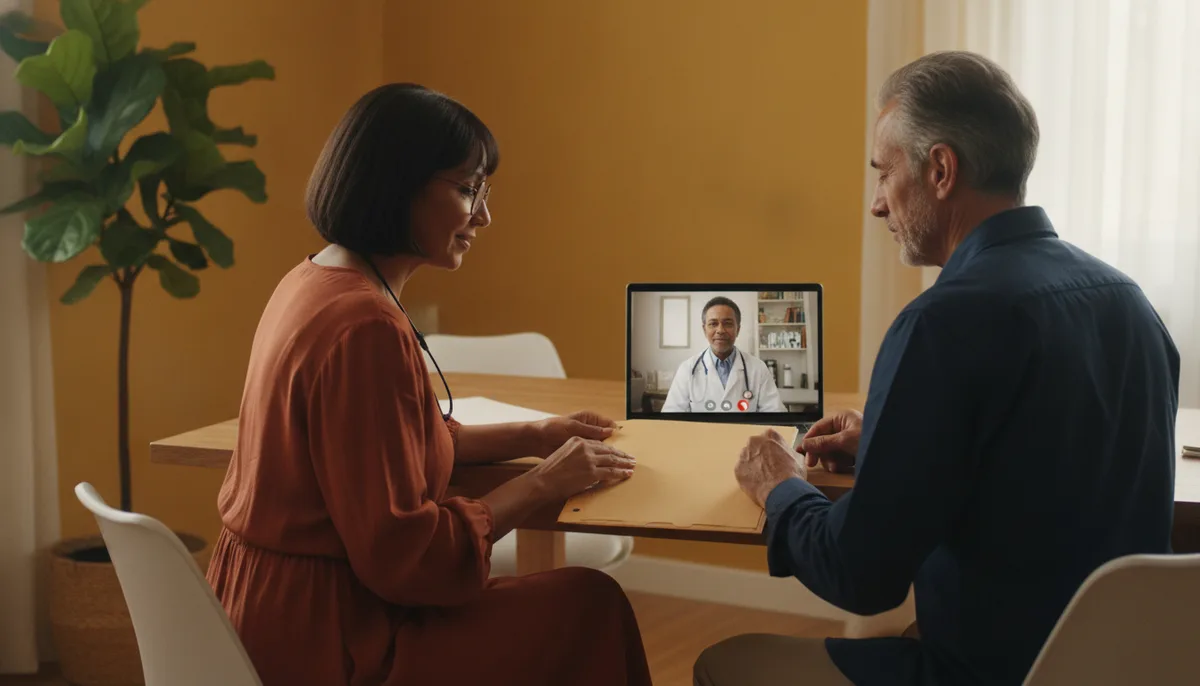
A second medical opinion is a consultation with another specialist doctor after your doctor has given you a diagnosis or treatment plan, so you can confirm you understand your condition and your options. It is especially useful before major surgery, when cancer is diagnosed, or when the diagnosis remains unclear. Gather your reports, imaging, and questions in advance, and never stop any medication on your own.
What is a second medical opinion, and what does it not mean?
It means having your condition reviewed by another doctor in the same specialty, who examines your tests, diagnosis, and proposed plan and gives you an independent assessment. The second doctor may agree with what you were told, or may suggest a different option or an additional test.
It does not mean leaving your first doctor or moving between clinics endlessly. The goal is to understand your situation well and make a confident decision. It also does not mean stopping a medication or changing a treatment plan on your own. Any change to medications is decided by your treating doctor after reviewing your case.
When should you request a second medical opinion?
Not every illness requires a second opinion. A common cold or a simple sore throat usually does not call for one. However, there are situations where a second opinion is a reasonable step, because the decision is major or because the picture is unclear. MedlinePlus lists "second surgical opinions" among the topics related to communicating with your doctor [1].
Before major surgery or surgery that cannot be reversed
If your doctor proposes a major operation, an operation that cannot be undone, or an operation for which your condition has a non-surgical alternative, ask another doctor. Ask them to clarify whether the surgery is necessary now, and whether the condition can be monitored or another treatment tried first.
When cancer is diagnosed or suspected
A cancer diagnosis changes the whole course of a person's life, and treatment depends on the type of tumor, its stage, and laboratory results. Another doctor may review the biopsy report (pathology) and imaging, and may present different treatment options. To learn about the oncologist and their role, see the definition of medical oncology.
When the diagnosis is unclear
If symptoms have persisted for months without a clear cause, or if doctors' interpretations of your results differ, a second opinion may add a new perspective. In cases where a hereditary cause is suspected, you may find it helpful to read about genetic counseling and when you need it, or about hereditary endocrine diseases and hereditary eye diseases.
Other situations worth considering
- Long, expensive, or serious side-effect-prone treatment that you do not understand the reason for.
- A chronic condition that does not improve despite adherence to the plan, such as type 2 diabetes.
- Feeling that you have not understood the explanation after asking more than once. MedlinePlus advises continuing to ask until you understand what your doctor is saying [1].
Does requesting a second opinion mean I don't trust my doctor?
No. Many doctors accept this and see it as a normal part of the treatment journey, especially for major decisions. MedlinePlus emphasizes that good communication between you and your doctor is one of the most important elements of good care [1].
You might calmly say: "I want to feel confident about my decision. Could you provide me with my report and images?" A polite request preserves your relationship with your doctor, and you may return to them after the second opinion so they can follow your treatment.
If you feel embarrassed or anxious about this step, that feeling is common. You can read anxiety disorders: when does anxiety become a disease if anxiety stays with you constantly.
What documents do you need, and how do you request your medical record?
The biggest cause of wasted time is arriving at the second doctor without your file, so they repeat tests or postpone their opinion. Therefore, start gathering your documents before the appointment. MedlinePlus recommends learning how to access your medical record so you can follow test results, diagnoses, treatment plans, and medications [1].
Ask your doctor's clinic or the hospital about their method of providing a copy of the file, as it differs from one facility to another. Request the documents early, and make sure they are complete and legible.
| What to request | Why it helps the second doctor |
|---|---|
| Doctor's report or case summary | Clarifies the diagnosis, medical history, and proposed plan. |
| Laboratory test results | Allows comparison of values and shows how they change over time. |
| Imaging reports and the CD of the actual images | The report alone is often not enough, as the doctor or radiologist may want to see the images themselves. |
| Biopsy report, and slides or samples when needed | In tumor cases, the sample may need to be re-read in another laboratory. |
| Operation report or hospital discharge summary | Shows what was done previously and which treatments were used. |
| Current medication list | Helps avoid drug interactions and duplicate treatment. |
Keep digital and paper copies. Hand over originals only when requested, and only if you receive a receipt or a promise of their return. When requesting a second medical opinion, it is best to ask the new clinic in advance exactly what is needed.
How do you prepare for the appointment without losing your time?
Appointments are usually short, so preparation makes them more useful. MedlinePlus notes that preparation helps you benefit from the visit, whether it is in person or remote [1]. To learn about remote consultation as a general concept, read the definition of telemedicine. Note that it may not suit some conditions that require direct examination.
- Write your medical story on one page: when symptoms began, what improves them, and what makes them worse [1].
- List all your medications: including allergies, herbs, vitamins, and supplements [1]. For supplements specifically, see the risks of taking them without medical advice.
- Prepare your questions in writing, ranked from most to least important [1].
- Bring someone you trust: they may hear what you missed and take notes for you [1].
- Tell the doctor what actually happened, and do not say you take your medication or eat healthily if that is not true. The doctor needs the real picture to provide you with the most suitable care [1].
- Tell the doctor frankly about the first opinion, including what your previous doctor advised and any doubts you have about it.
If your report is in a foreign language, or if the doctor does not speak your language, call the clinic before the appointment and ask whether an interpreter can be arranged [1].
What questions should you ask the doctor during a second medical opinion?
Good questions save time. Try these questions and adapt them to your situation:
- What is your diagnosis, and how certain are you of it? Do we need an additional test to confirm it?
- Do you agree with the proposed plan? If not, what is the alternative and why?
- What are the benefits, risks, and possible side effects of each option?
- What happens if I wait or monitor the condition before any procedure?
- What will recovery look like, and what will change in my daily life?
- Can you contact my first doctor or send them a written report?
- Who should I contact if I need further information later? MedlinePlus advises asking which method of contact is most suitable and what to do when additional information is needed [1].
Write down the answers during the session, or ask your companion to do so [1], and request written instructions if you need them [1]. If you do not understand a medical term, ask about it immediately rather than leaving it until after you leave.
What do you do if the two opinions disagree?
Disagreement does not necessarily mean that one of the doctors is wrong. It may stem from differences in experience, in weighing risks and benefits, or in patient preferences, or from incomplete information reaching one of them.
- Ask each doctor to explain the reasons for their recommendation in detail.
- Compare the options: benefits, risks, recovery time, and what suits your circumstances and values.
- Present the second doctor's view to the first, as it may clarify the difference or lead to an adjusted plan.
- If the disagreement remains significant for a serious decision, you may need a third doctor. However, do not keep searching endlessly if the delay is harming your condition.
- Choose the plan you understand and feel is suitable for you, and ask the doctor who will be treating you about the next step.
MedlinePlus confirms that patient participation in the decision is part of good communication with the doctor, listing "shared decision-making" among its patient materials [1].
When should you contact your doctor immediately, and when should you go to the emergency department?
A second opinion must never delay urgent care. If serious symptoms appear, do not wait for an appointment or reports.
Call 911 or go to the nearest emergency department if you have:
- Severe chest pain or severe shortness of breath.
- Signs of a stroke: sudden weakness on one side of the body, facial drooping, or difficulty speaking.
- Severe bleeding that does not stop, loss of consciousness, or seizures.
- Sudden severe abdominal pain, or high fever with worsening condition.
See your doctor promptly if:
- Your symptoms worsen while you are waiting for the second opinion.
- New symptoms appear, such as unexplained bleeding or unintended weight loss. You may find it helpful to read about frequent bruising and easy bleeding.
- You experience concerning side effects from a medication. Do not stop the medication on your own before speaking with your doctor or pharmacist.
If your condition requires a quick decision, ask your doctor directly: "How long can I safely wait?"
How do you find a doctor for a second medical opinion in Jordan?
Start by identifying the specialty that suits your condition: surgery, oncology, endocrinology, cardiology, or another field. Then search the ClinicsJo directory by specialty and governorate, read the doctors' and clinics' profiles, and contact them or book where the profile allows it. ClinicsJo is a directory for identification and contact, and does not provide medical ratings of doctors' quality.
If you are unsure of the specialty, starting with a general medical examination or browsing general medical examination clinics in Jordan and general medical examination doctors may help, so the doctor can direct you to the right specialist. If your concern relates to the kidneys, there is a page for consultation in kidney diseases.
What should you check in the profile?
- The precise specialty and interest in your condition, not just the general name of the clinic.
- The clinic's location, working hours, and method of contact or booking.
- Whether reports can be sent in advance, and what you are asked to bring.
Questions to ask the clinic before booking
- Do you accept second opinion reviews, and roughly how long is the appointment?
- Is it necessary to bring the imaging CD and the original reports?
- What is the cost of the consultation, and does it include reviewing previous tests?
Finally, the decision remains yours and your treating doctor's. Make the second medical opinion a means of understanding and reassurance, then follow the plan you have chosen in cooperation with your medical team.
Frequently asked questions
Do I have the right to request a second medical opinion?
Yes, you can consult another doctor whenever you wish, especially for major decisions. It is best to tell your doctor calmly and request a copy of your reports and images. Do not stop or change any medication before returning to your treating doctor or pharmacist.
When do I not need a second medical opinion?
In simple, clear cases, such as a passing common cold or minor injuries, a second opinion is usually not needed. In an emergency, do not delay treatment to get one; call 911 or go to the nearest emergency department.
What should I bring with me to the second opinion doctor?
Bring your doctor's report, test results, imaging reports with the image CD itself, the biopsy or operation report if one exists, and a list of your medications, supplements, and allergies. Write your questions and the sequence of your symptoms on one page.
How do I request my medical file from the hospital or clinic?
Ask the reception or medical records department about the method of providing a copy of your file, as procedures differ between facilities. Request the documents early, make sure the reports and images are complete, and keep a copy before handing over any original.
What should I do if the two doctors disagree on their recommendation?
Ask each doctor to explain their reasons, the benefits, risks, and alternatives, then present the second doctor's view to the first. If the disagreement persists on a serious decision, you may need a third opinion, but do not delay necessary treatment. Choose the plan you understand together with your doctor.
Can I get a second opinion remotely?
Some doctors may allow review of reports and images remotely, but this does not suit every case, as some require a direct examination. Ask the clinic in advance what reports and images they accept, and whether the appointment will be in person or remote.
Sources and references
- Talking With Your Doctor: MedlinePlus — MedlinePlus — U.S. National Library of Medicine. Accessed: 2026-10-26.