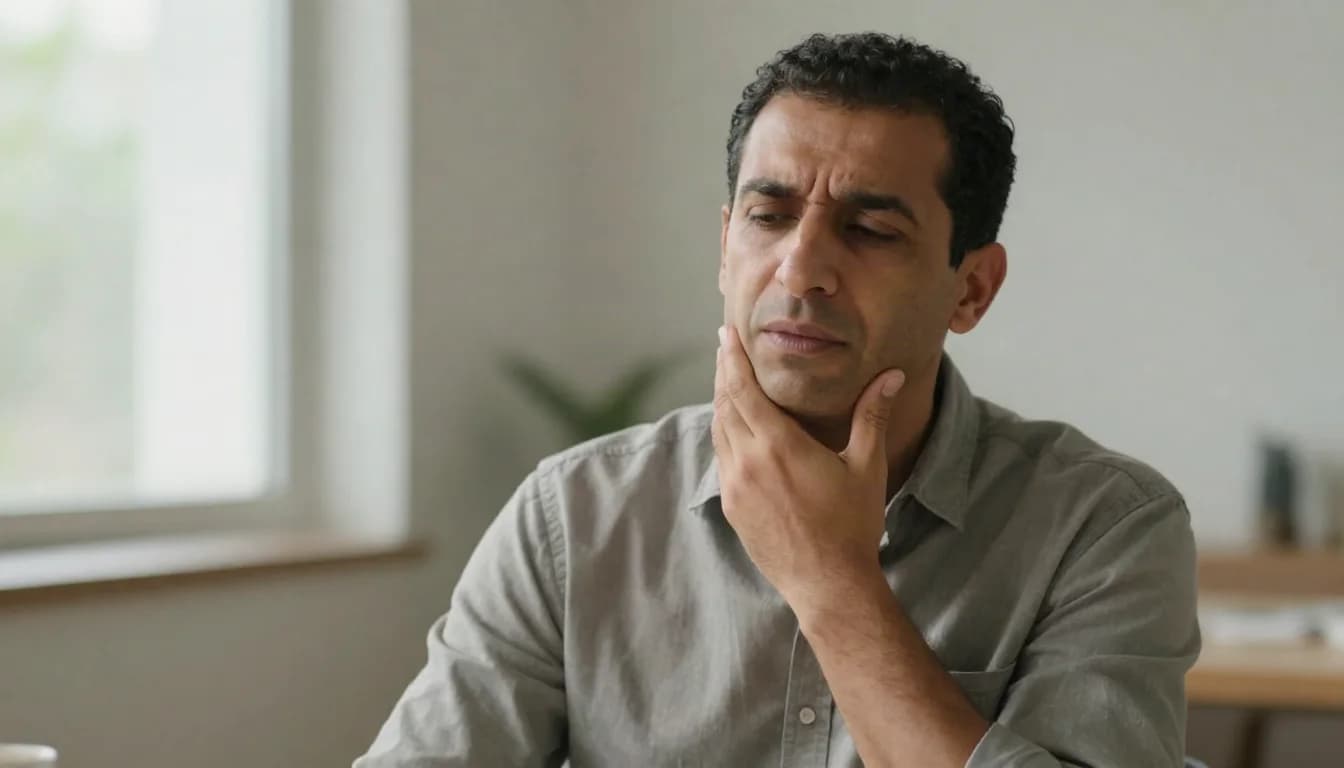
Jaw and facial bone fractures treatment Doctors in Jordan
علاج كسور الوجه والفكين
Facial and jaw fractures are injuries to the lower jaw, upper jaw, cheekbone, eye socket or nose, most often caused by road traffic collisions, falls, sport and assault. They are an emergency. Early assessment and imaging before any intervention determine the correct treatment, and delay allows bone to unite in the wrong position, altering the bite and facial shape and making later correction far harder because the bone must be cut again.
Signs that suggest a fracture include teeth that no longer meet as they used to, inability to close or open the mouth, abnormal mobility of part of the jaw, numbness of the lip, cheek or teeth, double vision, a sunken eye or eyes at different levels, a flattened cheekbone, or nasal bleeding with rapid swelling.
Before reaching hospital, do not try to push bone or teeth back into place yourself, and do not force your mouth open. Support a mobile lower jaw with a gentle bandage, remove any loose foreign object from the mouth if you can do so without pushing it inwards, keep any completely avulsed tooth in milk or saline without scrubbing the root, and go to an emergency department straight away.
Treatment ranges from observation with a soft diet for stable, undisplaced fractures, to fixing the teeth with arch bars and elastics, to open surgery that repositions the bone and secures it with plates and screws. Orbital and cheekbone fractures are treated according to their effect on vision and facial contour, not on the image alone.
The limits are explicit. Surgery restores form and function within limits. It cannot guarantee that all numbness will resolve, since some sensory loss may persist. It cannot prevent every scar or minor asymmetry, and it cannot repair optic nerve damage if that has occurred. Damaged teeth need separate treatment once the bone is stable.
4 specialists
Procedure steps
1
Emergency assessment and securing the basics
Breathing, bleeding and level of consciousness are assessed first, and head or neck injury is excluded, because in the first minutes a safe airway matters more than the fracture itself. The face, bite, sensation and vision are then examined.
2
Imaging before any intervention
A facial computed tomography scan is obtained, with dental imaging added when needed, to define the number, site and displacement of the fractures. No repositioning is attempted before these details are known, because blind manipulation can worsen the injury.
3
Deciding treatment and its timing
The choice lies between conservative follow-up with a soft diet, closed fixation with arch bars and elastics, or open surgery. Timing matters: displaced fractures are usually treated within a few days, before union begins in the wrong position.
4
Reduction and fixation of the bone
Surgery is usually performed under general anaesthesia. The fragments are repositioned using the correct dental occlusion as a guide, then fixed with plates and screws through incisions placed inside the mouth where possible, or along hidden lines when needed.
5
Recovery and monitoring the bite
The bite, jaw movement and sensation are monitored with reviews and imaging, a soft diet is required for weeks, and mouth opening exercises may be advised. Damaged teeth and any orthodontic treatment follow once the bone is stable.
Before the procedure
If the injury is recent, do not wait and do not simply try painkillers: go to an emergency department. Tell the team when and how the injury happened, whether there was any loss of consciousness, vomiting, or bleeding from the nose or ear, and list all your medicines, especially blood thinners, along with chronic conditions and allergies. Report your last meal, since it affects the timing of anaesthesia. Bring any previous images or reports, stop eating and drinking once instructed, and arrange for someone to stay with you and drive you. If you have an older photograph showing your smile before the injury, bring it, as it helps the surgeon restore your original position.
After the procedure
Follow the soft or liquid diet for the period your surgeon specifies, and do not bite anything hard even if you feel better, because the bone needs weeks to consolidate. Clean your mouth meticulously with the prescribed rinse, especially if arch bars and elastics are in place, sleep with your head raised, use cold packs as advised, avoid forceful nose blowing if the fracture is near the sinuses or eye socket, and avoid smoking and strenuous sport until cleared. **Seek care immediately if you have difficulty breathing or swallowing, bleeding that will not stop, double vision or reduced sight, clear fluid draining from the nose, fever with swelling that increases after day three, a sudden change in how your teeth meet, or new or worsening numbness.**
Expected duration
Closed fixation with arch bars and elastics usually takes one to two hours, and open surgery for a single fracture one to two hours, extending to several hours when multiple fractures are involved. Bone consolidation itself generally needs four to six weeks of dietary care and compliance.
تُعد د. يولا كوفالينكا من الكفاءات الطبية المتميزة في مجال طب الأسنان. تخرجت من جامعة لوغانسك الطبية الحكومية عام 2007، وكانت ضمن أوائل خمسة طلاب على دفعتها، وه…
يمتلك د. معتصم ارديسات خبرة مهنية واسعة في مجال طب الأسنان بدأت منذ عام 2007. تمتد مسيرته بين العمل الأكاديمي والممارسة السريرية في أوروبا والشرق الأوسط، مما من…
الدكتور محمد عرفات حسن هو طبيب أسنان وصاحب خبرات متقدمة في طب وجراحة الفم والأسنان، خرّيج جامعة دمشق العريقة في طب وجراحة الفم والأسنان (بكالوريوس)، وحاصل على ع…
الدكتور محمد أحمد علي الطراونة جرّاح فم ووجه وفكين، ومستشار في زراعة الأسنان وتجميل الوجه غير الجراحي. حاصل على البورد الأردني في جراحة الفم والوجه والفكين (201…
Finding Jaw and facial bone fractures treatment services in Jordan
Which doctors are listed for Jaw and facial bone fractures treatment in Jordan?
There are currently 4 doctor profiles linked to Jaw and facial bone fractures treatment on ClinicsJo. Review the listed services and contact the practice to confirm availability with the doctor and branch you choose.
How can I find an appointment for Jaw and facial bone fractures treatment?
Start with an available doctor's profile and use the contact or booking options shown there. Confirm the service, practice location and appointment time with the clinic. If this list is empty, broaden your search using the directory links on this page.
What does Jaw and facial bone fractures treatment cost in Jordan?
Ask the practice for the current price and what it includes. A consultation fee shown on a profile is not necessarily the price of a procedure, tests or follow-up. Confirm any additional charges and insurance arrangements before your visit.
Explore related Oral & Maxillofacial Surgery doctor directories