
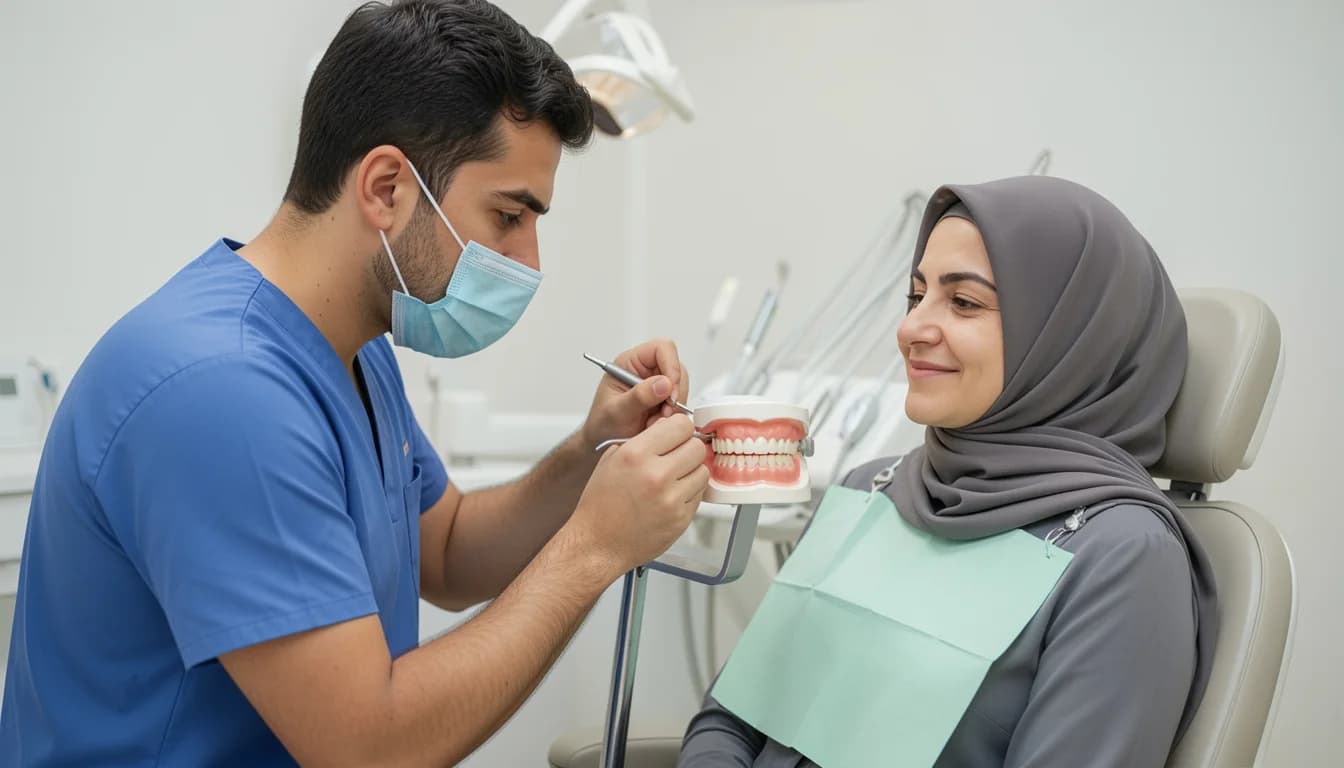
Professional dental cleaning is a preventive procedure in which a dentist or dental hygienist removes hardened calculus (tartar) and bacterial plaque from tooth surfaces and from the narrow pockets just below the gum line, then polishes the enamel so plaque finds it harder to settle again. It combines an ultrasonic scaler that vibrates deposits loose under a cooling water spray with fine hand instruments for surfaces the device cannot reach. Plaque is a soft film that rebuilds every single day. Left in place it mineralises within days into tartar, which no toothbrush, mouthwash or home remedy can lift. Tartar holds bacteria against the gum, producing redness, puffiness, bleeding when you brush and persistent bad breath. If that inflammation continues for years it can extend into the supporting tissue and the bone around the tooth, which is the leading cause of tooth loss in adults. It matters just as much to know what the visit does not do. A professional cleaning **never replaces brushing twice a day and daily flossing**; it complements them, because what is removed in the chair starts reforming within hours once home care stops. It is also not a whitening treatment: it lifts surface staining from tea, coffee and tobacco so teeth look cleaner and slightly brighter, but it does not change the natural shade of the tooth. It does not treat decay, repair broken fillings, or bring back gum that has already receded or bone that has been lost. A preventive visit usually ends with topical fluoride, which makes enamel more resistant to acid attack, and for children with a fissure sealant that closes the deep grooves of newly erupted permanent molars, the commonest site of decay at that age. Both are simple and painless, and their value lies in correct timing rather than in frequent repetition. Most people are advised to attend every six months. The interval is often shortened for smokers, people living with diabetes, patients in orthodontic treatment and those who form calculus quickly, and it is adapted during pregnancy. Whether you need a routine polish or staged deep cleaning below the gum line is decided by clinical examination, with X-rays when required, not by reading about it.
Procedure steps
- 1
Examination and gum assessment
The dentist checks teeth and gums, measures pocket depth where needed, and maps where calculus has built up along with any decay or broken filling to be handled at a separate visit. An X-ray may be requested to assess the bone around the teeth.
- 2
Ultrasonic scaling
The scaler tip is passed over the tooth surfaces so vibration breaks the calculus loose under a continuous water spray. Most people feel vibration and cold rather than pain, and local anaesthesia can be used if the gums are very inflamed or the teeth sensitive.
- 3
Hand scaling and interdental debridement
Fine hand instruments clear remaining deposits from just below the gum line and from the spaces between the teeth, the very sites where gum inflammation usually begins and which a brush alone cannot reach.
- 4
Final polishing
A rotating brush and prophylaxis paste polish the surfaces, lifting surface stains and leaving the enamel smoother so plaque adheres less easily over the following days.
- 5
Fluoride, sealants and technique coaching
Topical fluoride is applied, a fissure sealant is placed for children whose permanent molars have deep grooves, and the dentist then shows you the brushing and flossing technique that suits your mouth, the step that decides how long the benefit lasts.
Before the procedure
Eat normally beforehand; a cleaning requires no fasting. Before the appointment tell your dentist if you take anticoagulants or blood thinners, have a prosthetic heart valve, a history of endocarditis, or a weakened immune system, since special arrangements or preventive antibiotics may be needed. Mention pregnancy or breastfeeding, marked sensitivity to cold, a pacemaker, or reflux that makes lying back uncomfortable. Bring a list of your regular medicines and any diabetes reports you have. Brush before you come, and do not cancel because your gums bleed: bleeding is a sign of the inflammation you came to treat, not a reason to postpone. If the visit is for a child, describe it in simple words and avoid words such as needle or pain.
After the procedure
Sensitivity to cold and heat and tender gums for one to three days are expected after scaling, because tooth surfaces that were buried under deposits are now exposed again. Use a toothpaste made for sensitive teeth and a soft brush, and avoid very hard or spicy food on the first day. If your dentist asks you not to eat or drink for about half an hour after fluoride, follow that, and keep away from tea, coffee, deeply coloured drinks and smoking for the rest of the day. Resume brushing twice daily and flossing the same day: stopping for fear of bleeding is exactly what brings the problem back. Slight bleeding while brushing for a day or two is acceptable and settles as the gums heal. **Seek dental care immediately if** bleeding does not stop with pressure, pain increases after the third day instead of easing, or you develop **facial swelling, fever, or difficulty swallowing or opening your mouth**, which point to infection and need urgent assessment rather than waiting for a routine visit.
Expected duration
Usually 30 to 45 minutes per visit; heavy calculus or advanced gum inflammation that needs deep cleaning below the gum line is often staged over two or more appointments.


