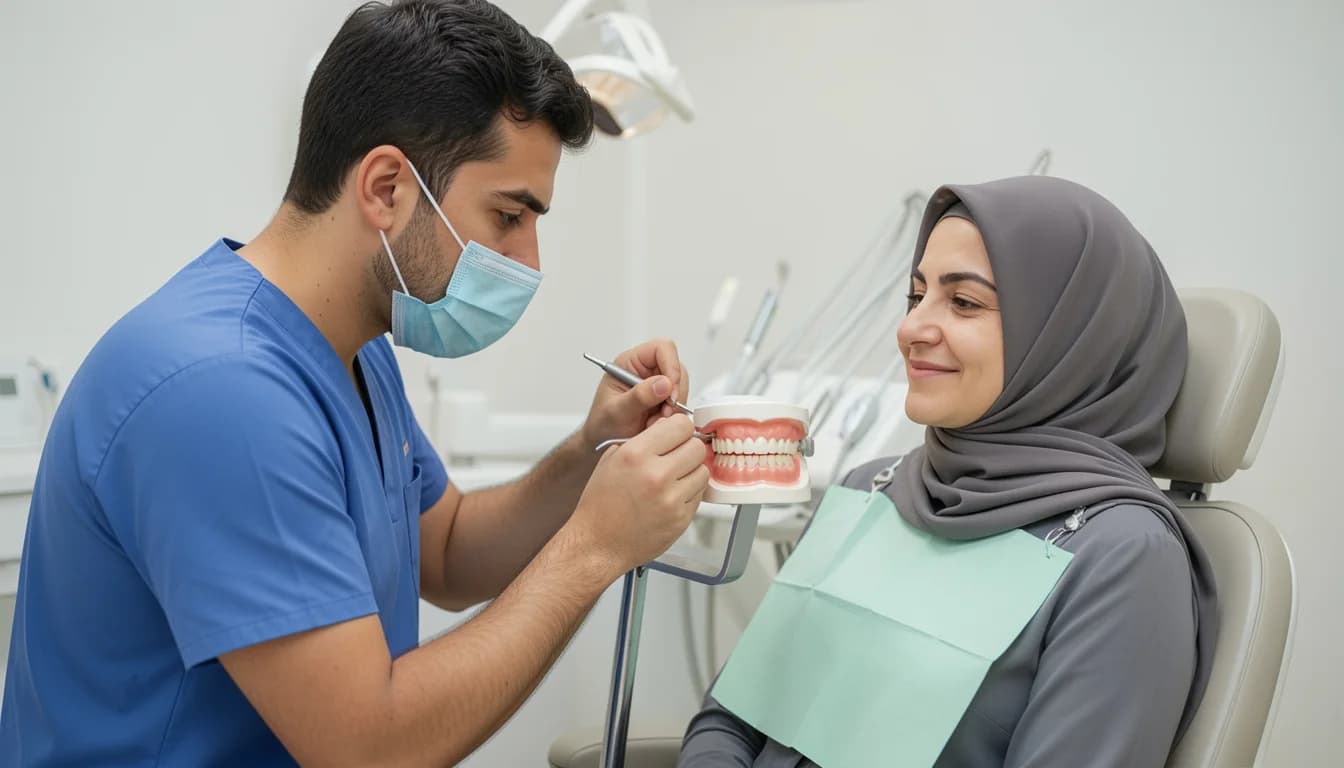
A light-cure filling is a direct restoration made of tooth-coloured composite resin, placed inside the cavity in layers, with each layer hardened in seconds by a visible blue light. The name refers to the curing method, not to a type of radiation: the light used is neither an X-ray nor a laser, and it does not treat the decay itself — it triggers the material to set.
Its main advantage is that it bonds chemically to tooth tissue, so the dentist can remove only the decayed part and preserve as much sound structure as possible instead of cutting a wide retentive cavity. It also matches tooth shade, is used in both front and back teeth, and serves well for repairing a small fracture at the corner of a front tooth or closing small defects and stained pits.
Its limits must be stated plainly. A composite filling does not whiten a tooth, and — importantly — it does not lighten during later whitening sessions. Anyone who bleaches their teeth after having front fillings placed may find the restoration now looks darker than the surrounding tooth and needs replacement. Composite also stains gradually with coffee, tea, spiced tea and smoking, and its margins may darken over time. It is not the most durable choice for very large cavities under heavy bite forces or in people who grind at night; in those situations ceramic restorations or a crown are considered. It does not prevent new decay, does not correct crowding, and cannot restore a damaged nerve.
Success depends heavily on technique: isolating the tooth and keeping the field dry, placing layers of the correct thickness, curing adequately, then adjusting the bite and polishing. This is why results differ between cases, and why service life is better predicted by quality of work, oral hygiene and bite load than by any fixed number of years.
Whether this particular material suits you is decided by clinical examination and radiographs — the site and size of the cavity, how close it lies to the gum or the nerve, and your occlusion. Your dentist may recommend a different material or an indirect restoration if tooth loss is extensive.
4 specialists
Procedure steps
1
Shade selection and examination
The tooth is examined and a radiograph reviewed when needed, and the shade is selected before work begins and before the tooth dehydrates — a dry tooth looks lighter than it truly is, which leads to a wrong shade.
2
Anaesthesia and isolation
The tooth is anaesthetised when needed and isolated with a rubber dam or cotton rolls and suction. Isolation is not optional: any saliva or moisture on the bonding surface weakens adhesion and leads to leakage and stained margins.
3
Decay removal and surface conditioning
Decayed tissue is removed as conservatively as possible, then enamel and dentine are conditioned with an etchant and a dedicated adhesive to prepare them for bonding. A protective liner is placed if the cavity is deep and close to the pulp.
4
Incremental build-up and curing
The material is placed in thin increments, each cured with the blue light for a defined number of seconds, and the surface anatomy and cusps are sculpted to mimic a natural tooth. In front teeth, several shades may be layered to reproduce translucency.
5
Occlusal adjustment and polishing
You bite on articulating paper, any high spot is reduced, and the restoration is polished through successive grits until smooth and glossy — a rough surface stains faster and accumulates more plaque.
Before the procedure
Tell your dentist if you plan to whiten your teeth: the correct sequence is whitening first, then placing front fillings to match the final shade — doing the reverse leaves the restoration darker than its surroundings. Also mention any previous reaction to local anaesthetic or latex, your chronic conditions and medications, pregnancy or breastfeeding, and night-time grinding, which changes the material recommendation. No fasting is needed, but a light meal is sensible since you will avoid eating until the anaesthetic wears off. Brush before the appointment, and if you smoke or drink a lot of coffee and tea, ask how this will affect staining so your expectations are realistic before work begins.
After the procedure
You may chew on a composite filling the same day once the anaesthetic has worn off, but start cautiously on the treated side. Expect mild sensitivity to cold or pressure that settles within a few days to two weeks. Cut back on coffee, tea, deeply coloured drinks and smoking during the first days, and keep brushing twice daily and flossing, since the margins of a restoration are where secondary decay begins. Do not use your teeth to open packaging, bite nails or crush ice, and avoid biting hard objects with a restored front tooth. If you grind at night, discuss a night guard to protect the restoration. **Contact your dentist promptly if you develop: persistent or night-waking throbbing pain, sharp increasing pain on biting, gum or facial swelling or fever, marked sensitivity that has not settled after two weeks, or a rough, fractured or partly lost filling.**
Expected duration
Usually 20 to 40 minutes per tooth, and up to about an hour for multi-layered, multi-shade front restorations.
تُعد د. يولا كوفالينكا من الكفاءات الطبية المتميزة في مجال طب الأسنان. تخرجت من جامعة لوغانسك الطبية الحكومية عام 2007، وكانت ضمن أوائل خمسة طلاب على دفعتها، وه…
يمتلك د. معتصم ارديسات خبرة مهنية واسعة في مجال طب الأسنان بدأت منذ عام 2007. تمتد مسيرته بين العمل الأكاديمي والممارسة السريرية في أوروبا والشرق الأوسط، مما من…
الدكتور محمد عرفات حسن هو طبيب أسنان وصاحب خبرات متقدمة في طب وجراحة الفم والأسنان، خرّيج جامعة دمشق العريقة في طب وجراحة الفم والأسنان (بكالوريوس)، وحاصل على ع…
الدكتور محمد أحمد علي الطراونة جرّاح فم ووجه وفكين، ومستشار في زراعة الأسنان وتجميل الوجه غير الجراحي. حاصل على البورد الأردني في جراحة الفم والوجه والفكين (201…
Which doctors are listed for Light Cure Fillings in Jordan?
There are currently 4 doctor profiles linked to Light Cure Fillings on ClinicsJo. Review the listed services and contact the practice to confirm availability with the doctor and branch you choose.
How can I find an appointment for Light Cure Fillings?
Start with an available doctor's profile and use the contact or booking options shown there. Confirm the service, practice location and appointment time with the clinic. If this list is empty, broaden your search using the directory links on this page.
What does Light Cure Fillings cost in Jordan?
Ask the practice for the current price and what it includes. A consultation fee shown on a profile is not necessarily the price of a procedure, tests or follow-up. Confirm any additional charges and insurance arrangements before your visit.
Explore related Dental Fillings doctor directories