
Istiklal Hospital Outpatient Clinics
Dr Ahmad Al-Haroub is a consultant in paediatrics and neonatology whose practice includes infant care, premature-infant follow-up and childhood growth. He holds…
Sign in to the platform to view the phone number
Trusted medical platform in Jordan
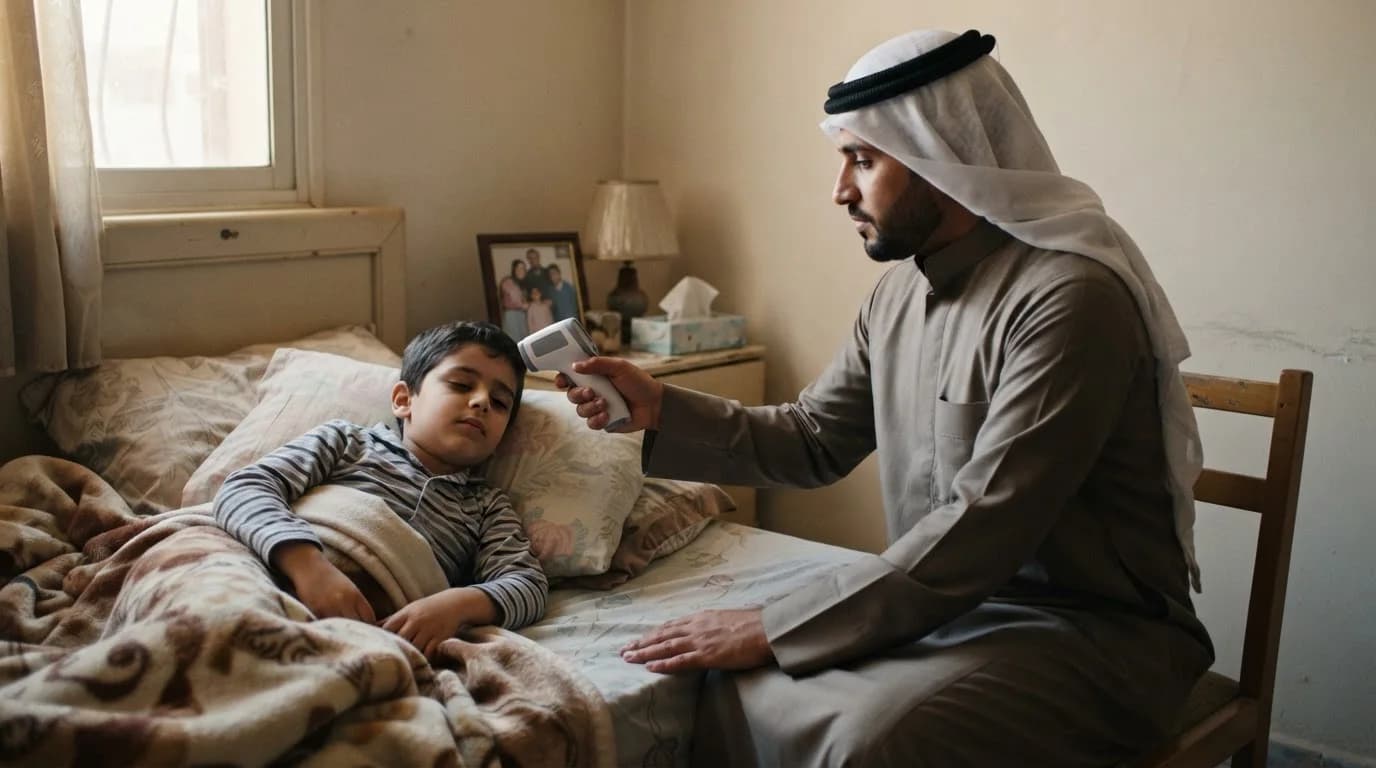
Newborn care is the structured medical follow-up of a baby from birth through the end of the first month, the period in which the body's systems adapt to life outside the womb. It covers assessment of breathing, temperature, skin colour and weight; a complete physical examination from the fontanelle to the feet including heart, lungs, abdomen, umbilical stump, hip joints, testes and reflexes; monitoring of feeding, urine output and stools; observation for jaundice; newborn screening tests; the first vaccinations according to the national programme; and teaching parents the warning signs.
Feeding is the centre of this care. Its adequacy is judged by practical signs: frequent feeds the baby asks for, a good number of wet nappies each day, stools that change colour progressively, settling after a feed, and regaining the weight lost in the first days before climbing along the growth curve. Safe sleep matters just as much: always place the baby on the back, on a firm flat surface, with no pillows, loose bedding or toys in the cot, never in your own bed, and with no smoking in the house or car. The umbilical stump is kept clean, dry and open to air, with the nappy folded below it, until it separates on its own.
Some widespread practices should be abandoned because they genuinely cause harm: never apply kohl, salt, oil or any traditional substance to the umbilical stump, and never bind it with a tight dressing. Do not give the baby water, herbal preparations such as anise or fennel, sugar water, or any milk that was not prescribed during the first months, because these increase the risk of dehydration, electrolyte disturbance and infection. Never give any medicine or fever reducer at this age without a doctor's decision, and avoid overdressing or tightly swaddling the baby.
Jaundice is common in the first days and is usually physiological and self-limiting, yet it can occasionally rise to a level that threatens the brain, which is why it must never be judged by eye alone but measured medically whenever there is doubt. Seek urgent medical assessment if jaundice appears within the first 24 hours of life, if the yellow colour becomes deep and extends to the abdomen and feet, or if it comes with lethargy and refusal to feed, an unusual high-pitched cry, a marked change in colour, floppiness or arching of the body. Do not rely on exposing the baby to sunlight: it is not a treatment and can harm the skin and temperature control. The proven treatment is phototherapy in an equipped setting under medical supervision.
This care has clear limits: its visits do not replace emergency assessment when a warning sign appears, newborn screening detects a defined group of conditions rather than every disease, and a normal result today does not mean the baby cannot fall ill tomorrow. Any complaint is evaluated by clinical examination rather than by reading an article, and at this age in particular the difference between waiting for an appointment and seeking immediate review is a very large one.
The baby's breathing, heart rate, colour, muscle tone and temperature are assessed; the baby is dried, kept warm and placed skin to skin with the mother to encourage the first feed within the golden hour. Initial measurements are recorded and the preventive measures approved in the national programme are given at birth.
The doctor examines the baby head to toe: fontanelle, eyes, mouth and palate; heart and lungs; abdomen and umbilical stump; the hips for developmental dysplasia; the genitalia and testes; the spine, skin and reflexes, alongside weight, length and head circumference.
Newborn hearing screening is performed, and a heel-prick blood sample is taken to screen for defined metabolic and hormonal conditions that can be treated early. The first vaccinations are given according to the national programme and recorded in the child's card together with the next due date.
This is the most important visit at this age: the baby is weighed and compared with birth weight, feeding and nappy counts are reviewed, jaundice is assessed by transcutaneous or blood measurement when needed, the umbilical area is checked, and the family is taught exactly which signs demand immediate review.
Measurements are plotted on the growth curve so the trend is followed rather than a single isolated number, and developmental skills, vision, hearing and responsiveness are assessed. Feeding and vitamin D are reviewed as the doctor advises, vaccination dates are set, and the warning signs are taught again.
Bring the birth summary and vaccination card to every visit, plus any discharge report if your baby stayed in the neonatal unit. Before the visit, record the number and length of feeds, the number of wet nappies, the colour and frequency of stools, and any vomiting or unusual crying and when it happens. Do not give the baby any medicine, herbal drink or water before the visit, and do not apply anything to the umbilical stump, so the doctor sees the baby's true condition. Bring spare nappies, clothes and a blanket, keep the baby warm on the way, and keep them away from crowds and anyone with a cold. Write down your questions even the ones that seem trivial, and tell the doctor about inherited conditions in the family and about the mother's medicines if she is breastfeeding. If you notice yellowing, look at the baby in natural daylight rather than yellow indoor light, and report when it started and how far down the body it has spread.
Place your baby on the back in their own cot on a firm surface with no pillows or loose bedding, and keep the whole environment smoke free. Feed on demand and track nappies and weight at every visit. Wash your hands before holding the baby and ask visitors to do the same, and keep visits few in the first weeks. Leave the umbilical stump dry and uncovered and apply nothing to it. Do not give water, herbal drinks or any medicine without a prescription, and never give a fever reducer at this age before the baby is seen. Seek emergency care immediately, without waiting, for any fever in a newborn or a low temperature with a cold body, lethargy or difficulty waking or refusal to feed, difficulty breathing or fast breathing or in-drawing between the ribs or a pause in breathing, bluish lips or tongue, an unusual high-pitched cry, a seizure or floppiness or arching, green or bloody vomit, abdominal distension or absent urine, redness or discharge or foul smell around the umbilicus, and jaundice within the first 24 hours or deep yellowing that reaches the abdomen and feet.
A check-up visit usually takes 20 to 40 minutes, with several closely spaced visits during the first month
Dr Ahmad Al-Haroub is a consultant in paediatrics and neonatology whose practice includes infant care, premature-infant follow-up and childhood growth. He holds…
Dr. Suzan Mohammad Youssef Abdelrahim is a Jordanian board-certified paediatrician and a University of Jordan medical graduate. She is a member of the Jordanian…
Dr. Issa Ali Khashashneh provides pediatric care with a registered subspecialty in neonatology. He holds the Jordanian Board in Pediatrics and previously worked…
Dr Ali Atiyeh Al Muati practises paediatrics and neonatal care at Istiklal Hospital in Amman. He holds the Jordanian board and a British fellowship in paediatri…
Dr. Ahmad Abdelraouf Ahmad Al Khabbas is a Jordanian board-certified paediatrician and a medicine and surgery graduate of Jordan University of Science and Techn…
Dr Hussain Jarawan is a consultant in pediatrics and pediatric neurology. He holds a medical degree from the University of Jordan and Jordanian Board qualificat…
There are currently 6 doctor profiles linked to Newborn care on ClinicsJo. Review the listed services and contact the practice to confirm availability with the doctor and branch you choose.
Start with an available doctor's profile and use the contact or booking options shown there. Confirm the service, practice location and appointment time with the clinic. If this list is empty, broaden your search using the directory links on this page.
Ask the practice for the current price and what it includes. A consultation fee shown on a profile is not necessarily the price of a procedure, tests or follow-up. Confirm any additional charges and insurance arrangements before your visit.
The price of Newborn care published on ClinicsJo is 25 JOD at Dr Hussain Jarawan Pediatric Neurology Clinic. It is the price the clinic published itself, not an average of the market in Jordan; the final price is set by the doctor after the consultation.
Other doctor profiles with a published fee: 11.
Expected duration (from the procedure guide): A check-up visit usually takes 20 to 40 minutes, with several closely spaced visits during the first month
Before booking, ask the clinic for the all-inclusive price and what it covers, any extra tests or scans, how many follow-up visits are included, the payment options, and whether your insurance is accepted. You can reach them through the contact details on the doctor and clinic profiles on this page.
The figures above were published by the clinics and doctors themselves on ClinicsJo and may change. We do not estimate prices. Confirm the all-inclusive price with the clinic before booking. Offers on ClinicsJo