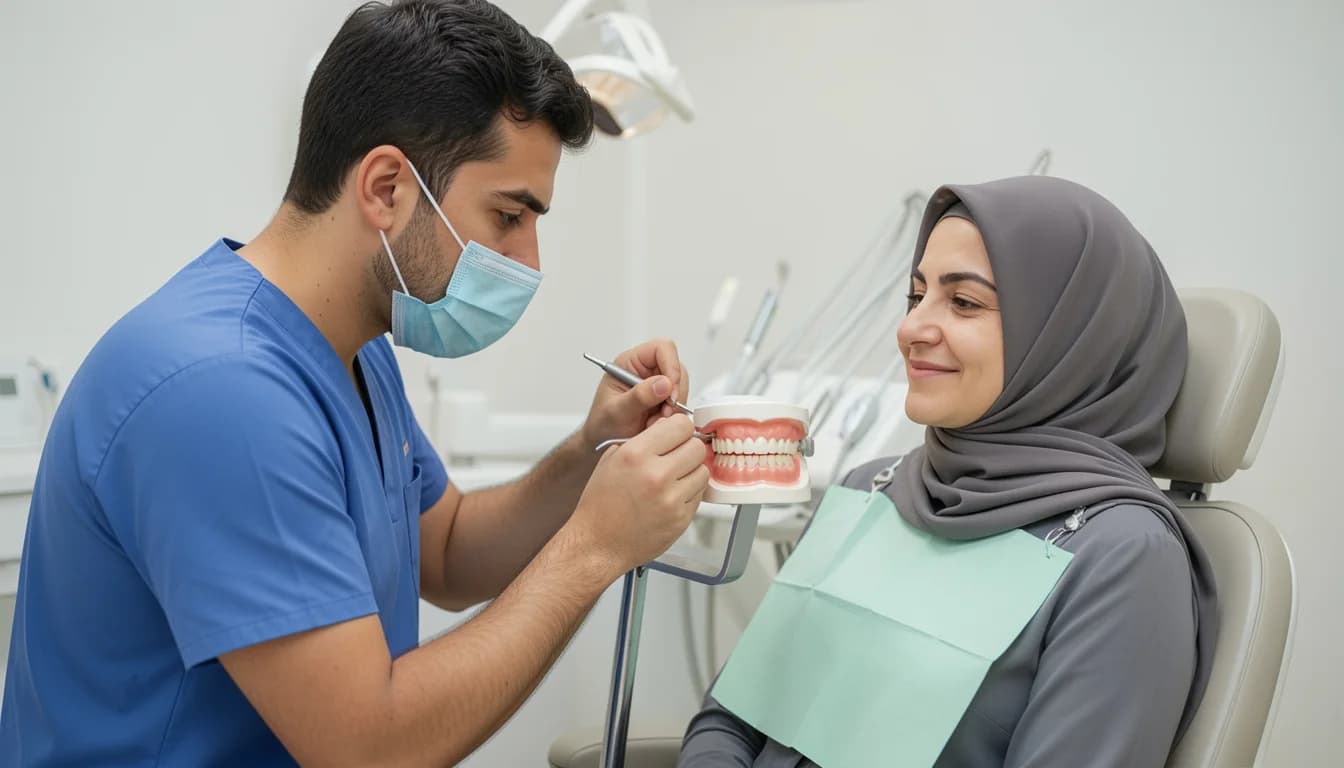
Orthodontic treatment in children is a group of interventions aimed at the teeth and the growing jaws to correct a malocclusion or guide jaw development before growth is complete. It is not a scaled-down version of adult orthodontics; it exploits an advantage that will not be available later, namely that the bone is still growing and its direction can be influenced.
A first orthodontic assessment is usually advised around the age of seven, because by then the permanent front teeth and first molars have erupted and the bite can be evaluated. An early visit does not mean early treatment; in most children the outcome is simply periodic monitoring. Some problems, however, genuinely benefit from acting sooner: a reverse bite, a narrow upper jaw that makes the jaw shift sideways on closing, an impacted permanent tooth, early loss of baby teeth, and habits such as thumb sucking or tongue thrusting.
The tools available at this stage are varied: an upper jaw expander, functional appliances that guide the relationship between the jaws during growth, space maintainers after a baby tooth is lost too early, appliances that help break an oral habit, and partial or full fixed braces once the permanent teeth are through. Which appliance is used and when depends on clinical examination, radiographs and the stage of growth, not on the child's age in years alone and certainly not on reading about it.
Families need to understand the limits. Early treatment does not always remove the need for full braces later; it often simplifies or shortens them instead. Guiding jaw growth works only while growth continues, and once growth is finished the options change fundamentally. Above all, every course of treatment ends in a retention phase. **A retainer after braces is not optional; neglecting it lets the teeth drift back and wastes years of treatment.** Braces also give no protection against decay, and a child who cleans poorly can finish treatment with teeth that are straight and damaged at the same time.
4 specialists
Procedure steps
1
First visit and growth assessment
The orthodontist examines the child's teeth, bite, jaw relationship and any oral habits, then classifies the case as monitoring, early intervention or waiting for the permanent teeth.
2
Radiographs and diagnostic records
Radiographs, clinical photographs and scans or impressions are taken to locate unerupted teeth, read the direction of jaw growth and measure the space available.
3
Early guidance phase
When indicated, an expander, functional appliance, space maintainer or habit appliance is used, aiming to simplify the problem rather than complete the whole correction.
4
Fixed braces after the permanent teeth erupt
Partial or full fixed braces are placed to align the teeth and settle the bite, with regular adjustment visits and an oral hygiene check at every appointment.
5
Retention and follow-up until growth ends
A retainer is fitted once appliances are removed and the child is reviewed periodically, since continuing jaw growth can produce changes needing adjustment through the teenage years.
Before the procedure
Give the orthodontist your child's full medical history: chronic conditions, regular medicines, allergies, heart or immune problems, and any previous surgery in the mouth. Mention oral habits such as thumb sucking, mouth breathing, snoring or tongue thrusting, any past injury to the front teeth or jaw, and any family history of orthodontic or jaw surgery. Complete fillings and a dental cleaning before treatment starts, because an unhealthy mouth makes braces riskier, not merely harder. Prepare your child emotionally with a simple honest explanation of the visit and no dramatic warnings, and arrive early so the surroundings feel familiar. Finally, ask the clinician directly what this particular phase is meant to achieve, how long it is expected to last and what will follow it, so the family knows what lies ahead.
After the procedure
Supervise your child's brushing yourself at first and do not assume it is being done well; brushing after every meal and using orthodontic floss are necessities rather than refinements. Keep hard and sticky foods, fizzy drinks and sugary drinks away, and cut firm fruit into pieces instead of biting into it. Expect mild soreness after each adjustment that usually settles within days, and use orthodontic wax over any edge that rubs the lip or cheek. Attend every review appointment, because missed visits lengthen treatment more than most parents expect. Contact the clinic if an appliance loosens, a wire protrudes, or an expander or its key is lost. **Seek care immediately for facial swelling, increasing throbbing pain or fever, if your child swallows or inhales a piece of an appliance, or if the gums bleed or discharge pus.** Once braces come off, wear the retainer exactly as prescribed.
Expected duration
The first assessment usually takes 30 to 45 minutes, while treatment phases commonly span months to years depending on growth.
تُعد د. يولا كوفالينكا من الكفاءات الطبية المتميزة في مجال طب الأسنان. تخرجت من جامعة لوغانسك الطبية الحكومية عام 2007، وكانت ضمن أوائل خمسة طلاب على دفعتها، وه…
يمتلك د. معتصم ارديسات خبرة مهنية واسعة في مجال طب الأسنان بدأت منذ عام 2007. تمتد مسيرته بين العمل الأكاديمي والممارسة السريرية في أوروبا والشرق الأوسط، مما من…
الدكتور محمد عرفات حسن هو طبيب أسنان وصاحب خبرات متقدمة في طب وجراحة الفم والأسنان، خرّيج جامعة دمشق العريقة في طب وجراحة الفم والأسنان (بكالوريوس)، وحاصل على ع…
الدكتور محمد أحمد علي الطراونة جرّاح فم ووجه وفكين، ومستشار في زراعة الأسنان وتجميل الوجه غير الجراحي. حاصل على البورد الأردني في جراحة الفم والوجه والفكين (201…
Finding Orthodontics For Children services in Jordan
Which doctors are listed for Orthodontics For Children in Jordan?
There are currently 4 doctor profiles linked to Orthodontics For Children on ClinicsJo. Review the listed services and contact the practice to confirm availability with the doctor and branch you choose.
How can I find an appointment for Orthodontics For Children?
Start with an available doctor's profile and use the contact or booking options shown there. Confirm the service, practice location and appointment time with the clinic. If this list is empty, broaden your search using the directory links on this page.
What does Orthodontics For Children cost in Jordan?
Ask the practice for the current price and what it includes. A consultation fee shown on a profile is not necessarily the price of a procedure, tests or follow-up. Confirm any additional charges and insurance arrangements before your visit.