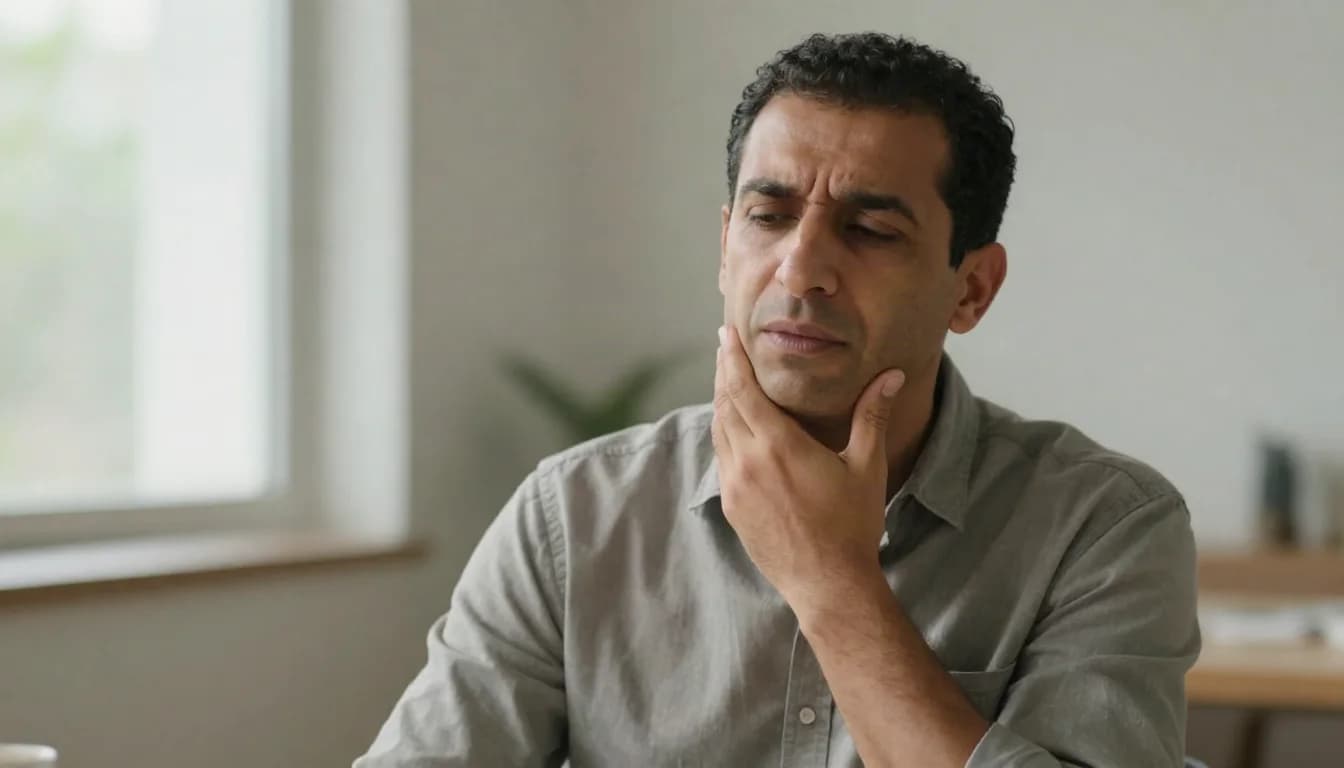
Painless Wisdom Tooth Extraction Doctors in Jordan
خلع ضرس العقل بدون ألم
Wisdom tooth extraction is the removal of a third molar, either whole or divided into sections, performed under local anaesthesia so that the procedure itself is not painful. The phrase pain free means that pain is fully controlled during the operation, with conscious sedation added when needed or when anxiety is high. It does not mean you will feel nothing during the days of recovery.
The most important point is that not every wisdom tooth needs to come out. A tooth completely buried in bone with no symptoms, no infection and no decay in its neighbour may reasonably be kept under radiographic surveillance. The decision comes from a clinical examination and a panoramic film, sometimes with a three dimensional scan to show how the roots relate to the lower jaw nerve or the maxillary sinus. It does not come from a blanket rule that all wisdom teeth must be removed.
Usual indications include repeated infection of the gum around the tooth, decay in the tooth or in its neighbour because the area cannot be cleaned, a cyst or resorption affecting the adjacent root, recurrent pain and pressure, or a specific orthodontic or surgical need identified by your treating clinician.
The limits are equally clear. Removing a wisdom tooth does not treat crowding of the front teeth and does not prevent crowding from returning, a widespread but inaccurate belief. It does not treat temporomandibular joint pain, and it does not slim the face or reshape the jawline. If your pain actually comes from another tooth or from the sinuses, extraction will not end it.
Expect swelling and reduced mouth opening that peak on the second or third day and then settle. Possible complications include bleeding, dry socket, and numbness of the lip or tongue that is usually temporary and rarely permanent when roots lie close to the nerve. Ask for these risks to be explained for your own case before you consent.
4 specialists
Procedure steps
1
Assessment and reading the image
The surgeon examines the gum, mouth opening and the neighbouring tooth, then reads the image to establish the tooth angulation, root anatomy and proximity to the nerve or sinus. Together you decide: extraction now, surveillance, or treating infection first.
2
Anaesthesia and pain control
Local anaesthesia is given until the area is completely numb, then tested before work begins. For marked anxiety or lengthy cases, conscious sedation may be added, or the extraction may be performed under general anaesthesia in hospital.
3
Gaining access to the tooth
If the tooth is impacted or partly covered, a small gum flap is raised and a limited amount of overlying bone may be removed using water cooled instruments to minimise heat and trauma to the bone.
4
Sectioning and delivery
The tooth is usually divided into segments removed one by one, since this is far gentler on bone and nerve than attempting to deliver it in one piece. The site is checked to confirm no fragment or root is left behind.
5
Socket cleaning and closure
The socket is irrigated and cleaned, the gum is sutured with stitches that dissolve or are removed after about a week, and you are given gauze to bite on plus written instructions for the first hours and the warning signs to watch for.
Before the procedure
Tell your surgeon about all your medicines, especially blood thinners, anticoagulants, bone density drugs, steroids and immunosuppressants, and never stop any medicine on your own. Mention pregnancy or breastfeeding, and disclose diabetes, heart disease, an artificial valve, a clotting disorder, or a history of prolonged bleeding after a previous extraction. If only local anaesthesia is planned, do not arrive completely fasted because an empty stomach increases faintness; if sedation or general anaesthesia is planned, follow the fasting instructions and arrange a driver. Brush before the appointment, avoid smoking, and plan a day or two off work with soft food ready at home.
After the procedure
Bite firmly on the gauze for about half an hour and do not probe the wound with your tongue or fingers. Use cold packs on the face intermittently during the first hours and sleep with your head raised. Do not use a straw, rinse forcefully or spit on the first day, because this dislodges the clot and causes dry socket, and do not smoke, which is the strongest trigger for it. Eat soft lukewarm food, drink plenty of fluids, and begin gentle warm salt water rinses from the following day. **Seek care immediately if bleeding does not stop with sustained gauze pressure, if swelling increases after the third day with fever, if you struggle to swallow, breathe or open your mouth, if numbness in the lip or tongue persists, or if severe throbbing socket pain with a foul smell appears after day three.**
Expected duration
An erupted, straightforward wisdom tooth may take 10 to 20 minutes, while a tooth impacted in bone usually takes 30 to 60 minutes per tooth, plus time for anaesthesia and instructions. The real duration is set after examination and imaging.
تُعد د. يولا كوفالينكا من الكفاءات الطبية المتميزة في مجال طب الأسنان. تخرجت من جامعة لوغانسك الطبية الحكومية عام 2007، وكانت ضمن أوائل خمسة طلاب على دفعتها، وه…
يمتلك د. معتصم ارديسات خبرة مهنية واسعة في مجال طب الأسنان بدأت منذ عام 2007. تمتد مسيرته بين العمل الأكاديمي والممارسة السريرية في أوروبا والشرق الأوسط، مما من…
الدكتور محمد عرفات حسن هو طبيب أسنان وصاحب خبرات متقدمة في طب وجراحة الفم والأسنان، خرّيج جامعة دمشق العريقة في طب وجراحة الفم والأسنان (بكالوريوس)، وحاصل على ع…
الدكتور محمد أحمد علي الطراونة جرّاح فم ووجه وفكين، ومستشار في زراعة الأسنان وتجميل الوجه غير الجراحي. حاصل على البورد الأردني في جراحة الفم والوجه والفكين (201…
Finding Painless Wisdom Tooth Extraction services in Jordan
Which doctors are listed for Painless Wisdom Tooth Extraction in Jordan?
There are currently 4 doctor profiles linked to Painless Wisdom Tooth Extraction on ClinicsJo. Review the listed services and contact the practice to confirm availability with the doctor and branch you choose.
How can I find an appointment for Painless Wisdom Tooth Extraction?
Start with an available doctor's profile and use the contact or booking options shown there. Confirm the service, practice location and appointment time with the clinic. If this list is empty, broaden your search using the directory links on this page.
What does Painless Wisdom Tooth Extraction cost in Jordan?
Ask the practice for the current price and what it includes. A consultation fee shown on a profile is not necessarily the price of a procedure, tests or follow-up. Confirm any additional charges and insurance arrangements before your visit.
Explore related Oral & Maxillofacial Surgery doctor directories