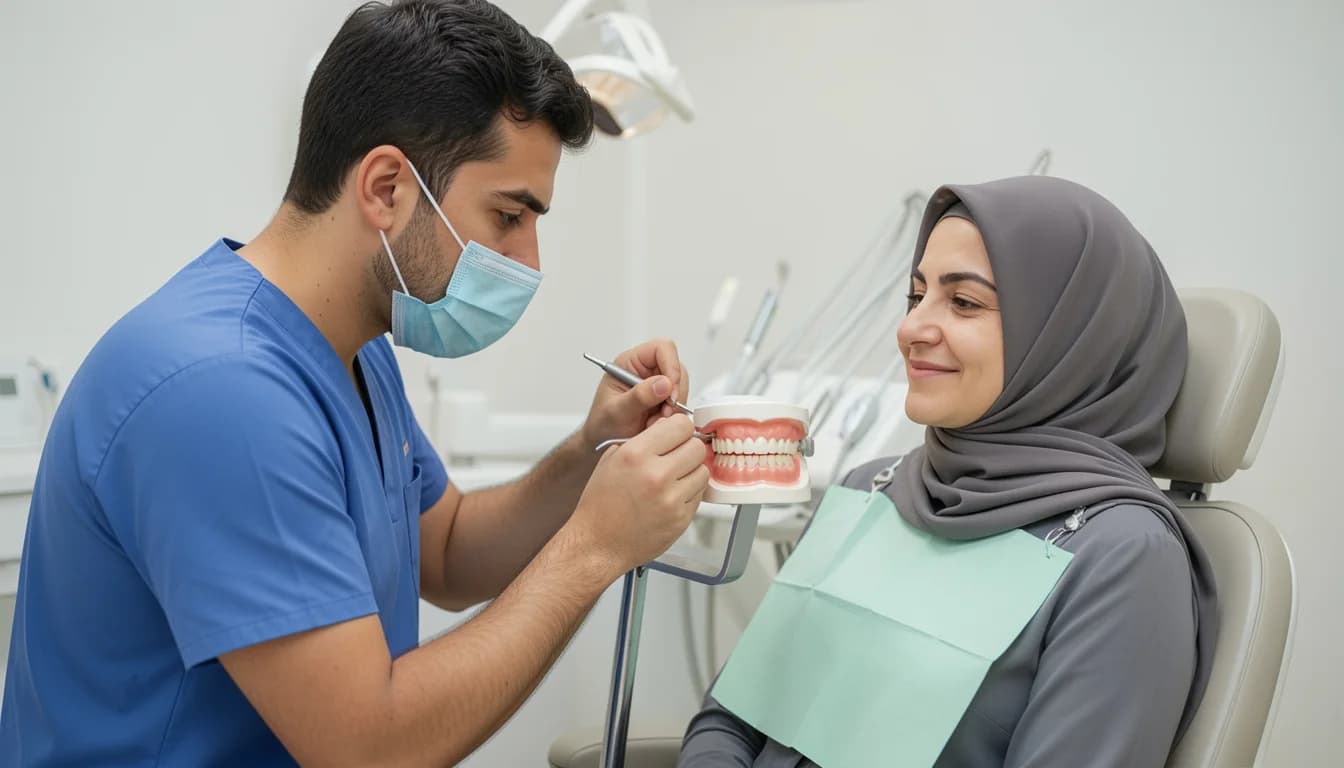
Treatment of pain after dental crown management Doctors in Jordan
علاج الم ما بعد تلبيس الأسنان
Pain after a dental crown is any ache or sensitivity felt in the crowned tooth or in the gum around it once the crown is in place, and treatment starts with identifying the cause rather than masking the symptom. The usual causes are few and identifiable: a crown sitting slightly high so it absorbs the whole force of the bite, leftover cement or a crown margin pressing on the gum, a pulp irritated by the preparation of the tooth, decay or infection that was not resolved before the crown was fitted, or a crack in the tooth or its root.
The pattern of the pain guides the diagnosis. Brief sensitivity to cold that fades within seconds is common in the first weeks and usually settles gradually. Pain on biting one specific spot points to the bite or to a crack. Throbbing pain that wakes you at night, or lingers for minutes after the trigger is removed, points to an inflamed pulp. Pain with swelling or a foul taste points to infection around the root. Diffuse aching across the jaw and temple with morning headaches often points to tooth grinding rather than to the crown.
A core rule applies: a restoration is the stage that follows treatment of the cause, so a crown should not be cemented over decay that was not fully removed, an inflamed nerve, or untreated infection around the root. When a crown is placed over an existing problem the pain continues, and the answer is to access or remove the crown, treat the canal, and restore the tooth again, not to increase painkillers.
The limits must be stated plainly. Painkillers ease symptoms and treat nothing. Reducing a high contact removes overload but does not heal a dying nerve. Replacing the crown helps nothing when the pain comes from a neighbouring tooth, the sinuses, or the jaw joint. Two beliefs cost patients dearly: that extraction is the easier and cheaper option than saving a tooth, when in fact it is followed by bone loss, drifting of nearby teeth, and a larger replacement later; and that having a crown means you no longer need to clean, when decay begins precisely at the crown margin where it meets natural tooth. Suitability for each step is decided by clinical examination and imaging, not by reading.
4 specialists
Procedure steps
1
Describing the pain and its timing
The dentist asks when the pain began, whether cold, heat or biting triggers it or it arises on its own, how long it lasts after the trigger is removed, and whether it wakes you at night. These details alone separate transient post-preparation sensitivity from an inflamed pulp that needs root canal treatment, and they prevent unnecessary intervention.
2
Clinical examination and bite check
The crown, its margin, the surrounding gum and the pocket depth are examined, and you are asked to bite on thin marking paper to reveal the point taking the heaviest load. Light percussion and biting on a flexible wedge help identify a crack, and neighbouring teeth are checked because pain is often referred.
3
Radiograph and pulp vitality testing
A small radiograph of the tooth reveals decay remaining under the crown, infection around the root, an incomplete root filling, or a root fracture. The tooth's response to a cold or electric stimulus is measured to judge the state of the nerve, and compared with healthy teeth in the same jaw.
4
Cause-directed treatment
Sometimes it is enough to reduce a high contact with fine polishing, or to remove residual cement and treat gum inflammation. If the pulp is no longer vital, the canal is treated through an access opening in the crown, which is then sealed. If the crown margins are poorly fitting or the tooth is cracked, a wider plan is explained to you before anything begins.
5
Review and follow-up
A short review is arranged after a few days to two weeks to confirm the pain has settled, to fine-tune the bite again if needed, to assess whether a night guard is warranted if grinding signs appeared, and to review how you clean around the crown margin with floss or an interdental brush.
Before the procedure
Before your appointment, note the pain precisely: when it started, what triggers it, how long it lasts, and whether it wakes you at night. Tell the dentist every medicine you take regularly, and which painkiller you took and when, because analgesics change the result of sensitivity testing and blur the diagnosis. Say when the crown was fitted and whether the tooth has had root canal treatment before, and bring any previous radiographs or reports you have. Mention clenching or grinding during sleep or under stress, and any known allergy to a material or drug. Do not stop your long-term medication on your own, and do not place clove pieces or an aspirin tablet against the gum, as this burns the tissue and makes the pain worse.
After the procedure
If your bite was adjusted, eat soft food for the rest of the day and avoid chewing on the treated side until the tooth settles. Clean around the crown twice a day with a soft brush and fluoride toothpaste, and pass floss or an interdental brush once a day on both sides of the crown; a restoration does not exempt you from cleaning, it increases the need for it, because decay begins at the crown margin where it meets natural tooth. Avoid biting ice, pens and nut shells, and wear your night guard if one was prescribed. Cold sensitivity easing gradually over some weeks is expected. **Seek care immediately if you develop facial or under-jaw swelling, fever, difficulty swallowing or breathing, pus or a repeated foul taste, or throbbing pain that your usual painkiller no longer controls.** Also return if pain on biting persists after adjustment, if the crown loosens or comes off, or if sensitivity lasts beyond a month.
Expected duration
An assessment visit usually takes 20 to 40 minutes with a bite adjustment done within it, while root canal treatment or remaking the crown needs one or more visits of 45 to 90 minutes.
تُعد د. يولا كوفالينكا من الكفاءات الطبية المتميزة في مجال طب الأسنان. تخرجت من جامعة لوغانسك الطبية الحكومية عام 2007، وكانت ضمن أوائل خمسة طلاب على دفعتها، وه…
يمتلك د. معتصم ارديسات خبرة مهنية واسعة في مجال طب الأسنان بدأت منذ عام 2007. تمتد مسيرته بين العمل الأكاديمي والممارسة السريرية في أوروبا والشرق الأوسط، مما من…
الدكتور محمد عرفات حسن هو طبيب أسنان وصاحب خبرات متقدمة في طب وجراحة الفم والأسنان، خرّيج جامعة دمشق العريقة في طب وجراحة الفم والأسنان (بكالوريوس)، وحاصل على ع…
الدكتور محمد أحمد علي الطراونة جرّاح فم ووجه وفكين، ومستشار في زراعة الأسنان وتجميل الوجه غير الجراحي. حاصل على البورد الأردني في جراحة الفم والوجه والفكين (201…
Finding Treatment of pain after dental crown management services in Jordan
Which doctors are listed for Treatment of pain after dental crown management in Jordan?
There are currently 4 doctor profiles linked to Treatment of pain after dental crown management on ClinicsJo. Review the listed services and contact the practice to confirm availability with the doctor and branch you choose.
How can I find an appointment for Treatment of pain after dental crown management?
Start with an available doctor's profile and use the contact or booking options shown there. Confirm the service, practice location and appointment time with the clinic. If this list is empty, broaden your search using the directory links on this page.
What does Treatment of pain after dental crown management cost in Jordan?
Ask the practice for the current price and what it includes. A consultation fee shown on a profile is not necessarily the price of a procedure, tests or follow-up. Confirm any additional charges and insurance arrangements before your visit.
Explore related Prosthodontics (Crowns & Bridges) doctor directories