

Dr Reem Al Qudah Clinic
Dr Reem Al Qudah is a dermatologist and venereologist with the Jordanian Board in dermatology. Her practice combines care for skin, hair and nail disorders with…
Hours not listedInsurance not specified7 views
Trusted medical platform in Jordan
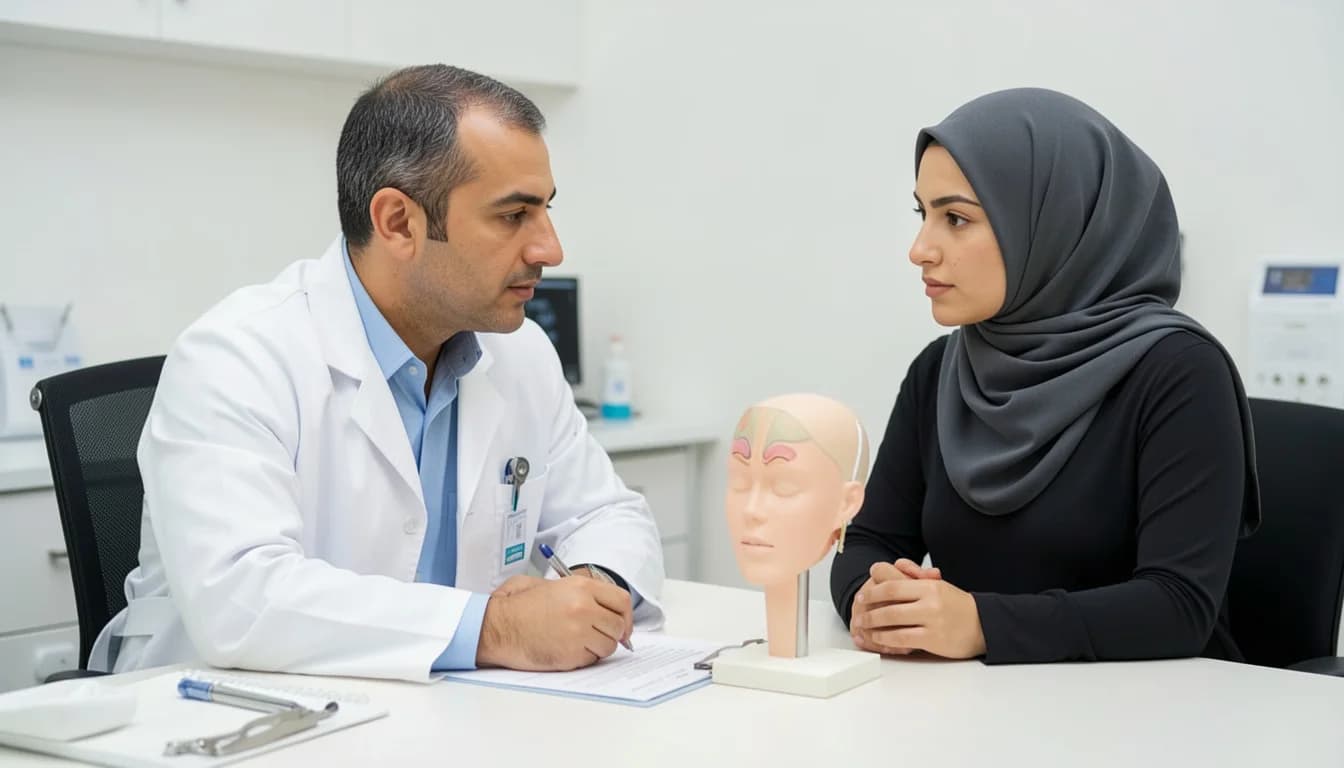
Vascular laser therapy uses wavelengths that are absorbed by haemoglobin inside small superficial blood vessels. The energy becomes heat within the vessel itself, which then coagulates, closes, and is gradually cleared by the body, while the surrounding skin stays relatively unharmed because the energy is targeted at red colour rather than at skin. It is used for visible facial capillaries on the cheeks and nose, persistent flushing and telangiectasia associated with rosacea, port-wine stains in children and adults, superficial haemangiomas after specialist assessment, some fine spider veins on the leg, and small vascular lesions such as cherry angiomas. The choice of wavelength, spot size, and pulse duration depends on vessel depth and calibre and on skin tone, and suitability is determined by clinical examination rather than by images circulating online. What can be expected is gradual fading of the treated vessels after one to several sessions, with temporary bruising or redness in between. Port-wine stains need a series of sessions started early and may lighten considerably without disappearing completely, while the visible redness of rosacea usually improves noticeably. The limits are explicit. Laser closes visible vessels; it does not cure rosacea as a chronic condition. Redness can return and may need maintenance sessions alongside topical treatment and avoidance of triggers such as heat, sun, and spicy food. It does not treat true leg varicose veins or large tortuous vessels, which need vascular assessment and possibly sclerotherapy or another procedure; treating them with a superficial laser simply wastes time. It does not lighten brown patches or melasma, because those are pigment rather than vascular problems. And it does not prevent new capillaries from appearing with sun exposure and age. Important precautions apply. Recent tanning or sun exposure raises the risk of burns and hyperpigmentation, particularly in medium and darker skin tones; blood thinners increase bruising; pregnancy defers treatment; and any lesion that grows rapidly, bleeds, or ulcerates needs a diagnosis before any cosmetic treatment is considered.
The skin is examined with good lighting and magnification to distinguish superficial telangiectasia from a port-wine stain, a haemangioma, or spider veins, and cases needing vascular assessment, imaging, or a specialist opinion before any laser session are excluded.
A small concealed area is treated first when appropriate, and the vessel response and skin colour afterwards guide the wavelength, pulse duration, and energy chosen, particularly in medium and darker skin tones to avoid burns and hyperpigmentation.
The area is cleansed, protective eyewear is worn by everyone in the room, skin cooling is applied before and after each pulse, and a topical anaesthetic is used for sensitive areas or for children when clinically indicated.
The lesion is covered with adjacent pulses without excessive stacking on the same spot, and the immediate colour response is monitored: a change in vessel colour or its disappearance indicates an adequate response, while too much energy can cause a blister or scar, so the setting is reduced at once.
The area is photographed before and after, the result is assessed at 4 to 8 weeks because fading is gradual, and the next session is planned according to what remains. Flushing triggers and the sun-protection plan are reviewed to reduce recurrence.
Avoid sun exposure, tanning, and tanning devices for at least two to four weeks before the session, and use sunscreen daily, because tanned skin risks burns and pigment changes. Tell your doctor about all your medications, especially blood thinners, aspirin, and supplements that increase bleeding, and never stop a cardiac medication on your own; ask your treating physician. Also mention recurrent cold sores, any tendency to keloid scars, any pigmentation that followed a previous procedure, and whether you are pregnant or breastfeeding. Do not wax or have a chemical peel in the area for two weeks beforehand, and pause retinoids and acids for the period your doctor specifies. Come with clean skin without make-up or foundation, and avoid alcohol and hot drinks before the session because they increase flushing. Photograph the area beforehand so you can judge the result objectively.
Expect redness and mild swelling for hours to days, sometimes a purple bruise that usually clears over one to two weeks, and the vessel may look darker before it fades. Cool the area with a clean compress at intervals on the first day, and never put ice directly on the skin. Do not scratch, exfoliate, or rub the area, and do not open any blister that forms. Avoid sun completely and use a broad-spectrum sunscreen daily with a hat, because sun is the main reason results fail and pigmentation develops. Postpone saunas, steam, hot baths, vigorous exercise, and hot or spicy drinks for two to three days, since heat dilates vessels. Resume make-up after a day or as advised, and continue any prescribed topical rosacea treatment. **Seek care promptly for increasing pain, blistering or ulceration, discharge with honey-coloured crusts or fever, hot redness spreading beyond the treated area, new white or dark patches, or a lesion that grows quickly, bleeds, or fails to heal.**
A session usually takes 10 to 30 minutes depending on the size of the area and is repeated every 4 to 8 weeks, while birthmarks require a series of successive sessions.
Dr Reem Al Qudah is a dermatologist and venereologist with the Jordanian Board in dermatology. Her practice combines care for skin, hair and nail disorders with…
There are currently 1 doctor profiles linked to Vascular Laser Therapy on ClinicsJo. Review the listed services and contact the practice to confirm availability with the doctor and branch you choose.
Start with an available doctor's profile and use the contact or booking options shown there. Confirm the service, practice location and appointment time with the clinic. If this list is empty, broaden your search using the directory links on this page.
Ask the practice for the current price and what it includes. A consultation fee shown on a profile is not necessarily the price of a procedure, tests or follow-up. Confirm any additional charges and insurance arrangements before your visit.