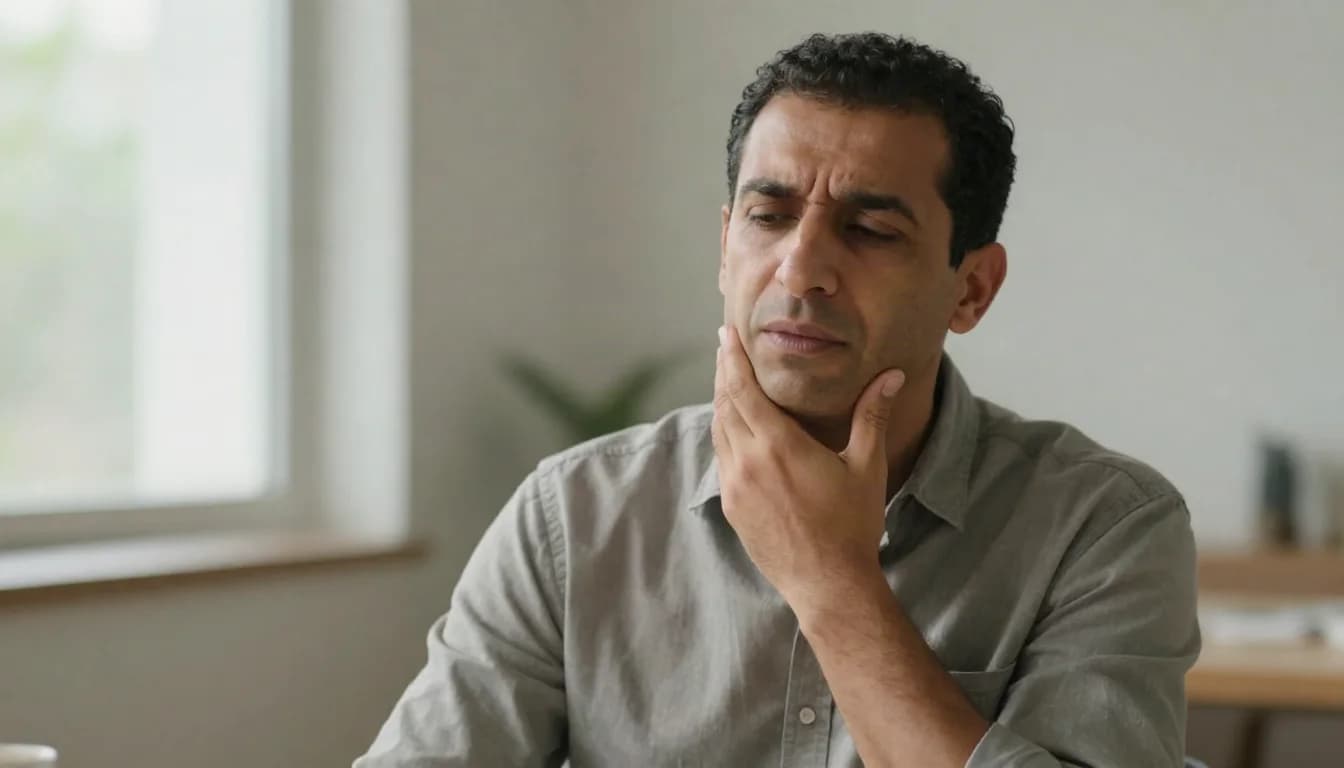
The wisdom tooth is the third molar at the end of the jaw, usually erupting between ages seventeen and twenty-five. The problem is that the jaw often lacks room for it, so it remains **impacted** fully or partially in the bone or under the gum, or erupts at an angle pressing on the adjacent tooth.
Partial impaction is the most troublesome: part of the crown is exposed and part covered by gum, creating a pocket that is hard to clean where bacteria and food debris collect. Painful gum infections around the tooth recur, the tooth itself or its neighbour may decay at the contact point, and the neighbour’s root may erode under pressure.
Not every wisdom tooth needs removal. A fully erupted tooth in a sound bite that can be cleaned has no reason to be extracted. Clear indications are: recurrent infection around it, unrestorable decay in it or its neighbour, pressure on the adjacent root, an associated cyst or tumour, or impaction that prevents reasonable cleaning.
Planning starts with a radiograph — often cone-beam CT in complex cases — to define root shape and inclination and, most importantly, **the tooth’s relationship to the inferior alveolar nerve**, which runs close to lower wisdom-tooth roots. Knowing this in advance is what reduces the risk of nerve injury that can cause temporary — and rarely permanent — numbness of the lip and chin.
Recovery passes a swelling peak on days two to three then improves. The most painful complication is **dry socket**, when the clot is lost, most often caused by smoking, using straws and vigorous early rinsing.
4 specialists
Procedure steps
1
Assessment and imaging
Clinical examination and a panoramic radiograph — with cone-beam CT in complex cases — to define position, inclination, root shape and the relationship to the inferior alveolar nerve and sinus.
2
Controlling acute infection if present
If there is acute infection or an abscess it is treated first with antibiotics and local debridement before extraction, since extracting during acute infection is harder and more painful.
3
Local anaesthesia
The site is anaesthetised locally by an appropriate technique, with intravenous sedation or general anaesthesia added in complex cases or with marked anxiety.
4
Surgical extraction
The gum is reflected when needed and a calculated amount of bone removed; the tooth may be sectioned to deliver it with least trauma, then the socket is cleaned and closed with sutures.
5
Follow-up and suture removal
A review confirms healing and removes non-absorbable sutures, and assesses any numbness, persistent pain or socket infection.
Before the procedure
Tell your dentist about all medications, especially blood thinners, aspirin and bisphosphonate osteoporosis drugs (very important, as they affect jawbone healing), and about cardiac disease, prosthetic valves, immunosuppression or diabetes. Do not come completely fasted if only local anaesthesia is planned — eat a light meal, since hunger increases dizziness. **Ask about how close the tooth is to the nerve on your own radiograph** and the likelihood of temporary numbness. Arrange transport if sedation is used, and prepare at home in advance: cold packs, soft cool food and prescribed analgesia, planning two to three days of rest.
After the procedure
Bite on the gauze with steady pressure for the time your dentist specifies, without changing it every minute. **Do not use straws, rinse vigorously, smoke or probe the site with your tongue for at least the first 24 hours** — these are the commonest causes of losing the clot and painful dry socket. Intermittent cold packs on the face on day one reduce swelling, and expect the swelling peak on days two to three. Eat soft cool food and avoid hot, sharp foods and small grains that lodge in the socket. Begin gentle warm saline rinsing after the first day as advised, and clean your other teeth gently. Complete any prescribed antibiotic. **Seek care immediately for bleeding that will not stop, pain increasing after day three and radiating to the ear (dry socket), fever with increasing swelling, difficulty opening the mouth, swallowing or breathing, or persistent numbness of the lip or tongue.**
Expected duration
Usually 20–45 minutes per tooth, longer with deep impaction
تُعد د. يولا كوفالينكا من الكفاءات الطبية المتميزة في مجال طب الأسنان. تخرجت من جامعة لوغانسك الطبية الحكومية عام 2007، وكانت ضمن أوائل خمسة طلاب على دفعتها، وه…
يمتلك د. معتصم ارديسات خبرة مهنية واسعة في مجال طب الأسنان بدأت منذ عام 2007. تمتد مسيرته بين العمل الأكاديمي والممارسة السريرية في أوروبا والشرق الأوسط، مما من…
الدكتور محمد عرفات حسن هو طبيب أسنان وصاحب خبرات متقدمة في طب وجراحة الفم والأسنان، خرّيج جامعة دمشق العريقة في طب وجراحة الفم والأسنان (بكالوريوس)، وحاصل على ع…
الدكتور محمد أحمد علي الطراونة جرّاح فم ووجه وفكين، ومستشار في زراعة الأسنان وتجميل الوجه غير الجراحي. حاصل على البورد الأردني في جراحة الفم والوجه والفكين (201…
Finding Wisdom Tooth Extraction services in Jordan
Which doctors are listed for Wisdom Tooth Extraction in Jordan?
There are currently 4 doctor profiles linked to Wisdom Tooth Extraction on ClinicsJo. Review the listed services and contact the practice to confirm availability with the doctor and branch you choose.
How can I find an appointment for Wisdom Tooth Extraction?
Start with an available doctor's profile and use the contact or booking options shown there. Confirm the service, practice location and appointment time with the clinic. If this list is empty, broaden your search using the directory links on this page.
What does Wisdom Tooth Extraction cost in Jordan?
Ask the practice for the current price and what it includes. A consultation fee shown on a profile is not necessarily the price of a procedure, tests or follow-up. Confirm any additional charges and insurance arrangements before your visit.
Explore related Oral & Maxillofacial Surgery doctor directories