Dr. Mohammad Jamal Al-Humaidi Clinic
Mohammad Jamal Al-Humaidi practices orthopedic and joint surgery, with published services in arthroscopy, sports injuries, knee conditions, and spinal problems.…
Hours not listedInsurance not specified5 views
Trusted medical platform in Jordan
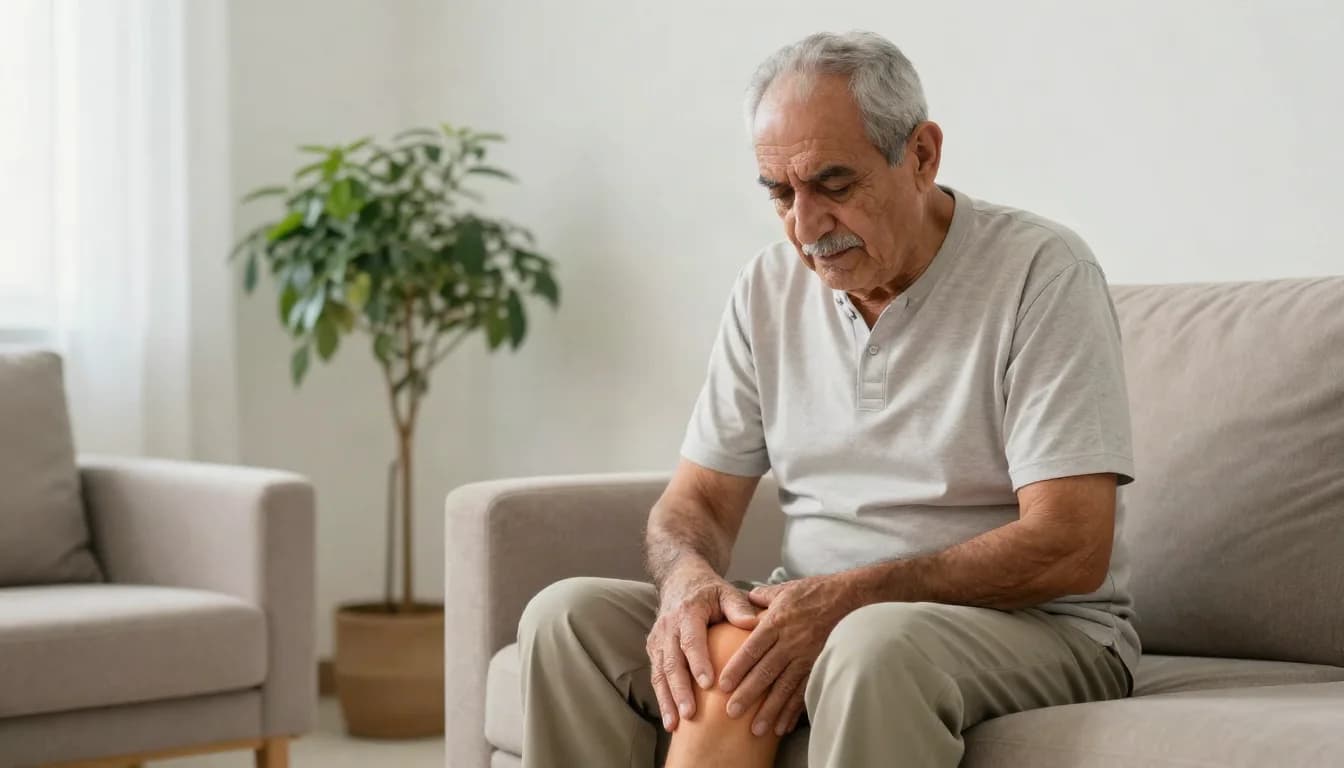
Knee osteoarthritis is the gradual wearing of the cartilage lining the joint surfaces, accompanied by changes in the bone beneath it, in the joint fluid and in the surrounding tissue, producing pain, morning stiffness and difficulty with stairs and rising from a chair. Treating its pain is not a single medicine but a layered plan built on symptom severity, functional level and coexisting illnesses, and every decision in it is made by clinical examination and review of imaging rather than by reading an article. The first layer matters most and must not be skipped: understanding the condition, a graded exercise programme strengthening the front and back of the thigh and the hip muscles with range-of-motion work, modification of activity and load, weight reduction where there is excess because losing weight reduces the load carried through the knee with every step, and suitable footwear. Physician-prescribed medicines for a limited period are then added, with caution about prolonged unsupervised use of anti-inflammatory drugs, particularly alongside kidney, stomach or heart disease. The limits of treatment must be stated frankly: **no medicine, injection or dietary supplement restores worn cartilage**. Injections — whether from the corticosteroid class, hyaluronic acid or platelet-rich plasma — relieve pain in selected cases; they do not grow cartilage and do not halt the progression of osteoarthritis. Braces and compression wraps may bring temporary comfort but do not treat muscle weakness. And a point many patients do not know: **the severity seen on a radiograph does not by itself determine the severity of pain** — some people have advanced films and tolerable pain while the reverse is also true, which is why symptoms and function are treated rather than the image. Two widespread myths deserve correction: **knee cracking does not cause osteoarthritis**, and **complete rest is not the best treatment** — the very same myth told about back pain. Prolonged sitting and lying down weaken the muscle that protects the joint and increase stiffness, whereas graded, measured movement is treatment rather than a threat. In advanced osteoarthritis where the non-surgical plan has failed, surgery is discussed: realignment of the leg axis when it is deviated, or partial or total joint replacement. It must be understood that **an artificial joint has a limited service life**, that **rehabilitation after surgery is half the result**, and that the goal is less pain and reasonable function rather than the knee you had at twenty.
Pain, range of motion, stiffness, muscle strength, leg alignment, gait and your ability to manage stairs and rise from a chair are assessed, a radiograph is reviewed when needed, and conditions that mimic osteoarthritis such as gout or a meniscal tear are excluded.
A graded exercise programme for the thigh and hip is built with range-of-motion work and low-impact aerobic activity such as walking, a stationary bike or swimming, weight reduction is planned where needed, and activities that increase joint load are modified.
Medicines are prescribed according to your condition and coexisting illnesses and for a limited period, the caution needed with prolonged anti-inflammatory use alongside kidney, stomach or heart disease is explained, and topical or thermal measures are added as adjuncts.
When pain persists after a fair trial of the programme, injection options are offered with a clear explanation of their temporary effect and definite limits; the type and interval are chosen by the treating doctor, and exercise continues because it is what preserves any benefit.
In advanced disease the surgical options are discussed with realistic expectations, pre-operative rehabilitation is started to strengthen the muscles, the post-operative rehabilitation plan is explained because it is half the result, and the expected restrictions and the implant’s service life are made clear.
Come in clothing that can be rolled above both knees so the two limbs can be examined and compared, and bring the shoes you usually wear so the wear pattern can be seen. Before the visit, write down how many minutes you can walk without stopping, whether the knee wakes you at night, how long morning stiffness lasts, and which movement is hardest in your day: stairs, rising from a chair, or getting out of the car. Bring previous radiographs and MRI scans with their reports and a complete list of your medicines and supplements, and tell the doctor about diabetes, kidney, stomach or heart disease and high blood pressure, because they limit both medication and injection options. Also report what you have already tried in exercise, physiotherapy or injections, for how long and with what result, and do not stop moving before the appointment.
Make exercise a daily habit rather than a short season, because strengthening the thigh and hip muscles is the treatment whose effect lasts, and expect improvement after weeks of adherence rather than after days. Modify activity instead of stopping it: walk gradually increasing distances on level ground, reduce repeated stair descent, deep squatting, long periods sitting with the knee bent and prolonged static standing, and use a cold pack for short periods when the knee swells after activity or gentle warmth before exercise if that helps you. Do not take painkillers for long stretches without supervision, and do not buy injections or supplements in the hope of “regrowing cartilage”. See your doctor if pain increases, if your walking distance falls, or if swelling keeps recurring. **Seek emergency care immediately if fever appears with a hot, swollen joint and severe pain preventing movement, if the knee locks and will not straighten, if you cannot bear weight after a fall, or if the calf becomes swollen and painful with breathlessness.**
The assessment visit usually takes 20 to 40 minutes, and the exercise and weight-reduction programme is typically reassessed after 6 to 12 weeks.
Mohammad Jamal Al-Humaidi practices orthopedic and joint surgery, with published services in arthroscopy, sports injuries, knee conditions, and spinal problems.…
Dr. Wael Al Haddad is a consultant orthopedic surgeon with Jordanian and Arab Board certification and advanced training at McMaster University in Canada. His wo…
Dr. Asaad Ahmad is a consultant orthopedic and sports medicine surgeon. He holds higher specialty and Jordanian Board qualifications, with German fellowship tra…
There are currently 3 doctor profiles linked to Osteoarthritic Knee Pain Treatment on ClinicsJo. Review the listed services and contact the practice to confirm availability with the doctor and branch you choose.
Start with an available doctor's profile and use the contact or booking options shown there. Confirm the service, practice location and appointment time with the clinic. If this list is empty, broaden your search using the directory links on this page.
Ask the practice for the current price and what it includes. A consultation fee shown on a profile is not necessarily the price of a procedure, tests or follow-up. Confirm any additional charges and insurance arrangements before your visit.