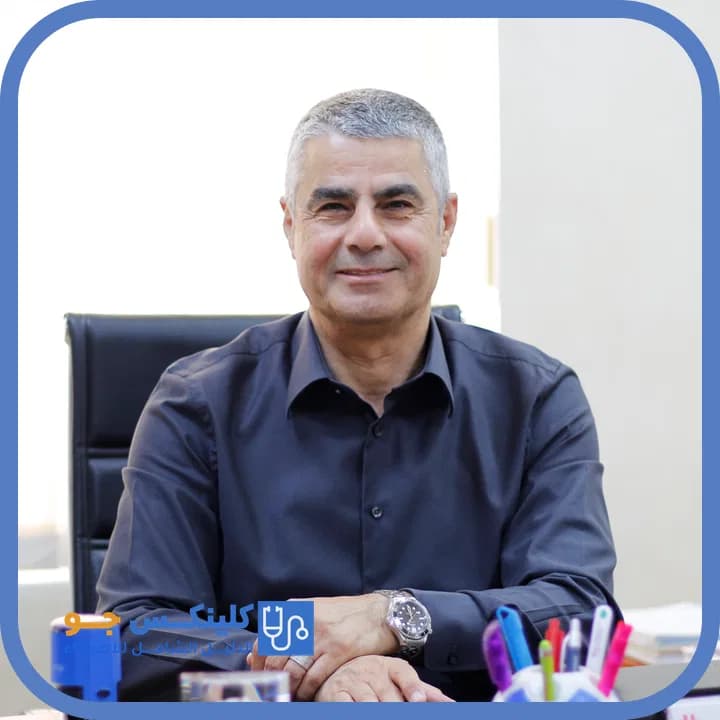
Ibn Al-Haytham Hospital Outpatient Clinics
Sign in to the platform to view the phone number
61 viewsHours 10:00–17:00 · 6 days a weekInsurance not specified
Trusted medical platform in Jordan

Looking for the best chronic renal failure treatment doctors in Jordan? This page lists four nephrologists in Amman whose profiles publish chronic kidney disease or renal failure care. They are ordered by how complete and checkable their published information is, not by clinical quality. You can compare their qualifications, services, insurers and clinic hours, then use our guide to prepare for a first visit.
| # | Doctor | Area | Rating | Experience | Consultation | Hours | Insurance | Suits | Profile score |
|---|---|---|---|---|---|---|---|---|---|
| 1 | Jawad Al Syouri | Tla' Al Ali | — | — | 30 JOD | 6 days · 10:00–17:00 | Accepted | Diabetes- or blood-pressure-related kidney disease follow-up in Tla' Al Ali | 47/100 |
| 2 | Ismaeel Qatash | Fifth Circle | — | — | — | 6 days · 10:00–16:00 | Accepted | Protein in urine, fluid balance or diuretic follow-up near Fifth Circle | 45/100 |
| 3 | Ahmad Yousef Rasheed | Jabal Amman | — | — | — | 6 days · 09:00–18:00 | Accepted | Suspected glomerular disease or longer weekday hours in Jabal Amman | 45/100 |
| 4 | Mohammad Walid Abu Zineh | Khalda | — | — | — | 6 days · 10:00–17:00 | — | Transplant, donor assessment or kidney concerns in pregnancy, Khalda | 40/100 |
From each profile as published today: approved reviews only, consultation fees only where the profile states them, confirmed weekly hours (the most common shift). «—» means the profile does not publish it.
Dr. Jawad Al Syouri is a nephrologist with a listed sub-specialty in hypertension. He sees nephrology, internal medicine and hypertension patients at Ibn Al-Haytham Hospital Outpatient Clinics in Tla' Al Ali, Amman. He studied medicine at the University of Bucharest, Romania, and holds Jordanian Boards in Internal Medicine and Nephrology. His published services include chronic renal failure treatment, kidney failure follow-up, diabetic kidney disease follow-up, renal hypertension assessment, dialysis and kidney-transplant patient follow-up, and renal function and medication review. His profile lists six insurers, including MedNet, MedVisa, NatHealth and MedGulf. Confirmed hours are Saturday to Thursday, 10:00–17:00.
Suits: Diabetes- or blood-pressure-related kidney disease follow-up in Tla' Al Ali
Dr. Ismaeel Qatash is a consultant nephrologist with American Board qualifications in internal medicine and nephrology. His listed sub-specialties are dialysis, kidney transplant and hypertension. He sees patients at his nephrology clinic in Khalaf Medical Complex near Amman's Fifth Circle. Published services include chronic kidney disease follow-up, kidney function assessment, proteinuria follow-up, management of diuretics, fluid and electrolyte assessment, blood pressure medication management, end-stage renal disease related services, and dialysis and transplant follow-up. His profile lists Arab Orient Insurance. Confirmed hours are Saturday to Wednesday 10:00–16:00 and Thursday 10:00–15:00.
Suits: Protein in urine, fluid balance or diuretic follow-up near Fifth Circle
Dr. Ahmad Yousef Rasheed is a consultant nephrologist and internal medicine specialist at Al Khalidi Medical Plaza in Jabal Amman. His record lists an M.B.Ch.B. from Al Baath University, Syria (2006), the Jordanian internal medicine board (2012), the Arab nephrology board (2016) and the nephrology subspecialty examination of the Royal Colleges of Physicians (2017). Published services include chronic and acute renal failure treatment, autoimmune glomerular disease care, electrolyte and acid-base assessment, dialysis and transplant follow-up, and coordination of kidney biopsy at an appropriate facility. His profile lists Arab Orient Insurance. Hours: Saturday to Wednesday 09:00–18:00, Thursday 09:00–13:30.
Suits: Suspected glomerular disease or longer weekday hours in Jabal Amman
Dr. Mohammad Walid Abu Zineh provides internal medicine and nephrology consultations at Saudi Hospital Specialist Outpatient Clinics, on the second floor of the hospital in Khalda, Amman. His listed sub-specialty is kidney transplant. His record lists the Jordanian Board in Nephrology, the Arab Board in Internal Medicine, US nephrology and transplant fellowship training at Johns Hopkins and Missouri, and a British nephrology fellowship. Published services include chronic renal failure treatment, chronic kidney disease follow-up, proteinuria and kidney function assessment, renal hypertension follow-up, dialysis follow-up, transplant and kidney donor assessment, and renal disease assessment in pregnancy. Confirmed hours are Saturday to Thursday, 10:00–17:00.
Suits: Transplant, donor assessment or kidney concerns in pregnancy, Khalda
Every matching doctor profile in this country was scored out of 100 for how complete and checkable its published information is, and the highest scores appear here in order. Featured placement does not change a profile's score, and the score does not measure treatment quality or outcomes — it tells you how much you can check before you call.
Ties are broken by the number of approved reviews, then published years of experience. Confirm the service, branch, appointment, fees and insurance coverage with the practice before visiting.
Chronic kidney disease (called chronic renal failure in its more advanced stages) is a gradual, permanent loss of the kidneys' ability to filter blood and to regulate fluids, salts and blood pressure. It develops over months or years and is often silent at first, because the remaining healthy tissue compensates for a while. In Jordan, diabetes and high blood pressure are the leading causes, followed by glomerular disease, inherited kidney disorders and long-standing urinary obstruction. Anyone living with diabetes or hypertension should have periodic kidney function tests and a urine test for albumin. Protein leaking into the urine is often the earliest measurable sign.
Consider booking a nephrology visit if:
You may be referred by a GP or internist, or you can book directly. Either way, the tests usually need repeating to confirm the problem is chronic, and the cause should be looked for.
Call 911 or go to the nearest emergency department, rather than waiting for a clinic appointment, if you or someone with kidney disease has:
All four listed profiles are nephrologists in Amman who publish chronic kidney disease or renal failure care. When people search for the best chronic renal failure treatment doctors in Jordan, what they usually need is a good fit for their own cause, stage and routine. Some practical points:
A first assessment usually takes 20 to 40 minutes. Core test results often come back the same day or within one to three days. Care generally follows five stages: confirming the disease is chronic, identifying the underlying cause, building a plan to slow progression, managing complications such as fluid, salt and blood pressure problems, and preparing early for advanced-stage options and follow-up.
What to bring:
Questions worth asking:
Do not stop or change any medicine on your own before the visit. Bring the list and let the doctor review it.
Insurers are listed on each profile. Dr. Jawad Al Syouri's profile lists six, including Solidarity - First Insurance Company, Euro Arab Insurance Group, MedGulf, MedNet, MedVisa and NatHealth. Dr. Ismaeel Qatash and Dr. Ahmad Yousef Rasheed list Arab Orient Insurance. For any clinic, confirm coverage directly, because policies and networks change.
Before you book, ask:
Book through the contact options shown on each profile on this page.
All four profiles list clinics in Amman, in different districts: Tla' Al Ali (Ibn Al-Haytham Hospital Outpatient Clinics), near Fifth Circle (Khalaf Medical Complex), Jabal Amman (Al Khalidi Medical Plaza) and Khalda (Saudi Hospital Specialist Outpatient Clinics, second floor). Use the map location on each profile to plan your route. If you live outside Amman, weigh travel time carefully, since follow-up is ongoing. If you feel unwell, tire easily or have swelling or breathlessness, arrange for someone to drive you rather than travelling alone.
No clinic on ClinicsJo has published a price for Chronic Renal Failure Treatment yet, so we do not quote an estimated figure. What is published is the consultation fee: 20–30 JOD (profiles: 5). The doctor sets the treatment price after assessing your case.
Expected duration (from the procedure guide): A first assessment visit usually takes 20 to 40 minutes, and core test results arrive the same day or within one to three days. The plan to slow progression is long-term care: medication is titrated over weeks, then follow-up is typically every three to six months, and more frequent in advanced stages or after a medication change.
Before booking, ask the clinic for the all-inclusive price and what it covers, any extra tests or scans, how many follow-up visits are included, the payment options, and whether your insurance is accepted. You can reach them through the contact details on the doctor and clinic profiles on this page.
The figures above were published by the clinics and doctors themselves on ClinicsJo and may change. We do not estimate prices. Confirm the all-inclusive price with the clinic before booking. Offers on ClinicsJo
Prepared by: the ClinicsJo editorial team. Last updated 18 October 2026.
List data: the doctor and clinic profiles published on ClinicsJo — services, doctors, hours, insurers and addresses entered by the providers or compiled by our team from public sources. Reviews appear only after moderation, the verified badge only on profiles the platform administration verified, and no price appears unless the profile itself publishes it. Where the data comes from and how lists are ordered · Medical content policy
Health references: the health information in the guide is general and written to agree with the guidance of major health bodies. To read further or check it:
The full directory behind this list, and our other shortlists for the same topic and place.
This page helps you compare published profiles; it is not medical advice and does not rank clinical skill. In an emergency call 911 or go to the nearest emergency department.