Dr. Yaser Kawar Clinic
Sign in to the platform to view the phone number
Trusted medical platform in Jordan

If you searched for the best critical care specialists in Amman, this page lists seven doctors whose ClinicsJo profiles include critical care as a sub-specialty. Five are pulmonary and critical care consultants, and two are anaesthesia and intensive care consultants. They are ordered by how complete and checkable each profile is, not by clinical skill. Compare training, services, locations and hours, then confirm details with the clinic.
| # | Doctor | Area | Suits | Profile score |
|---|---|---|---|---|
| 1 | Yaser Kawar | Abdali | Bronchoscopy, lung function tests and chronic lung disease follow-up in Abdali | 45/100 |
| 2 | Anas Al Khateeb | Jubaiha | Pulmonology | 34/100 |
| 3 | Shadi Obeidat | Jubaiha | Pulmonology | 34/100 |
| 4 | Mohammed J. Al-Jaghbeer | Jubaiha | Pulmonology | 34/100 |
| 5 | Emad Haddadin | Jubaiha | Anesthesia & Intensive Care | 31/100 |
| 6 | Mohammad Riziq | Jubaiha | Anesthesia & Intensive Care | 31/100 |
| 7 | Mamoon Awwad Zuhluf | Shmeisani | Adult cough, asthma and sleep-related breathing concerns in Shmeisani | 27/100 |
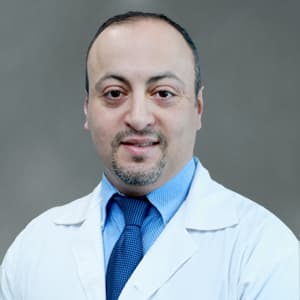
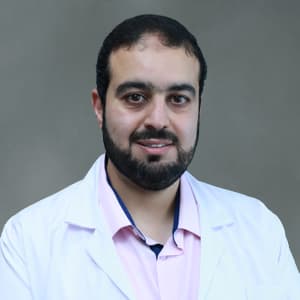
Dr. Yaser Kawar is a consultant in respiratory and critical care medicine. His biography lists American Boards in Internal Medicine, Pulmonary Disease and Critical Care, Jordan Medical Council certificates in pulmonary and critical care medicine, and fellowship of the American College of Chest Physicians. He graduated from Jordan University of Science and Technology in 2008 and completed residency and fellowships at Henry Ford Hospital from 2011 to 2017. Published services include bronchoscopy, endobronchial ultrasound, spirometry, lung function testing and thoracentesis. His stated scope covers asthma, COPD, fibrosis, cough, pleural disease, pulmonary hypertension and sleep-related breathing disorders. His biography says he practises at Abdali Hospital. The profile lists Abdali, Amman, Arab Orient Insurance, and hours Saturday to Thursday, 10:00–17:00.
Suits: Bronchoscopy, lung function tests and chronic lung disease follow-up in Abdali
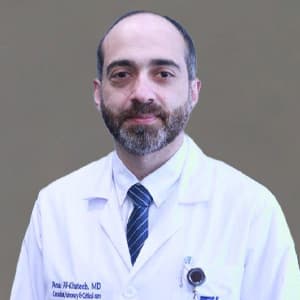
Anas Al Khateeb serves at King Hussein Cancer Center as consultant Physician - Pulmonary and Critical Care Medicine. Professional qualifications include: 2024: American Board of Neurocritical Care Medicine; 2023: Specialty Certificate in Adult Critical Care Medicine, Jordan Medical Council; 2023: Specialty Certificate in Pulmonary Medicine, Jordan Medical Council; 2019: American Board of Critical Care Medicine; 2018: American Board of Pulmonary Medicine; 2016: American Board of Internal Medicine. Education and training include: 2016-2019: American Fellowship in Pulmonary and Critical Care Medicine; 2013-2016: American Residency in Internal Medicine.
Suits: Pulmonology
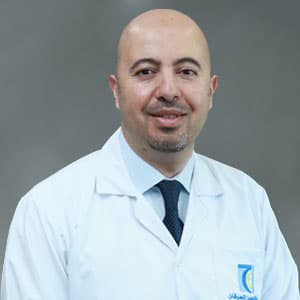
Shadi Obeidat serves at King Hussein Cancer Center as pulmonary and Critical Care Consultant. Professional qualifications include: Board Certified in Internal Medicine by the American Board of Internal Medicine, USA; Board Certified in Pulmonary Medicine by the American Board of Internal Medicine, USA; Board Certified in Critical Care Medicine by the American Board of Internal Medicine, USA; Board Certified in Pulmonary Medicine by the Jordan Medical Council; Board Certified in Critical Care Medicine by the Jordan Medical Council (Equation). Education and training include: 2010-2011: Critical Care Fellowship at Baylor College of Medicine, Texas, USA; 2008-2010: Pulmonary Medicine Fellowship at Marshall University, West Virginia, USA.
Suits: Pulmonology
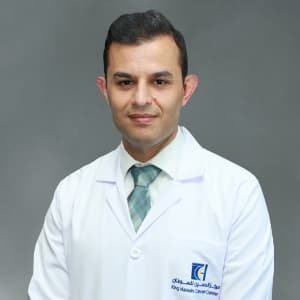
Mohammed J. Al-Jaghbeer serves at King Hussein Cancer Center as consultant, Pulmonary and Critical Care Medicine and Director of the Graduate Medical Education Office. Professional qualifications include: 2022: Jordanian Board of Pulmonary Medicine; 2016: American Board of Internal Medicine- Pulmonary Medicine; 2014: American Board of Internal Medicine - Critical Care Medicine; 2012: American Board of Internal Medicine. Education and training include: 2016: Fellowship in Pulmonary Medicine - University of South Carolina, Columbia, South Carolina, USA; 2014: Fellowship in Critical Care Medicine - University of Pittsburgh Medical Center, Pittsburgh, Pennsylvania, USA.
Suits: Pulmonology
Emad Haddadin serves at King Hussein Cancer Center as consultant Anesthesia and Pain Management. Professional qualifications include: 2014: Jordanian Board in Anesthesia and Intensive Care. Education and training include: 2005: MBBS, University of Jordan; 2013: Master’s in Anesthesia and Intensive Care, University of Jordan.
Suits: Anesthesia & Intensive Care
Mohammad Riziq serves at King Hussein Cancer Center as consultant Anesthesia and Pain Management. Professional qualifications include: 2018: Jordanian Board in Anesthesia and Intensive Care. Education and training include: 2022-2023: Pain Medicine Fellowship, UK; 2013-2017: Anesthesia and ICU Resident, University of Jordan.
Suits: Anesthesia & Intensive Care
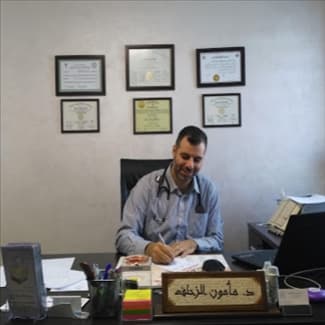
Dr. Mamoon Awwad Zuhluf is described as a consultant in pulmonology, intensive care and sleep medicine with a clinic in Shmeisani. His stated consultation scope covers adult respiratory symptoms and lung conditions, sleep-related breathing concerns, and review of investigations and previous treatment. Published services include pulmonology consultation, chronic cough assessment, asthma and chronic respiratory disease follow-up, respiratory investigation and treatment review, and sleep disorders treatment. Confirmed hours are Saturday to Wednesday, 11:00–17:00, and Thursday, 11:00–14:00, so a Thursday visit needs an earlier slot. Reviewing earlier investigations is part of his stated scope, so bring previous test results and reports.
Suits: Adult cough, asthma and sleep-related breathing concerns in Shmeisani
Every matching doctor profile in this area was scored out of 100 for how complete and checkable its published information is, and the highest scores appear here in order. Featured placement does not change a profile's score, and the score does not measure treatment quality or outcomes — it tells you how much you can check before you call.
Ties are broken by the number of approved reviews, then published years of experience. Confirm the service, branch, appointment, fees and insurance coverage with the practice before visiting.
Critical care, also called intensive care medicine, looks after people with life-threatening illness or injury, usually in a hospital intensive care unit (ICU). Typical situations include:
Admission to intensive care is arranged by hospital teams, usually through an emergency department or a ward. It is not something you book online.
Outside the ICU, the doctors on this page work in two related fields. Five are pulmonary and critical care consultants, who also see outpatients with lung and breathing problems. Two are anaesthesia and intensive care consultants whose profiles also list pain management. Common reasons to book an outpatient visit include:
Call 911 or go to the nearest emergency department if someone has any of the following. Do not wait for a clinic appointment.
People searching for the best critical care specialists in Amman usually want one of two things: a doctor for an ongoing lung or breathing problem, or guidance after a relative's time in intensive care. The profiles here can help with both. No list can tell you who is clinically right for you, but these points are worth comparing:
An outpatient appointment with a pulmonary and critical care consultant usually starts with a detailed history. Expect questions about:
An examination often follows, which may include listening to the chest and checking oxygen levels. The doctor may suggest tests such as lung function testing or imaging. A pain or anaesthesia consultation focuses on the history of the pain, previous treatments and how the pain affects daily life.
What to bring:
Questions worth asking:
Before booking, ask the clinic or your insurer:
Five consultants on this list are based at King Hussein Cancer Center in Jubeiha (written Jubaiha on the profiles). Dr. Zuhluf's clinic is in Shmeisani. Dr. Kawar's profile gives an Abdali address, and his biography says he practises at Abdali Hospital.
If you are travelling from Abdoun, Sweifieh, Khalda, Dabouq, Tla' Al-Ali, the Gardens or the 7th Circle, allow extra time at busy hours. When you book, confirm the exact building, entrance and floor. Large medical sites can take a while to navigate on foot, especially for someone short of breath.
If you are following up after an admission at another Amman hospital, bring the discharge papers to your appointment. Examples include Jordan University Hospital, King Hussein Medical Center, Al-Bashir Hospital, Specialty Hospital and Istishari Hospital. In an emergency, call 911 rather than driving to a clinic.
This page helps you compare published profiles; it is not medical advice and does not rank clinical skill. In an emergency call 911 or go to the nearest emergency department.