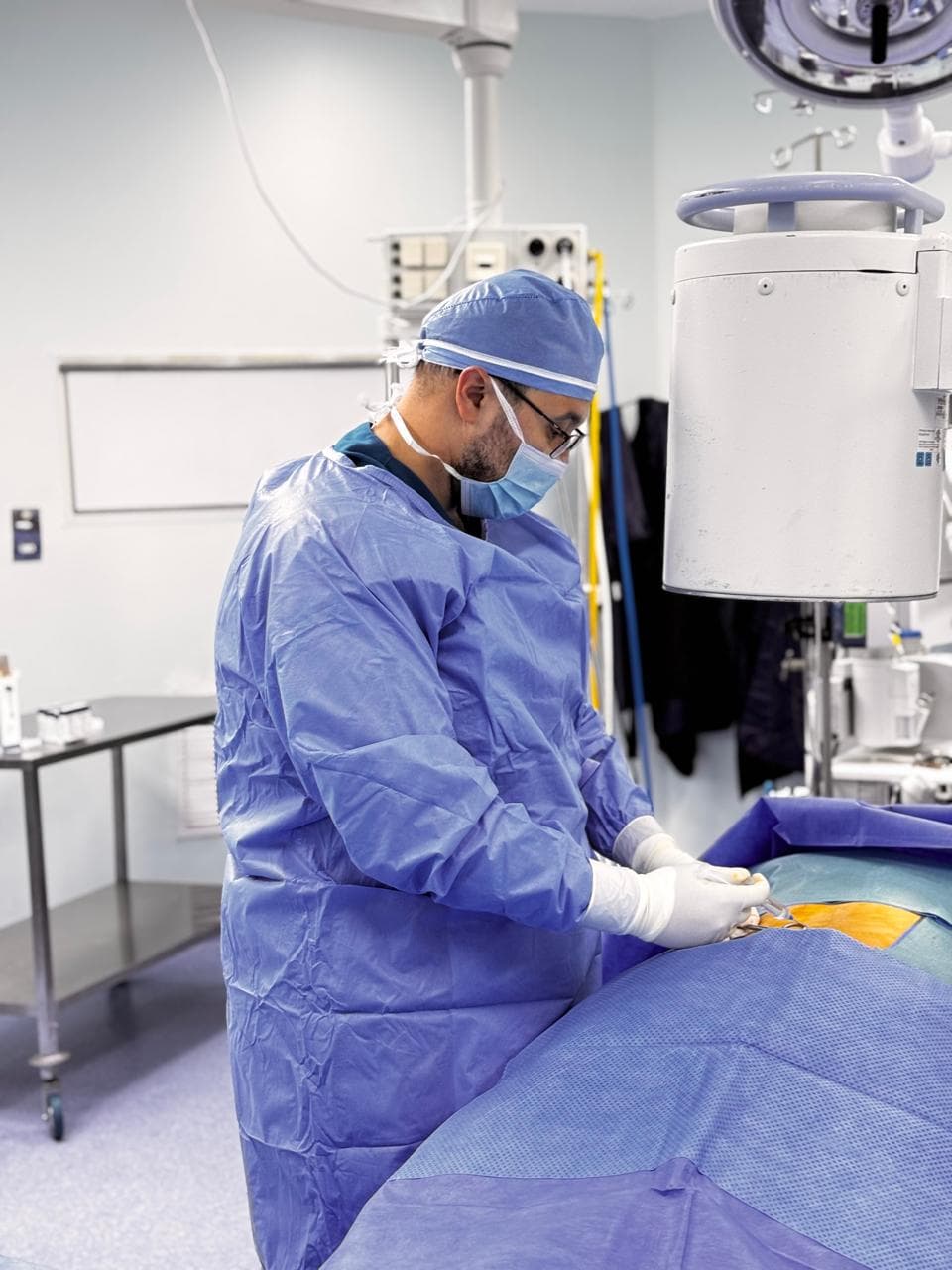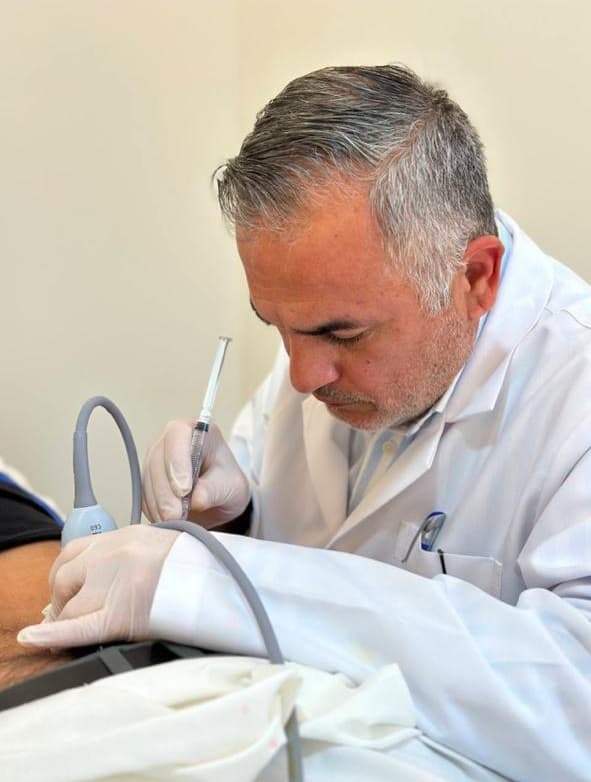
Top 4 Interventional Pain Procedures Specialists in Amman — A woman performing a wrist stretching exercise — directory of the best Interventional Pain Procedures doctors in Amman

Top 4 Interventional Pain Procedures Specialists in Amman 2026

If you are searching for the best interventional pain procedures specialists in Amman, this page lists four pain doctors whose profiles include image-guided injections, nerve blocks or radiofrequency treatment. They are ordered by how complete and checkable their published information is, not by skill or outcomes. Compare their services, clinic areas and hours, then read the guidance on when to book, what to bring and what to ask.

4 of 4 doctors on ClinicsJoUpdated 18 October 2026How we chose

At a glance

#DoctorAreaSuitsProfile score
1Mohammad BushnaqTla' Al AliChronic or nerve pain needing medication review and ultrasound-guided injections38/100
2Saleh AtiyahFifth CircleBack, neck or nerve pain where spinal injections are being considered30/100
3Mahmoud Al ManasrahShmeisaniCancer-related, postoperative or shingles-related pain in central Shmeisani27/100
4Wael KhatibAbdaliHospital-based chronic pain assessment within Abdali Hospital's outpatient clinics19/100
  1. 1Mohammad Bushnaq

    Dr. Mohammad Bushnaq practises pain management, internal medicine and palliative care at his clinic in Tla' Al Ali. He holds the Jordanian Board in Internal Medicine from the Jordan Medical Council and a United States fellowship in pain management and palliative care, which his biography places in California. His professional history includes work at King Hussein Cancer Center and teaching at the Hashemite University. Listed services include chronic pain assessment, pain medication follow-up, ultrasound-guided pain injections, and follow-up for nerve, joint and tendon pain. His biography also mentions radiofrequency procedures. Confirmed hours are Saturday to Wednesday 09:00–17:00 and Thursday 09:00–14:00.

    Suits: Chronic or nerve pain needing medication review and ultrasound-guided injections

  2. 2Saleh Atiyah

    Dr. Saleh Atiyah runs an interventional pain clinic at Fifth Circle, and his biography describes his work in interventional pain management, anaesthesia and intensive care at Arab Medical Center. His training includes pain management at Montpellier University in France and ultrasound- and X-ray-guided interventions in South Korea. He chairs the Jordanian Pain Physicians Society for 2025–2028, after serving as its secretary from 2022 to 2025. Listed services include nerve blocks, facet joint and epidural injections, radiofrequency procedures, ultrasound-guided injections and chronic pain follow-up. He also sees headaches. Confirmed hours are Saturday to Thursday, 09:00–17:00.

    Suits: Back, neck or nerve pain where spinal injections are being considered

  3. 3Mahmoud Al Manasrah

    Dr. Mahmoud Al Manasrah sees patients at an interventional pain management and palliative care clinic in Shmeisani Hospital Plaza on Ubada Bin Al Samit Street. The doctor holds the Jordanian board qualification in anaesthesia and intensive care and completed further training in interventional pain management and palliative care within the Royal Medical Services. Listed services cover chronic pain consultations, neck, back and joint pain assessment, nerve pain assessment, postoperative pain management, and cancer pain management with palliative care. The biography also mentions sciatica, shingles-related pain and chronic headaches. Confirmed hours vary by day, from late morning into the afternoon or early evening.

    Suits: Cancer-related, postoperative or shingles-related pain in central Shmeisani

  4. 4Wael Khatib

    Dr. Wael Khatib is a consultant in anaesthesia, intensive care and pain management at Abdali Hospital, seeing patients at its outpatient clinics. The doctor holds the Jordanian board in the specialty and graduated from Rostov Medical University. Listed services are chronic pain assessment, interventional pain procedures, and anaesthesia for cardiac and neurological surgery. The biography advises bringing previous reports, imaging and details of treatments already tried to a pain assessment. It also notes that the suitability of any intervention is decided after review, and that anaesthetic care is coordinated with the surgical team.

    Suits: Hospital-based chronic pain assessment within Abdali Hospital's outpatient clinics

This shortlist covers 4 of the 4 matching doctors on ClinicsJo. Browse the full list and filter it.

How we chose this list

Every matching doctor profile in this area was scored out of 100 for how complete and checkable its published information is, and the highest scores appear here in order. Featured placement does not change a profile's score, and the score does not measure treatment quality or outcomes — it tells you how much you can check before you call.

  • Profile verified by the platform15
  • Approved reviews (number and average)20
  • Published years of experience (up to 25)15
  • Published qualifications10
  • Written professional biography8
  • Profile photo5
  • Published services8
  • Listed insurers7
  • Confirmed opening hours6
  • Published consultation fee3
  • Map location3

Ties are broken by the number of approved reviews, then published years of experience. Confirm the service, branch, appointment, fees and insurance coverage with the practice before visiting.

When do you need an interventional pain specialist?

Interventional pain medicine uses targeted procedures, usually guided by ultrasound or X-ray, to reduce pain that has not settled with simpler measures. Common examples include nerve blocks, epidural injections, facet joint injections and radiofrequency treatment of the nerves that carry pain signals. These procedures are usually one part of a wider plan that may also include exercise, physiotherapy, medication review and, where relevant, psychological support for living with long-term pain.

People are often referred, or book themselves, for:

  • Back or neck pain lasting more than a few weeks, especially pain spreading into an arm or leg (such as sciatica)
  • Joint pain, for example in the knee, hip or shoulder, that limits daily activities
  • Nerve pain, including pain that continues after shingles
  • Chronic headaches that have already been assessed
  • Pain after surgery that is not settling as expected
  • Cancer-related pain, often alongside palliative care

Most back and neck pain improves with time, staying active and simple self-care, so an injection is rarely the first step. A specialist visit makes sense when pain is persistent, disturbs sleep or work, or keeps returning despite treatment.

Warning signs that need urgent care

Do not wait for a clinic appointment. Call 911 or go to an emergency department if you have:

  • Back pain with loss of bladder or bowel control, or numbness around the genitals or buttocks
  • New or worsening weakness in the legs or arms
  • Back pain with fever, after a fall or accident, or with a history of cancer or unexplained weight loss
  • A sudden, severe headache, or a headache with fever, a stiff neck, confusion, weakness or difficulty speaking
  • Chest pain, or pain spreading to the arm or jaw with breathlessness
  • After a recent injection: fever, increasing pain or redness at the site, or new numbness or weakness

How to choose among the doctors here

All four profiles list interventional pain procedures, but they differ in emphasis, setting and schedule. Practical points to compare:

  • Match the services to your problem. Some profiles list specific spinal procedures such as epidural and facet joint injections, while others highlight cancer pain, palliative care or postoperative pain. Choose the profile whose published services fit your situation.
  • Clinic or hospital setting. One doctor sees patients in a hospital's outpatient clinics; the others work from private clinics. Ask where any procedure itself would be performed, as it may differ from where you have the consultation.
  • Imaging guidance. Ask whether procedures are done under ultrasound or X-ray guidance and whether that equipment is on site.
  • Hours. Confirmed hours differ, including shorter Thursday hours and later starts on some days. Check these against your own schedule, especially if you need follow-up visits.
  • Location in Amman. Traffic across the city can turn a short distance into a long journey, so a nearby clinic helps when repeat visits are likely.

The order of this list reflects profile completeness only. When comparing interventional pain procedures specialists in Amman, use the published details as a starting point, then ask your own questions directly.

What to expect at the first visit

A first consultation is usually an assessment rather than a procedure. The doctor will ask about where the pain is, how long you have had it, what makes it better or worse, and how it affects sleep, work and mood. A physical and neurological examination is common. The doctor may discuss options that range from medication changes and physiotherapy to a guided injection. Not everyone is suitable for an intervention.

What to bring

  • Previous imaging (MRI, CT or X-ray) with the written reports, on disc or printed
  • Recent blood tests and reports from other doctors
  • A list of all medicines and supplements, including painkillers you have tried
  • Details of past treatments such as physiotherapy or earlier injections, and whether they helped
  • Your insurance card and ID

Tell the doctor if you take blood thinners, have diabetes, are pregnant or may be pregnant, or have allergies to medicines, contrast dye or local anaesthetic. These can affect whether and when a procedure is done. Do not stop any medicine on your own; ask for instructions.

Questions to ask

  • What do you think is causing my pain, and what are the options?
  • What would the procedure involve, and how long does it take?
  • What are the possible benefits, side effects and risks?
  • Will I need someone to drive me home afterwards?
  • How will we judge whether it has helped, and what happens next if it has not?

Insurance, fees and booking: what to ask before the appointment

Costs for pain care can include several parts, so ask before you book:

  • What is the consultation fee, and is a follow-up visit charged separately?
  • If a procedure is recommended, is it priced separately from the consultation, and does that include imaging guidance and any medicines used?
  • Does the clinic accept your insurer, and does the procedure need prior approval?
  • If the procedure is done in a hospital, will there be separate hospital charges?
  • How long is the wait for a consultation, and for a procedure if one is planned?

Keep any approval reference from your insurer and bring it with you on the day.

Getting there

Amman is spread across many hills and districts, and rush-hour traffic can be heavy, particularly in the morning and late afternoon. Two of the clinics here are in districts that many residents know well: Tla' Al-Ali in the west of the city and Shmeisani nearer the centre. Check each profile's map location before setting off, and allow extra time to find parking near busy commercial streets.

If you are having a procedure, arrange for someone to accompany you and drive you home, as you may feel numb, sore or tired afterwards. Visitors to Amman should confirm the exact building and floor when booking.

Checklist before you book

  • Check whether your pain has any warning signs that need urgent care instead of a clinic visit
  • Choose a profile whose published services match your type of pain
  • Confirm the clinic's hours and the location where any procedure would be done
  • Ask about the consultation fee and any separate procedure or hospital charges
  • Check whether your insurer is accepted and whether approval is needed
  • Gather imaging, reports and a full medication list
  • Mention blood thinners, diabetes, pregnancy or allergies when booking
  • Arrange transport home if a procedure is possible on the day

Frequently asked questions

How was this list of pain specialists chosen and ordered?
The list includes the four profiles on ClinicsJo for interventional pain procedures in Amman. They are ordered by a 100-point score of how complete and checkable their published information is, covering items such as qualifications, biography, services, hours and map location. Featured profiles, if any, appear first with a badge. The order does not measure treatment quality, skill or outcomes, so compare the details yourself.
What are interventional pain procedures?
They are targeted treatments, often guided by ultrasound or X-ray, aimed at the source of pain. Examples include nerve blocks, epidural injections, facet joint injections and radiofrequency procedures. They are usually used when pain persists despite simpler treatment, and they normally form part of a wider plan including exercise and physiotherapy. Whether a procedure is suitable depends on an individual assessment by the doctor.
Do I need a referral to see a pain specialist in Amman?
Many private clinics accept direct bookings, but some insurers require a referral or prior approval, especially for procedures. Check with your insurer before booking. Even without a formal referral, bringing reports from your GP, orthopaedic doctor or neurologist helps the pain specialist understand what has already been investigated and tried, and may avoid repeated tests.
Will I have an injection at my first appointment?
Usually the first visit is an assessment: a history, examination and review of your imaging and reports. The doctor then discusses options, which may or may not include a procedure. Some procedures need preparation, such as reviewing blood thinners or arranging insurance approval. Ask when booking whether a procedure could happen on the same day, so you can arrange transport if needed.
When is back pain an emergency?
Call 911 or go to an emergency department if back pain comes with loss of bladder or bowel control, numbness around the genitals or buttocks, new leg weakness, fever, a recent fall or accident, or a history of cancer or unexplained weight loss. These signs can point to serious conditions that need urgent assessment rather than a routine clinic appointment.
Which of these doctors list cancer pain or palliative care?
Dr. Mohammad Bushnaq lists palliative care among his sub-specialties and describes work at King Hussein Cancer Center in his biography. Dr. Mahmoud Al Manasrah lists cancer pain and palliative care, with services including cancer pain management. Patients receiving cancer treatment should keep their oncology team informed about any pain procedure being considered.
What should I search for when looking for the best interventional pain procedures specialists in Amman?
Rather than looking for a single “best” doctor, compare what matters to you: published services that match your pain, whether procedures are image-guided, where they are performed, clinic hours and location, and whether your insurer is accepted. Read each profile's qualifications and biography, and ask about benefits, risks and follow-up before agreeing to any procedure.

This page helps you compare published profiles; it is not medical advice and does not rank clinical skill. In an emergency call 911 or go to the nearest emergency department.