Jordan Eye Center
Sign in to the platform to view the phone number
Hours not listedInsurance not specified35 views
Trusted medical platform in Jordan

If you are searching for the best LASIK surgeons in Jordan, this page brings together eight ophthalmologists on ClinicsJo who publish LASIK vision correction as a service. All are based in Amman. They are ordered by how complete and checkable their profiles are, not by surgical skill or outcomes. Compare qualifications, clinics and opening hours, then book an assessment to find out whether laser correction suits your eyes.
| # | Doctor | Area | Suits | Profile score |
|---|---|---|---|---|
| 1 | Saif Al Rawashdeh | Mecca Street | Families wanting LASIK plus children's and strabismus care at one centre | 40/100 |
| 2 | Khaled Sharif | Jabal Amman | Patients with corneal concerns, such as keratoconus, exploring vision correction | 40/100 |
| 3 | Amer Hajjaj | Fifth Circle | Adults comparing LASIK with PRK, or with dry eye concerns | 40/100 |
| 4 | Khalaf Houshan | Mecca Street | Nearsighted adults wanting a laser-correction assessment on Mecca Street | 38/100 |
| 5 | Yazan Salameh | Mecca Street | Comparing femtosecond LASIK with implantable lenses after corneal assessment | 38/100 |
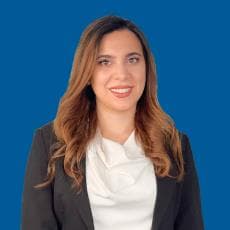
| 6 | Lana Hubaishy | Jabal Amman | Myopia or astigmatism patients needing evening appointments in Jabal Amman | 38/100 |
| 7 | Mohammad Abu Samak | 3rd Circle | Patients with retinal or diabetic eye history considering vision correction | 37/100 |
| 8 | Mohammad Farah | 7th Circle | Adults wanting a focused LASIK suitability consultation near 7th Circle | 34/100 |
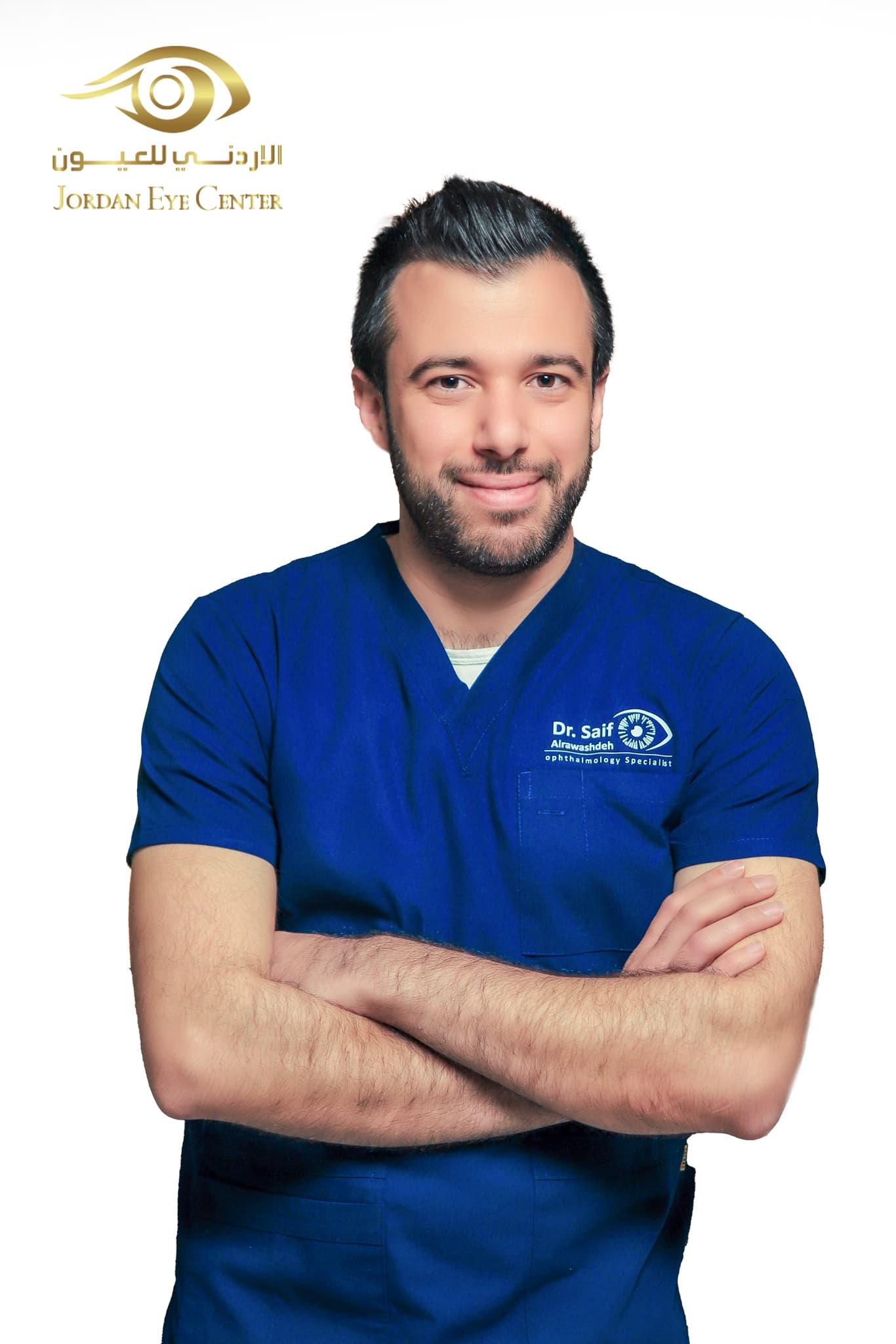
Dr. Saif Al Rawashdeh is an ophthalmology specialist. He graduated in medicine and surgery from Jordan University of Science and Technology and holds the Arab Board in Ophthalmology and the FICO qualification of the International Council of Ophthalmology. He practises at Jordan Eye Center on Mecca Street in Amman. His published services include laser and LASIK vision correction, along with cataract surgery, lens implantation, strabismus surgery and children's eye care. Confirmed hours are Saturday to Wednesday 08:00–19:00 and Thursday 08:00–16:00. His profile says appointments are coordinated according to the eye condition and doctor availability.
Suits: Families wanting LASIK plus children's and strabismus care at one centre
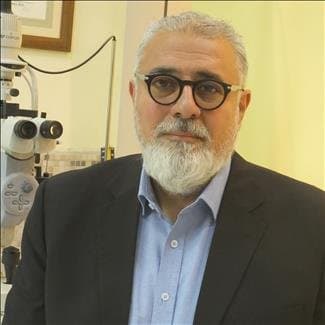
Dr. Khaled Sharif is a consultant ophthalmologist and medical director of Sharif Eye Centers. He sees patients at the Amman branch in Jabal Amman. He holds fellowships of the Royal College of Surgeons in Glasgow and the Royal College of Ophthalmologists in London. His profile states that he co-authored an atlas of corneal dystrophies and degenerations with T. A. Casey and has trained ophthalmic surgeons in refractive procedures. His published services include LASIK, corneal topography and imaging, cross-linking and other keratoconus treatment, keratoplasty, permanent lens implantation and cataract surgery. Confirmed hours are Saturday to Thursday, 09:00–22:00.
Suits: Patients with corneal concerns, such as keratoconus, exploring vision correction
Dr. Amer Hajjaj is an ophthalmologist and eye surgeon. He graduated from the University of Jordan and completed his ophthalmology residency at the Jordanian Royal Medical Services. He holds the Jordanian and Arab Boards in Ophthalmology, Fellowship of the International Council of Ophthalmology and Membership of the Royal College of Surgeons of Edinburgh. At his own clinic at Fifth Circle, Amman, his published services include LASIK and PRK vision correction, keratoconus assessment and treatment, dry eye treatment, contact lens fitting, cataract, glaucoma and diabetic eye care, and children's vision checks. Confirmed hours are Saturday to Wednesday 09:00–18:30 and Thursday 09:00–15:00.
Suits: Adults comparing LASIK with PRK, or with dry eye concerns
Dr. Khalaf Houshan works within the Jordan Eye Center team on Mecca Street, Amman. His profile describes postgraduate ophthalmic study and microsurgical training in Moscow, including a doctorate in microsurgery for myopia from the Fyodorov Eye Microsurgery Center. His published work focuses on assessment and laser vision correction, LASIK, cataract surgery and lens implantation. His care also covers childhood amblyopia (lazy eye). His biography notes that suitability for refractive correction or cataract surgery is discussed after examination. Confirmed hours are Saturday to Wednesday 08:00–19:00 and Thursday 08:00–16:00.
Suits: Nearsighted adults wanting a laser-correction assessment on Mecca Street
Dr. Yazan Salameh is a senior ophthalmology specialist and a fellow of the European Board of Ophthalmology. According to his biography, he is also a member of the American refractive surgery society. At Jordan Eye Center on Mecca Street, Amman, his practice focuses on refractive correction, cataract surgery and lens implantation. His published services include assessment of vision-correction options, LASIK, femtosecond LASIK, implantable vision-correction lenses and multifocal lens implantation. His profile notes that eye measurements and corneal assessment inform the choice of procedure. Confirmed hours are Saturday to Wednesday 08:00–19:00 and Thursday 08:00–16:00.
Suits: Comparing femtosecond LASIK with implantable lenses after corneal assessment
Dr. Lana Hubaishy is an ophthalmology specialist with a medical degree from the University of Jordan, the Jordanian Board in Ophthalmology and fellowship training in refractive laser surgery. Her listed sub-specialties are eye surgery and LASIK and vision correction. She is part of the Sharif Eye Centers team at the Jabal Amman branch. Her focus is refractive assessment and vision-correction options based on each patient's examination and corneal condition. Her published services include LASIK, corneal topography, corneal examination, myopia correction and astigmatism treatment. Confirmed hours are Saturday to Thursday, 09:00–22:00. Appointments should be confirmed through the centre.
Suits: Myopia or astigmatism patients needing evening appointments in Jabal Amman
Dr. Mohammad Abu Samak is a consultant ophthalmologist. He studied medicine and surgery at the University of Jordan, holds the Arab Board in Ophthalmology and completed a vitreoretinal fellowship at Henry Ford Hospital in the United States. His listed sub-specialties are LASIK and vision correction, cataract and vitreoretinal surgery. He sees patients at Amman Eye Clinic on Ibn Khaldoun Street (3rd Circle). His published services include laser vision correction and LASIK, keratoconus cross-linking, corneal imaging, cataract surgery, and diabetic and retinal care. His confirmed hours are limited: Saturday 10:00–18:00, and Monday and Wednesday 16:00–18:00.
Suits: Patients with retinal or diabetic eye history considering vision correction
Dr. Mohammad Farah is an ophthalmologist at Shami Eye Center at 7th Circle, Amman. He completed medical and higher specialty studies in ophthalmology at the University of Jordan. He holds the Jordanian Board in Ophthalmology, FRCS Glasgow and Fellowship of the International Council of Ophthalmology. His published services are LASIK vision correction and adult ophthalmology consultations. His profile notes that suitability for vision correction is assessed during the consultation. Confirmed hours are Saturday to Wednesday 09:00–17:00 and Thursday 09:00–14:00, which suits morning and early-afternoon visits.
Suits: Adults wanting a focused LASIK suitability consultation near 7th Circle
Every matching doctor profile in this country was scored out of 100 for how complete and checkable its published information is, and the highest scores appear here in order. Featured placement does not change a profile's score, and the score does not measure treatment quality or outcomes — it tells you how much you can check before you call.
Ties are broken by the number of approved reviews, then published years of experience. Confirm the service, branch, appointment, fees and insurance coverage with the practice before visiting.
LASIK is a planned, elective operation. It is not an emergency treatment. It reshapes the cornea, the clear front window of the eye, so that light focuses properly on the retina. It is used to reduce or remove the need for glasses or contact lenses in people with:
The process usually has four stages: a comprehensive exam, creation of a thin corneal flap, laser reshaping beneath the flap, and a fairly quick recovery. The laser part typically takes about 10–20 minutes for both eyes.
There are several types of procedure:
Which option is suitable, if any, can only be decided after measurements of your eyes.
Mainstream guidance generally expects candidates to:
Pregnancy, severe dry eye, some autoimmune conditions and certain eye diseases may mean waiting or choosing a different approach. LASIK does not stop the age-related need for reading glasses that usually starts in the mid-40s.
It makes sense to book an assessment if glasses or lenses are limiting your work, sport or daily life, or if you cannot tolerate contact lenses.
Get urgent care, and call 911 in an emergency, if you have:
After any eye surgery, contact your surgeon at once if you have increasing pain, worsening vision, spreading redness or discharge.
There is no single verified list of the best LASIK surgeons in Jordan, and this page does not rank surgical skill. Instead, use the published records to narrow your options:
A LASIK assessment usually takes longer than a routine eye test. It often includes:
Before you go:
Questions worth asking:
Many insurance policies treat vision correction as elective, so check with your insurer before you book rather than assuming cover. Ask the clinic directly:
When you book, confirm which doctor you will see and the exact session time. Several profiles here note that appointments are arranged through the centre.
This is a kingdom-wide list for Jordan, and each profile states its own address. All eight listed doctors are in Amman:
You should not drive after dilating drops or on the day of surgery, so plan a lift or a taxi.
If you are travelling from another city or from abroad, allow time for:
Ask your surgeon when it is safe to fly or travel after the operation.
This page helps you compare published profiles; it is not medical advice and does not rank clinical skill. In an emergency call 911 or go to the nearest emergency department.