

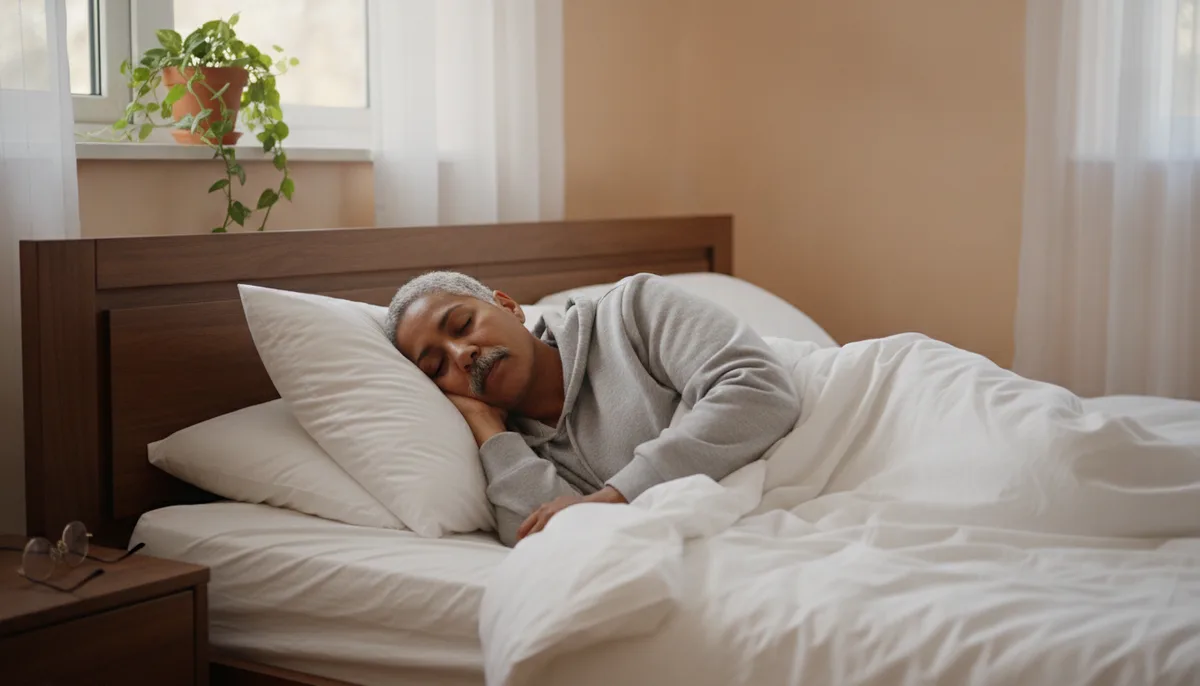
How many hours of sleep does a person need? Experts recommend 7 to 9 hours per night for adults, 8 to 10 hours for teenagers, and 9 to 12 hours for children aged 6 to 12, with more for young children who also nap [2]. For most adults, 6 hours is not enough, as sleeping less than 7 hours is linked to more health problems. If daytime tiredness continues despite sufficient sleep, consult a doctor.
How many hours of sleep does a person really need? The answer changes with age and is affected by lifestyle, health status, and the quality of sleep itself [1]. In this guide, we present the recommended numbers for each age group, answer the question "Is 6 hours enough?", and explain sleep debt, shift work, and signs of sleep disorders that warrant evaluation.
How many hours of sleep does a person need by age?
Recommendations depend on age and include naps for young children. Newborns under 4 months have highly variable sleep patterns, and no single number applies to them [2].
| Age group | Recommended sleep per day | Note |
|---|---|---|
| Infants (4 months – 1 year) | 12 – 16 hours | Includes naps |
| 1 to 2 years | 11 – 14 hours | Includes naps |
| 3 to 5 years | 10 – 13 hours | Includes naps |
| 6 to 12 years | 9 – 12 hours | - |
| Teenagers (13 – 18 years) | 8 – 10 hours | The biological clock usually shifts later |
| Adults (18 years and older) | 7 – 9 hours | At night |
Sources: [1] [2]. These are general recommendations, not a strict limit for everyone.
The numbers reflect quantity only, but quality matters too. Someone whose sleep is frequently interrupted may not get enough of certain sleep stages, even after spending many hours in bed [1].
Is 6 hours of sleep enough? How many hours does an adult need?
For adults, experts recommend sleeping 7 to 9 hours every night [2]. Therefore, 6 hours is below the minimum recommended for most people.
Sources indicate that people who sleep less than 7 hours per night may have more health problems than those who sleep 7 hours or more [2]. The problem is that many people get used to sleeping little and think they are fine, while the effects appear in concentration and mood.
Two simple questions to assess your sleep
Ask yourself the following questions. If your answer is "yes" to any of them, you may need to improve your sleep habits [1]:
- Do I have difficulty waking up in the morning?
- Do I have difficulty concentrating during the day?
- Do I doze off during the day unintentionally?
Is sleeping more than 9 hours harmful?
Not necessarily. Sleeping more than 9 hours may not be harmful, and it may benefit young people, those recovering from sleep deprivation, and patients [2]. However, if you sleep for long periods and still feel severe drowsiness during the day, read about hypersomnia and daytime sleepiness despite adequate sleep hours in our guide.
How many hours of sleep does a child and a teenager need?
A child needs more hours of sleep than an adult, because sleep is linked to growth. During deep sleep stages, growth hormone is released, which helps children grow and helps everyone repair muscles and tissues [1].
According to sleep experts, naps are appropriate for children under the age of 7 [2]. You can review a brief answer about children's sleep hours at different ages in our guide.
Why do teenagers go to sleep late?
During puberty, the biological clock changes, and teenagers tend to fall asleep and wake up later. This conflicts with early school start times, which is one reason many teenagers get too little sleep [1].
What helps the family here is organizing bedtime and keeping screens out of the teenager's bedroom, not blame. If your child snores loudly or shows signs of breathing interruptions during sleep, review our article on obstructive sleep apnea during sleep in children, tonsils, and snoring.
Do older adults need less sleep?
Some people believe that an adult's need for sleep decreases with age, but there is no evidence to support this. What happens is that older adults often sleep for less time, spend less time in restorative deep sleep stages, and wake more easily [1].
Therefore, an older adult's complaint of fragmented sleep deserves attention, and it should not be dismissed on the grounds that it is "just part of getting older."
What is sleep debt, and can it be repaid?
Sleep debt is the accumulated shortfall between the hours of sleep your body needs and what you actually get. A person who sleeps 6 hours every night while needing 8 will accumulate a deficit day after day.
Sources state that sleeping more than 9 hours may benefit those recovering from sleep deprivation [2]. It is practical to give yourself extra sleep time over several consecutive nights, while maintaining a fixed bedtime and wake-up time every day [1].
What does sleep deprivation do to your body?
Sleep deprivation does not only cause tiredness. It impairs clear thinking, reaction speed, and memory formation, and increases the likelihood of errors and accidents [1]. Its effects on mood include:
- Irritability and quick temper.
- Relationship problems, especially among children and teenagers.
- Depression and anxiety.
In the long term, insufficient or poor-quality sleep increases the risk of high blood pressure, heart disease, stroke, kidney disease, obesity, and type 2 diabetes [1]. Sleep deprivation also amplifies the effect of alcohol, so a sleep-deprived person is more affected than a well-rested person after the same amount [1].
How can you improve your sleep step by step?
First, allocate enough time for sleep in your schedule, then try the following habits [1]:
- Go to bed and wake up at the same time every day.
- Avoid caffeine, especially in the afternoon and evening, and avoid nicotine.
- Exercise regularly, but not close to bedtime.
- Avoid alcohol, large meals, and large amounts of drinks late at night.
- Do not nap after 3 p.m.
- Keep your room cool, dark, and quiet, and move the TV, computer, and phone away from your bed.
- Get exposure to sunlight during the day.
- If you cannot fall asleep within 20 minutes, get up, do something relaxing, then return to bed.
If the problem persists despite these steps, the cause may be insomnia or another disorder. Read Insomnia and Sleep Disorders: Causes and Treatment, and learn about cognitive behavioral therapy for chronic insomnia, which is offered as an alternative to sleeping pills. Do not stop or start any medication without consulting your doctor or pharmacist.
How can you sleep well if you work shifts?
Shift work makes it harder to get good sleep, because it goes against your body's natural rhythm. For some people, the situation may develop into shift work sleep disorder. Sources suggest the following [1]:
- Take naps and increase your total sleep time.
- Keep bright lighting at the workplace.
- Reduce how often you change shifts so your body can adapt.
- Limit caffeine to the beginning of your shift.
- When sleeping during the day, remove noise and light from the bedroom by using blackout curtains or earplugs.
Do not reduce your sleep goal just because it is daytime. Your overall sleep need remains within the range recommended for your age.
When is the cause sleep apnea or another disorder?
You may sleep for enough hours and still wake up tired. Sources recommend consulting a healthcare provider when sleep problems persist, as the cause may be a disorder such as insomnia or sleep apnea. The doctor may suggest a sleep study or other treatments [1].
Signs that usually prompt consideration of sleep apnea include:
- Loud and frequent snoring.
- Pauses in breathing noticed by someone sleeping beside you, or choking or gasping during sleep.
- Morning headaches and dry mouth upon waking.
- Severe daytime sleepiness and poor concentration despite seemingly adequate sleep hours.
These signs do not confirm a diagnosis, and the doctor decides on the appropriate test. A sleep study records what happens during the night, and you can find an explanation in sleep study (Polysomnography). If your sleepiness is excessive without a clear cause, also read about Narcolepsy, which is one cause of daytime sleepiness.
When should you see a doctor, and when should you go to the emergency room?
See a doctor if:
- Difficulty sleeping or frequent waking persists despite improving your habits [1].
- You doze off during the day or repeatedly experience poor concentration.
- People around you notice loud snoring or pauses in your breathing during sleep.
- You sleep less or more than is appropriate for your age or your child's age [2].
- Mood symptoms such as anxiety or depression appear alongside a sleep disorder.
Go to the emergency room or call 911 if:
- You experience severe chest pain or sudden shortness of breath.
- Sudden weakness appears on one side of the body, or you have difficulty speaking.
- You have thoughts of harming yourself. Seek help immediately and do not stay alone, as this condition is treatable.
If you feel drowsy while driving, pull over in a safe place, as sleep deprivation increases the risk of accidents [1].
How do you find the right doctor or clinic in Jordan?
Start by identifying the problem: is it difficulty falling asleep, fragmented sleep, daytime sleepiness, or snoring? Then choose the appropriate page. You can browse sleep disorders treatment, insomnia treatment, or sleep and comfort skills. You can also find the directory of insomnia assessment clinics in Jordan and sleep medicine clinics in Amman, and search by governorate.
What should you check in a doctor's profile?
- Specialty and area of interest, such as sleep medicine, ENT, pulmonology, psychiatry, or pediatrics.
- Location, governorate, working hours, and the contact or booking methods available in the profile.
- Services listed, such as insomnia assessment or conducting a sleep study.
Questions to ask at the appointment
- Do I need a sleep study, and where is it performed?
- Is modifying my habits enough, or do I need another treatment?
- What should I record before the visit? It helps to keep a two-week sleep diary noting bedtimes, wake-up times, naps, and caffeine intake.
For children, you can start with a pediatrician or a nearby maternal and child health center. For more on common sleep problems, read the insomnia page.
Frequently asked questions
Is 6 hours of sleep enough for an adult?
It is not enough for most adults, as the general recommendation is 7 to 9 hours per night. People who sleep less than 7 hours may have more health problems, and their concentration and mood may be affected. If you feel tired and have poor concentration during the day, try moving your bedtime earlier, and consult a doctor if the complaint persists.
How many hours of sleep does a school-age child need?
A child aged 6 to 12 needs 9 to 12 hours of sleep per day, and a teenager aged 13 to 18 needs 8 to 10 hours. These are general numbers. If your child seems to sleep less or more than necessary, consult a pediatrician.
Can I make up for lost sleep on the weekend?
Extra sleep may benefit those recovering from sleep deprivation, and sleeping more than 9 hours is not necessarily harmful in that case. However, it is best to keep a fixed bedtime and wake-up time throughout the week, and not rely on delayed catch-up sleep after days of staying up late.
Do older adults sleep less because they need less sleep?
There is no evidence that an adult's need for sleep decreases with age. What happens is that older adults often sleep for less time, spend less time in deep sleep, and wake more easily. If fragmented sleep or daytime sleepiness bothers them, it is helpful to discuss it with a doctor.
What are the signs of sleep apnea?
Common signs include loud, frequent snoring, pauses in breathing noticed by someone beside you, gasping during sleep, morning headaches, and severe daytime sleepiness. These signs do not confirm a diagnosis, and a doctor may request a sleep study to determine the cause and appropriate treatment.
How can I sleep well if I work shifts?
Try taking naps that increase your total sleep time, keep bright lighting at work, minimize changes between shifts, and limit caffeine to the beginning of your shift. When sleeping during the day, make the room dark and quiet using blackout curtains or earplugs. If exhaustion persists, consult a doctor.
Sources and references
- Healthy Sleep — MedlinePlus — U.S. National Library of Medicine. Accessed: 2026-10-26.
- How Sleep Works - How Much Sleep Is Enough? | NHLBI, NIH — www.nhlbi.nih.gov. Accessed: 2026-10-26.