How can a colleague use my notes before the next session?
Save session notes and the plan in the client file and review your colleague’s access permissions. Authorized users can read prior documentation and add their own visit notes.
An everyday clinic example
Another occupational therapist takes the next session
The authorized colleague reads the plan and previous notes before attending the client. They document the session and create the required coordination task. Reception follows attendance and the next booking, leaving completed work retrievable for the original therapist.
Share the record with practitioners according to their permissions.
Record session activities and follow-up notes and attach the plan to the client file. Visit history lets the practitioner review documented work before the next appointment without gathering paper progress notes.
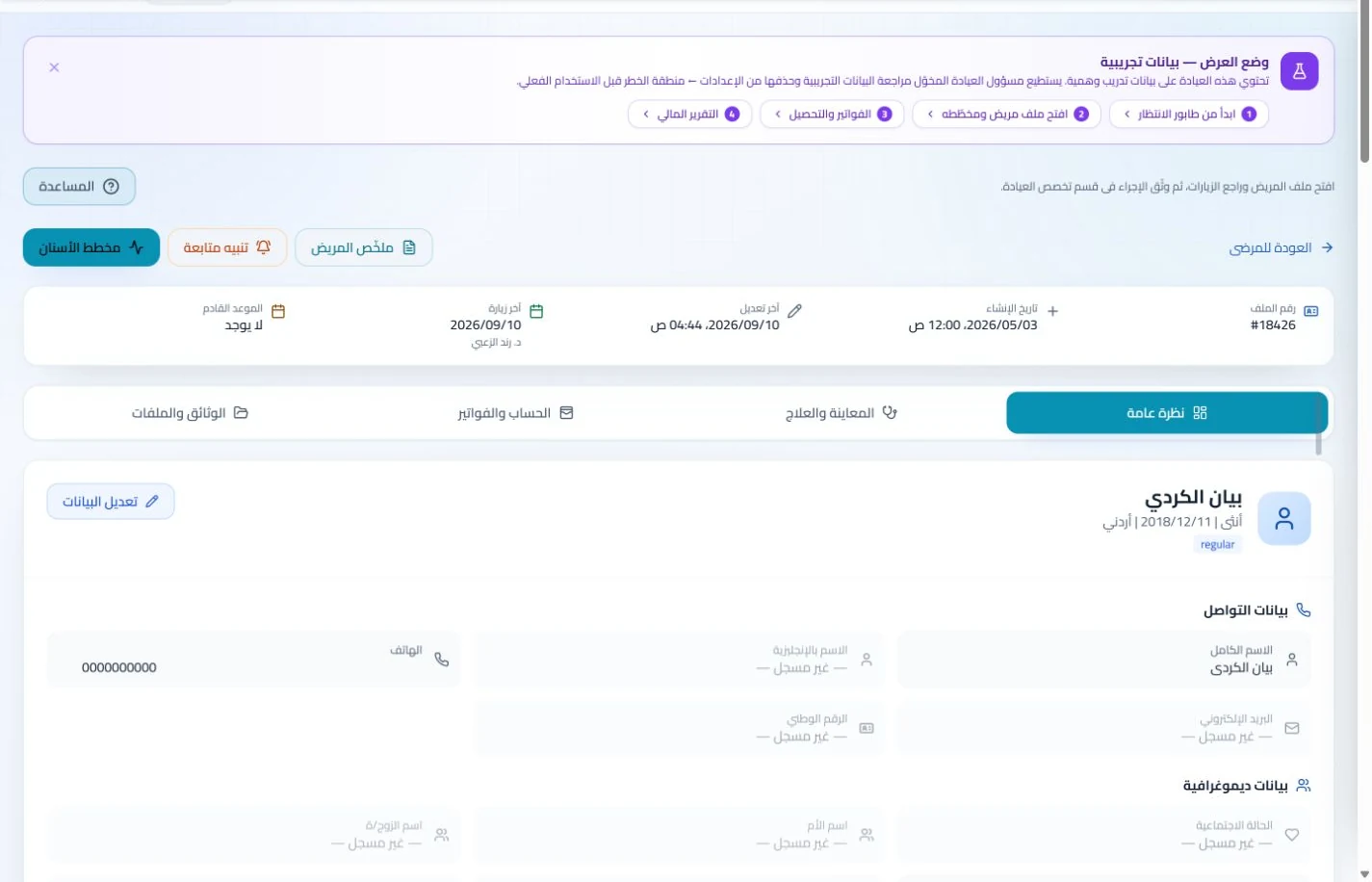
Patient records
Keep patient details, visits, attachments, prescriptions and plans in a retrievable record. Recording information during the visit reduces later searching and repeated documentation.
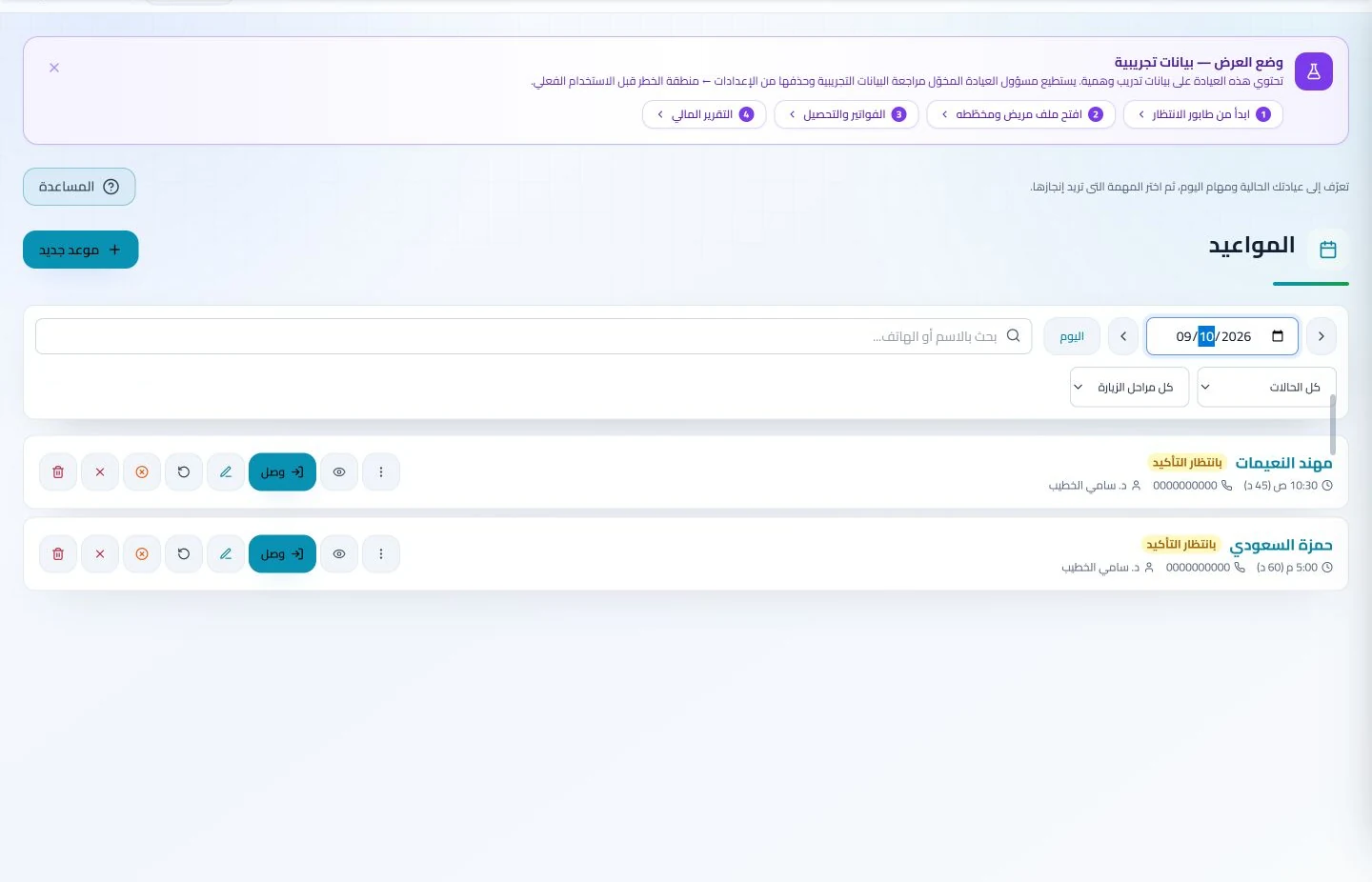
Book, change and cancel appointments and follow attendance, the waiting queue and working hours. Updating states during the day gives clinicians and reception a common scheduling reference.
Define centre rooms and team tasks and log activity materials managed as stock. Responsible staff can review quantities before preparation instead of discovering that a familiar consumable has run out.
Branches and team
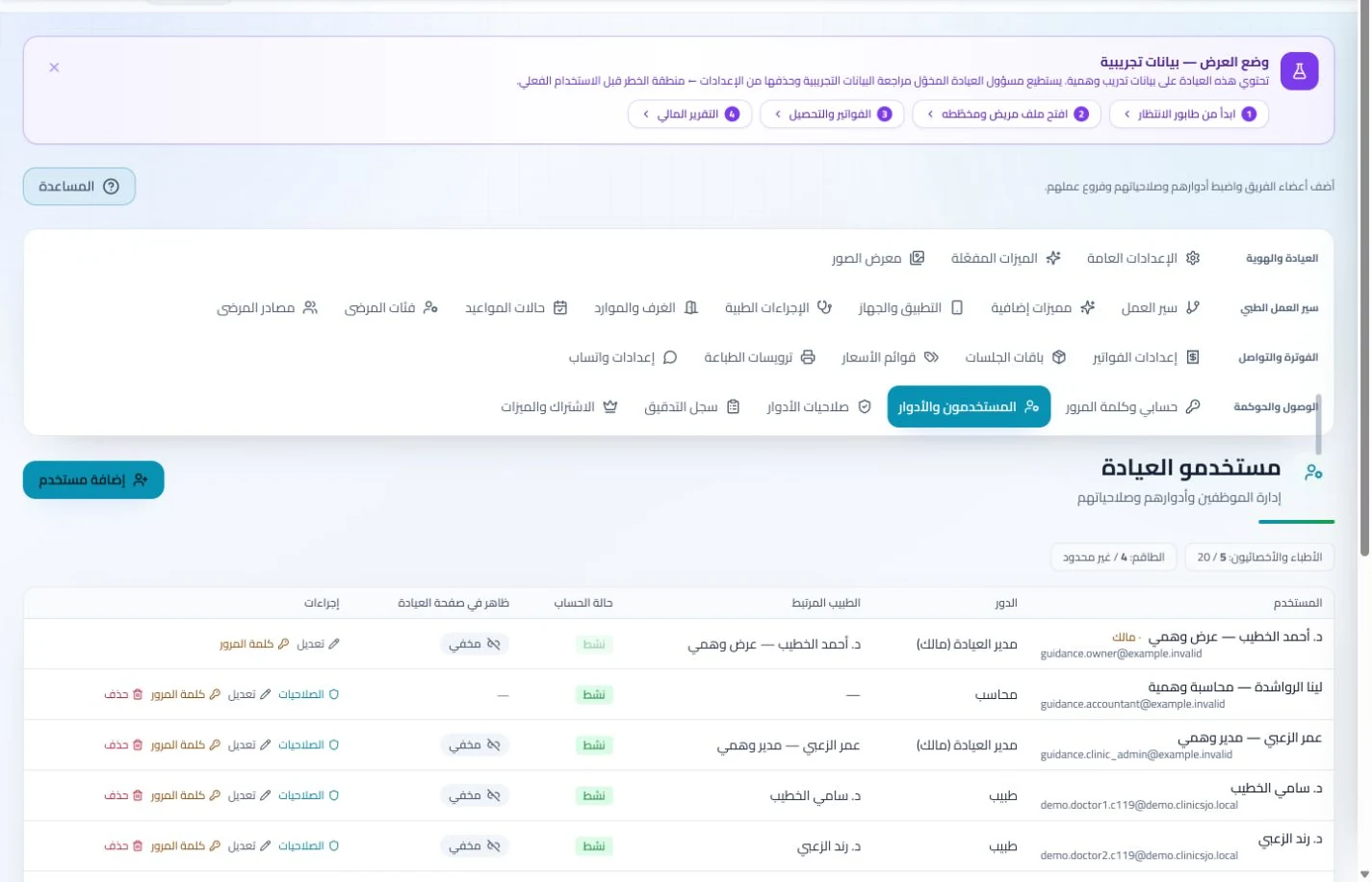
Configure services, prices, rooms and branches with user permissions and team tasks. Defined roles and follow-up ownership clarify handovers and reduce internal questions about the next administrative action.
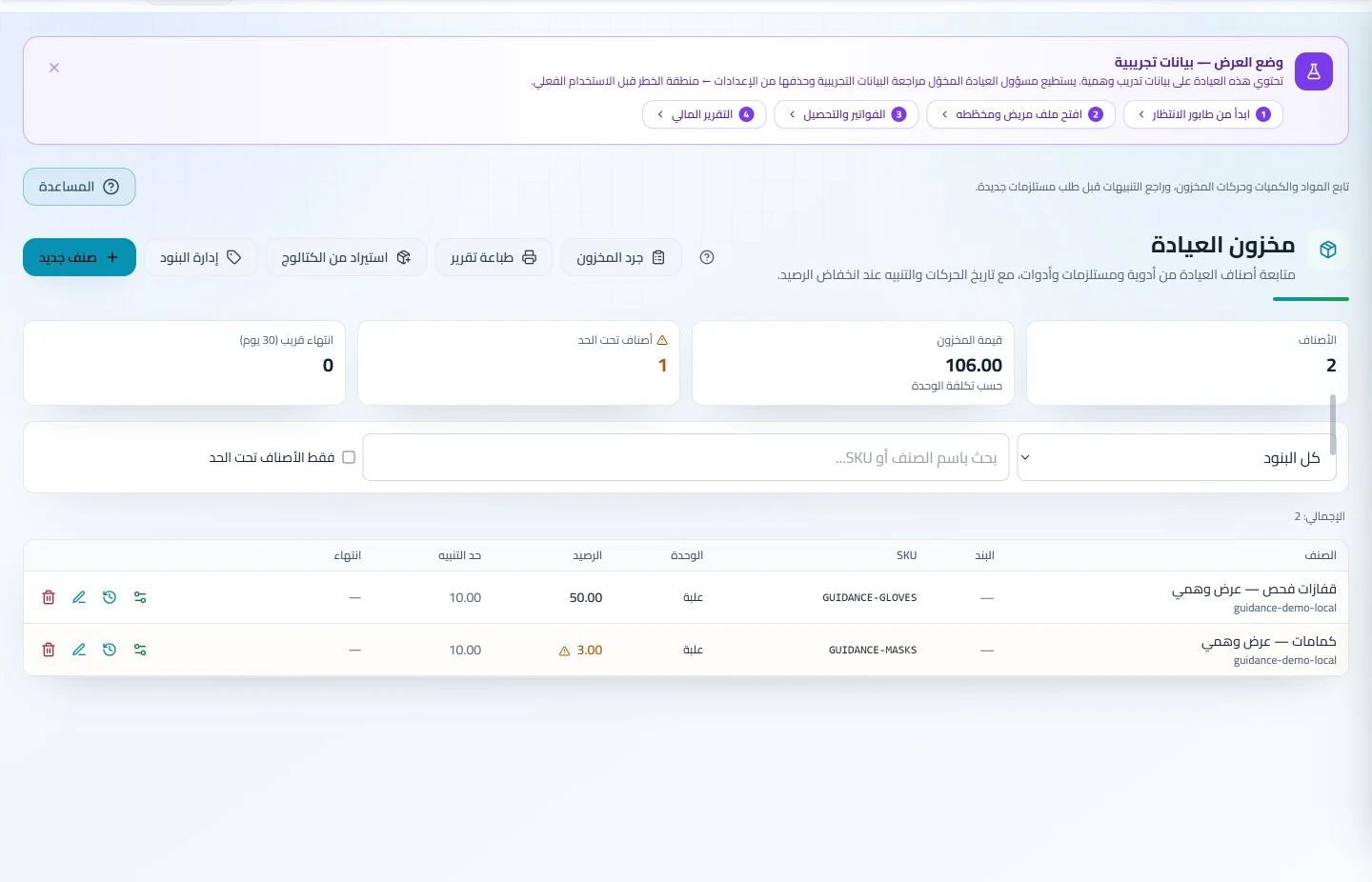
Track items, quantities, storage, movements and stocktakes with low-stock and expiry alerts. Accurate balances require logged receipts and usage; review them to identify replenishment needs before supplies run out.
Record delivered services and payments, then review balances and expenses. The centre can answer payment questions from financial records rather than treating an attendance mark as proof of payment.
Invoices and collections
Manage invoices, receipts, payments, outstanding balances and installments when enabled. Recording payments when received distinguishes collected amounts from balances needing follow-up without repeated manual calculation.
Organize income, expenses and cash accounts with financial reports and permission-based period locks. Recorded transactions give management a basis for account reviews without gathering figures from separate sources.
How can I compare management systems for an occupational therapy center in Jordan?
Test a handover between authorized therapists: save a plan and notes from two sessions, open them as a colleague and add a preparation task for the next visit. Assess chronology, ownership and invoice follow-up without re-entering information. ClinicsJo offers patient records, scheduling and tasks within available features, not automated occupational assessment. Compare permissions, therapist numbers and room options, and agree what can be imported versus entered manually before calculating migration costs.
Create your account, set up clinic details and services, and try the software free for 7 days. Then choose a clinic-management plan for your clinicians, team and required features.
A clinic-management subscription combines tools for patient records, appointments, billing and teamwork with a doctor and clinic profile on ClinicsJo. We prepare your profile for indexing and organize your specialty, services and location to support discovery in Google and AI-powered search. Tools and limits depend on your selected plan.
The plans page lists current prices, features and limits; some services require activation and setup.