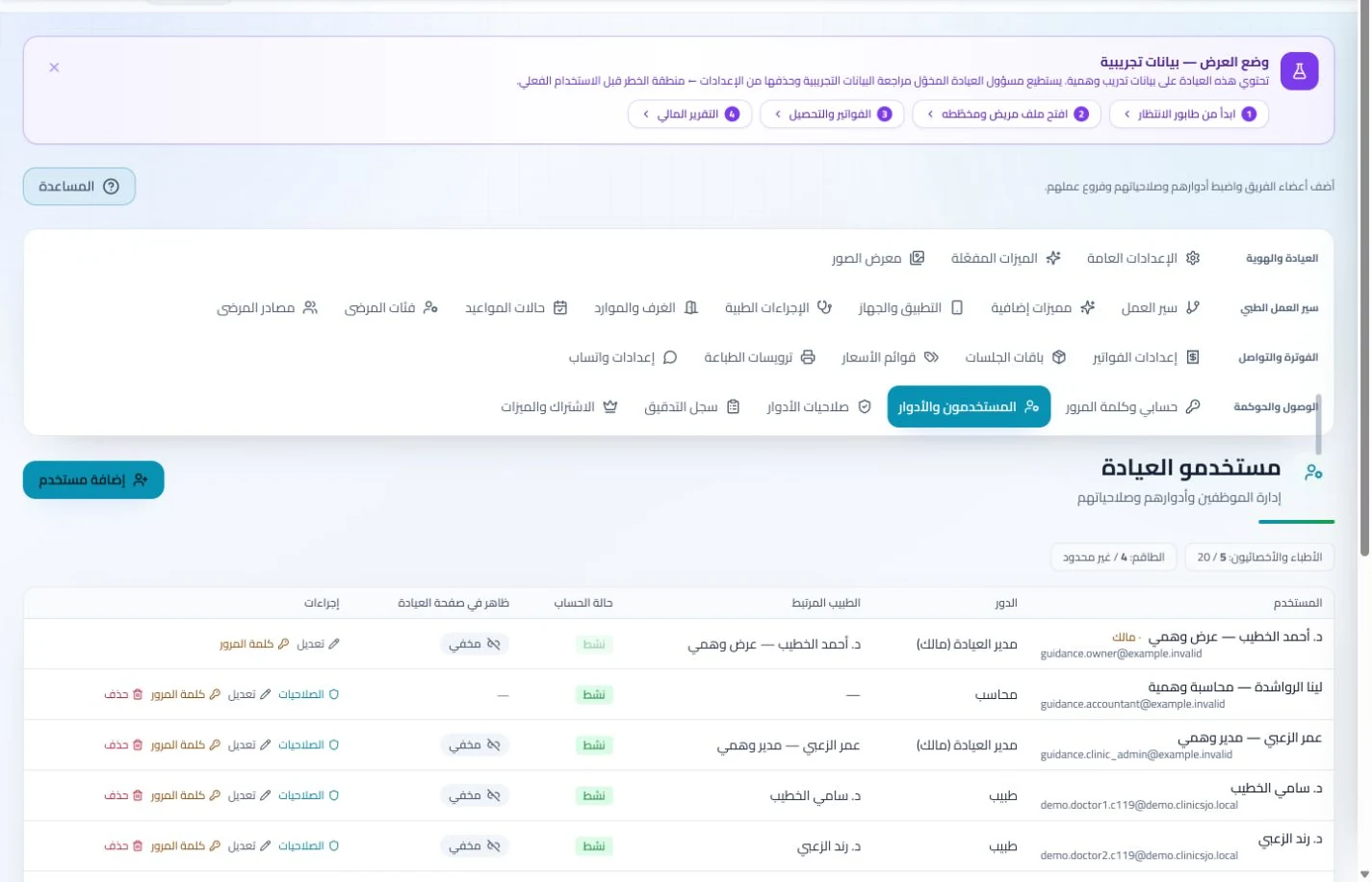
Psychiatry needs protected appointment time and retrievable professional records. Scheduling and staff permissions support attendance management without giving every employee access to notes.
Does reception need access to psychiatric session notes?
Assign roles according to tasks such as booking and collection. Review each role’s access to clinical records before using it in the practice.
An everyday clinic example
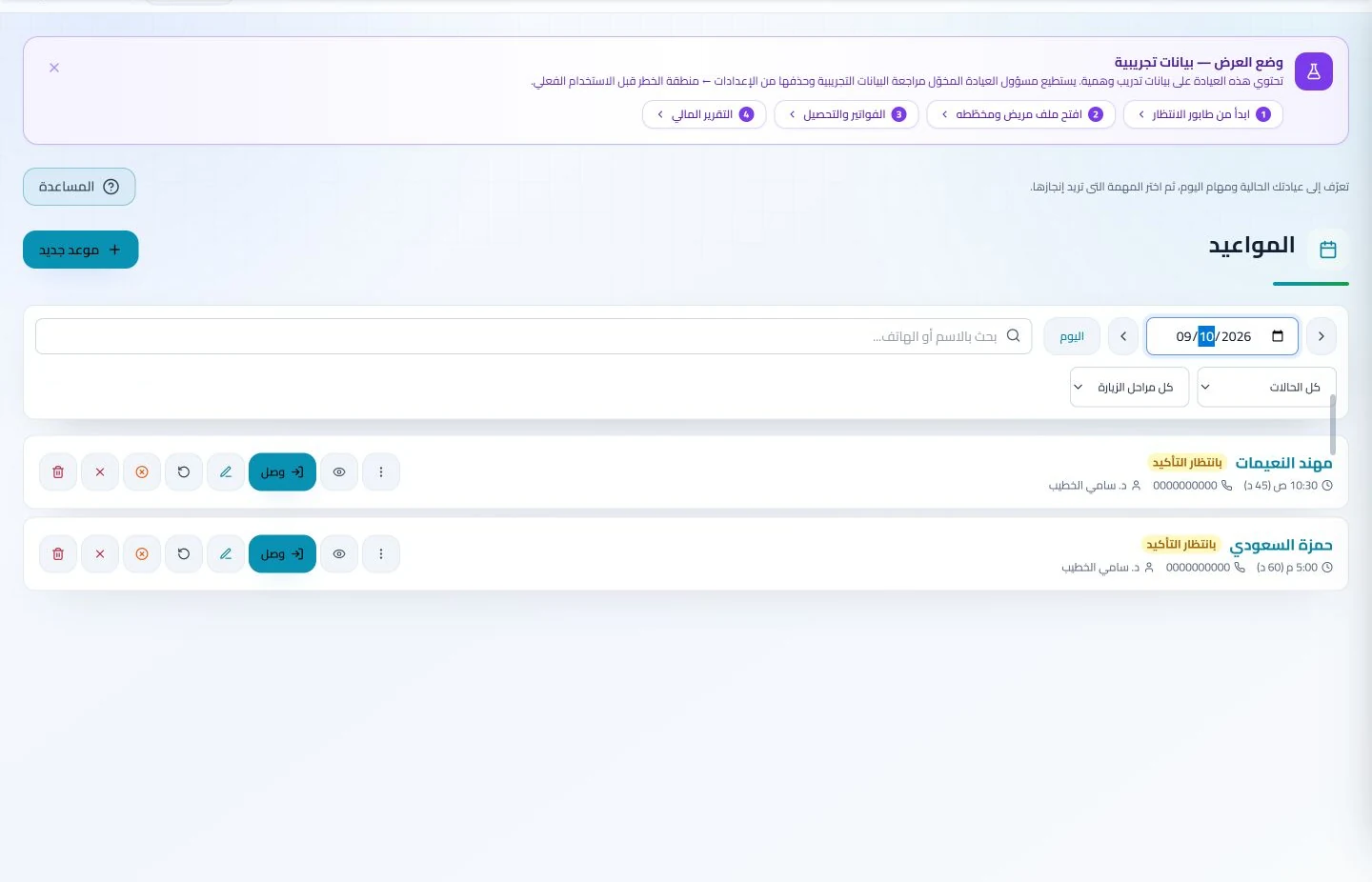
Rescheduling a psychiatric session
Reception handles permitted booking changes when a patient calls. Before the session retrieve your previous notes, then document the interview. Authorized staff record fees separately and coordinate the next appointment.
Set appointments for session and follow-up services.
Review permissions for access to clinical records.
Track session fees without copying clinical notes into the account.
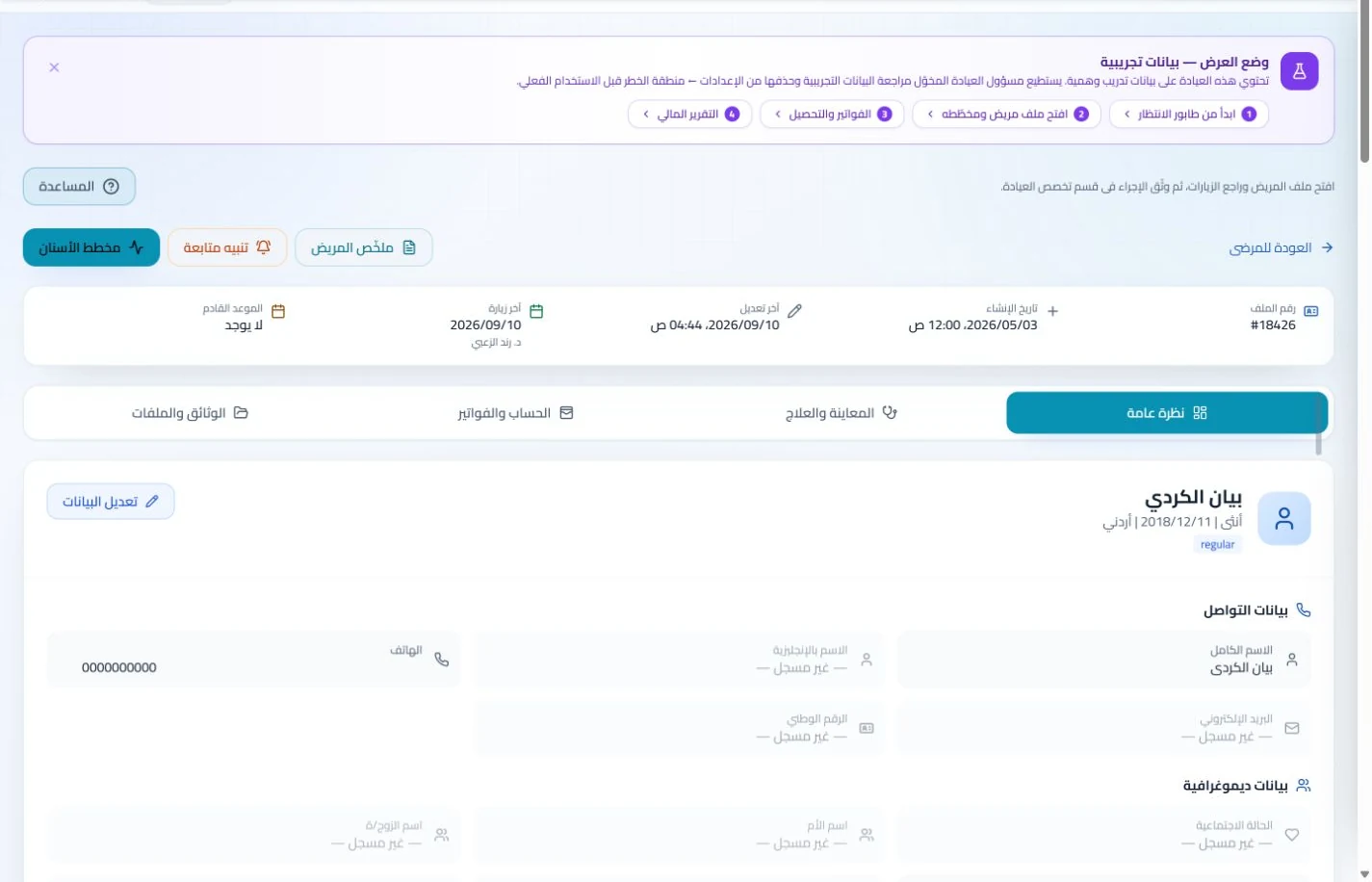
Keep follow-up notes in the patient record and configure access by staff role. Team members carry out authorized administrative work while documentation remains organized rather than scattered across papers.
Patient records
Keep patient details, visits, attachments, prescriptions and plans in a retrievable record. Recording information during the visit reduces later searching and repeated documentation.
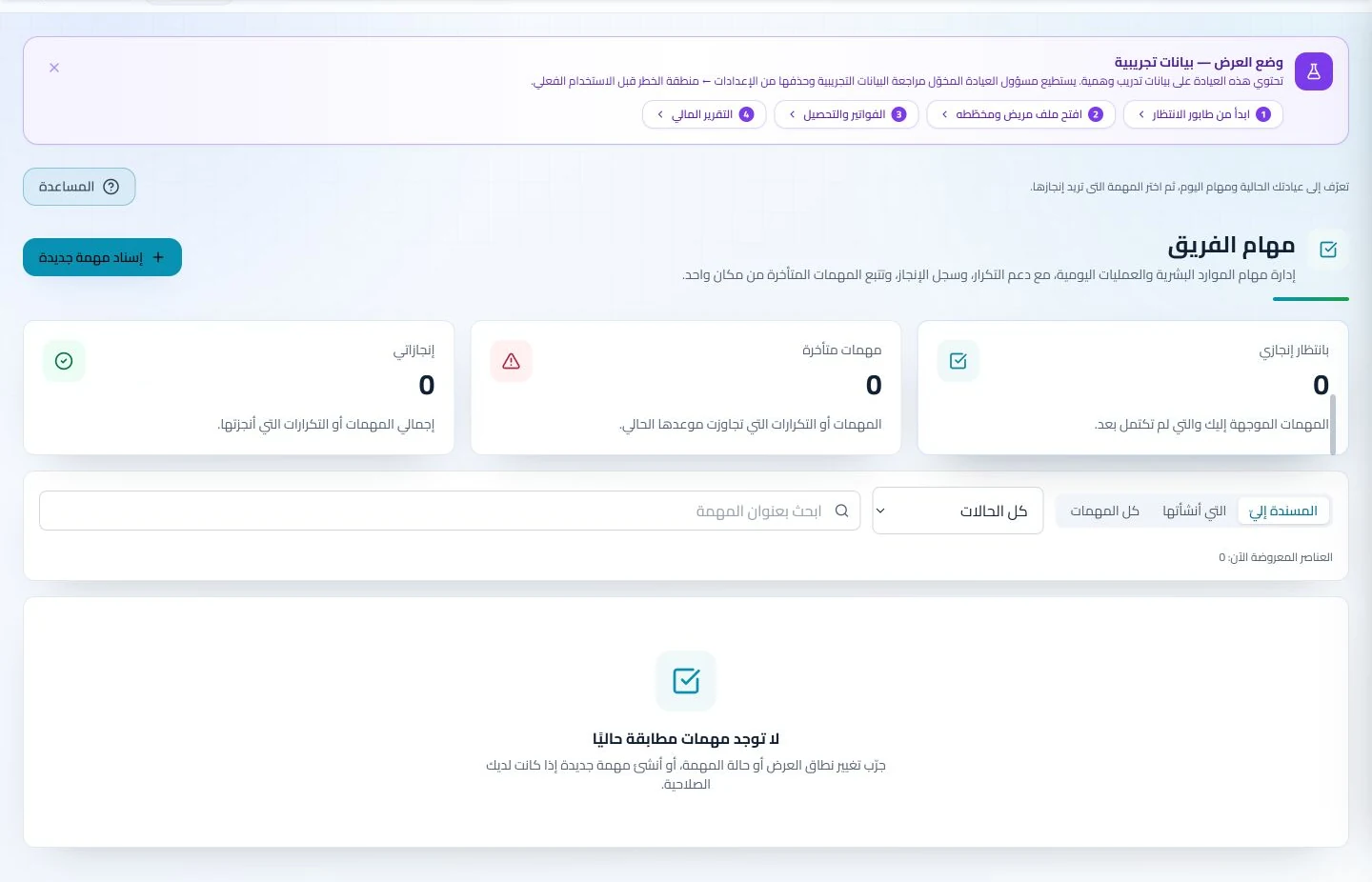
Configure services, prices, rooms and branches with user permissions and team tasks. Defined roles and follow-up ownership clarify handovers and reduce internal questions about the next administrative action.
Manage bookings, attendance and cancellations, with available communication settings aligned to clinic policy. A maintained schedule reduces internal calls asking which appointment arrangement is current.
Appointments
Book, change and cancel appointments and follow attendance, the waiting queue and working hours. Updating states during the day gives clinicians and reception a common scheduling reference.
Configure appointment reminders and enabled communication channels, with follow-up tasks and available message logs. Configured reminders reduce repetitive manual sending; delivery depends on service setup and activation.
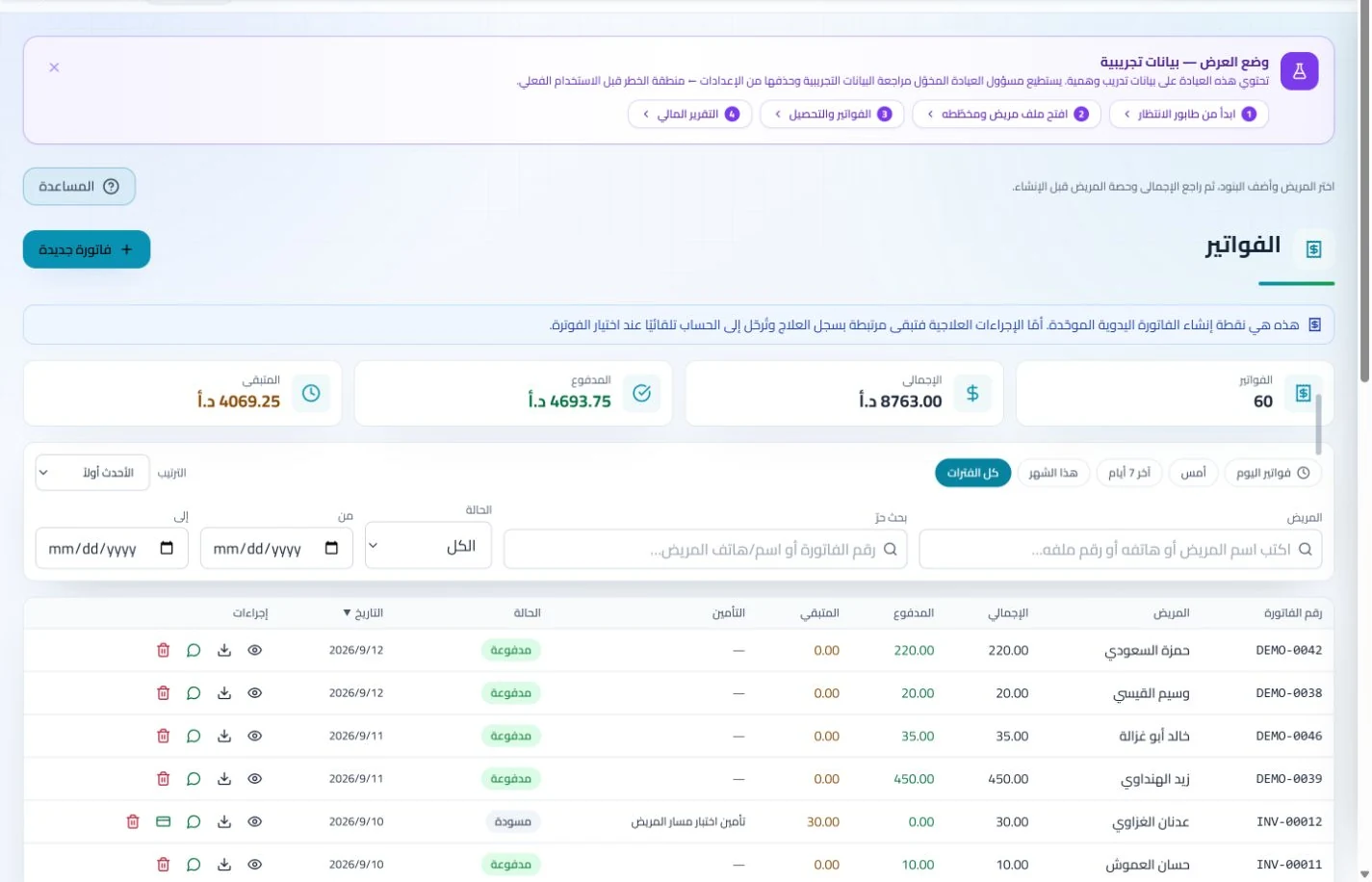
Record session charges and payments in the patient account and review collections and expenses. Authorized staff can check balances from financial records rather than searching consultation notes for payment details.
Invoices and collections
Manage invoices, receipts, payments, outstanding balances and installments when enabled. Recording payments when received distinguishes collected amounts from balances needing follow-up without repeated manual calculation.
Organize income, expenses and cash accounts with financial reports and permission-based period locks. Recorded transactions give management a basis for account reviews without gathering figures from separate sources.
How should a psychiatry clinic in Jordan assess staff access before choosing software?
Begin with two demonstration accounts assigned different responsibilities rather than relying on a general privacy statement. Change an appointment and record payment as reception, then inspect what that account can read compared with the clinician account. ClinicsJo offers roles and permissions, but their actual scope should be checked against clinic policy. Also inspect appointment details in messages and printouts, and agree on training and removal of departing staff access before adoption.
Create your account, set up clinic details and services, and try the software free for 7 days. Then choose a clinic-management plan for your clinicians, team and required features.
A clinic-management subscription combines tools for patient records, appointments, billing and teamwork with a doctor and clinic profile on ClinicsJo. We prepare your profile for indexing and organize your specialty, services and location to support discovery in Google and AI-powered search. Tools and limits depend on your selected plan.
The plans page lists current prices, features and limits; some services require activation and setup.