The carotid artery in the neck supplies most of the brain, and when it is narrowed by atherosclerotic plaque it can reduce perfusion or release small fragments that block a brain artery, causing a stroke or a transient ischaemic attack. Carotid artery catheterisation is a procedure in which a wire and catheter are passed from an artery in the groin or wrist, or directly from the neck, to reach and image the narrowed segment, which is then widened with a balloon and held open with a stent; a protection device that captures debris before it can reach the brain is usually employed.
It is important to distinguish a purely diagnostic procedure, whose aim is to image the artery, from a therapeutic one in which a stent is placed. Significant narrowing also has a surgical alternative, carotid endarterectomy, which is a well-established option. The choice between stenting, surgery and medical treatment alone is made by a team including vascular surgery, interventional radiology and neurology, according to the degree of narrowing, whether symptoms have occurred, the anatomy of the artery, age, coexisting disease and the experience of the centre. Suitability for any option is determined by examination and imaging, not by reading a page.
The limits are explicit: a stent reduces the risk of a future stroke; it does not repair earlier brain damage or restore the function of tissue that has died, and it does not prevent every stroke, because stroke has other causes including atrial fibrillation, small-vessel disease and uncontrolled blood pressure. Mild narrowing without symptoms may be managed with medication and risk-factor control alone, and the procedure itself carries a risk of stroke during or after it, so benefit is weighed against risk case by case.
The medicines that follow a stent are not a minor detail: antiplatelet therapy, statins, blood pressure and diabetes control and stopping smoking are what protect both the artery and the stent, and stopping them on personal initiative can lead to stent blockage. Patients and families must also know the signs of stroke precisely, because how quickly the hospital is reached determines the outcome of treatment.
2 specialists
Procedure steps
1
Neurological assessment and imaging
The patient is asked about episodes of weakness, numbness, slurred speech or temporary loss of vision, examined neurologically, and the neck is auscultated. The artery is assessed by duplex ultrasound then CT or MR angiography to measure the degree of narrowing, the shape of the plaque and the arterial anatomy, and the brain may be imaged to identify earlier injury. These findings underpin the choice between stent, surgery and medication.
2
Team decision and drug preparation
The case is discussed in a multidisciplinary team to choose the most appropriate option and its timing, particularly after a recent event. Antiplatelet medication is arranged beforehand exactly as the doctor specifies, cardiac and kidney status is assessed, and anticoagulants and diabetes drugs are reviewed. Benefit and risk are explained in plain language before consent, and a plan is made for blood pressure control during and after the procedure.
3
Access and cervical angiography
The procedure is usually performed under local anaesthesia with light sedation so the patient can still respond, with cardiac and blood pressure monitoring. A catheter is introduced through a small puncture in the groin, wrist or neck, and contrast is injected to image the carotid artery and its branches precisely and confirm the site of narrowing before any dilatation.
4
Cerebral protection and stenting
A protection device is usually deployed beyond the narrowing to capture any debris, then the segment is dilated with a balloon and a stent is placed to hold the wall and cover the plaque. You may feel pressure in the neck or a brief slowing of the pulse, which is treated at once. The protection device is withdrawn after flow is confirmed, and imaging and a neurological check are repeated before the procedure ends.
5
Neurological monitoring afterwards
Strength, speech, vision and level of consciousness are checked at short intervals, and blood pressure is controlled carefully because a marked rise or fall after stenting is harmful. The puncture site, the limb pulse, and urine output and kidney function after contrast are monitored. The medication plan and follow-up duplex appointments are explained, and the family is taught the signs of stroke and to call emergency services at once.
Before the procedure
Tell the team about all your medicines, especially antiplatelet drugs, anticoagulants and diabetes and blood pressure treatment, and start or adjust exactly what the doctor asks without stopping anything on your own. Report any episode of weakness, numbness, slurred speech or temporary loss of vision and exactly when it happened, since the timing changes the plan. Mention any allergy to contrast dye or iodine, any kidney disease, and any heart problem or atrial fibrillation. Bring your duplex and angiography reports and brain imaging if available. Stop smoking immediately, and get your blood pressure and diabetes controlled before the date. Fast before sedation for the stated period, and arrange a companion who will stay with you afterwards and who knows the warning signs of stroke.
After the procedure
Take your antiplatelet and statin medicines at exactly the dose and for the duration your doctor set, since stopping them early is among the greatest threats to the stent and the brain; if bruising or bleeding appears, see your doctor rather than stopping them yourself. Measure and record your blood pressure regularly, because control after stenting matters a great deal. Rest on the first day, avoid heavy lifting and strenuous effort for several days as instructed, and keep the puncture site clean and dry. Continue controlling diabetes and lipids and staying off tobacco, and keep your duplex follow-up appointments. **Call emergency services immediately for weakness, numbness or drooping on one side of the face or body, slurred speech or difficulty understanding speech, loss of vision in one eye or double vision, severe dizziness with loss of balance, sudden severe headache, confusion or a seizure: time is brain.** Return at once too for swelling, a pulsatile lump or bleeding at the puncture site, fainting with a very slow pulse, or chest pain.
Expected duration
The procedure usually takes 30 to 90 minutes depending on arterial anatomy, access difficulty and whether a stent is added. It is generally performed under local anaesthesia with light sedation. Neurological status and blood pressure are usually monitored overnight in hospital, longer if either is unstable. Return to normal activity is usually within days to two weeks as the team advises.
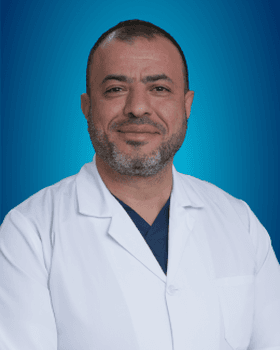
Dr. Munther Awni Al Saafin provides cardiology care at Jordan Hospital and Medical Centre. His interests include complex coronary intervention, chronic total co…
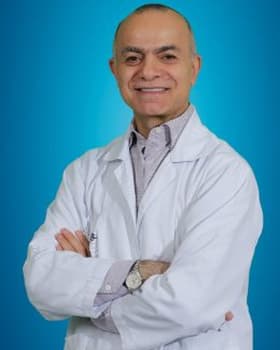
Dr. Imad Al Haddad practices cardiology and interventional cardiovascular medicine at Jordan Hospital. His work includes complex coronary disease and assessment…
Finding Carotid artery catheterization services in Jordan
Which doctors are listed for Carotid artery catheterization in Jordan?
There are currently 2 doctor profiles linked to Carotid artery catheterization on ClinicsJo. Review the listed services and contact the practice to confirm availability with the doctor and branch you choose.
How can I find an appointment for Carotid artery catheterization?
Start with an available doctor's profile and use the contact or booking options shown there. Confirm the service, practice location and appointment time with the clinic. If this list is empty, broaden your search using the directory links on this page.
What does Carotid artery catheterization cost in Jordan?
Ask the practice for the current price and what it includes. A consultation fee shown on a profile is not necessarily the price of a procedure, tests or follow-up. Confirm any additional charges and insurance arrangements before your visit.
Explore related Vascular Catheterization doctor directories