Interventional cardiac catheterization Doctors in Jordan
القسطرة القلبية التداخلية
Interventional cardiac catheterization treats a problem inside the heart or its arteries from within the blood vessel itself. A thin flexible tube (catheter) is introduced through an artery at the wrist or upper thigh and guided under X-ray to the heart. Unlike a purely diagnostic study, it does not stop at imaging: once the narrowing or blockage is located, the cardiologist widens it with a balloon, implants a stent, or reopens a closed artery. This is usually done under local anaesthesia while you are awake, without opening the chest.
The commonest reasons are angina that does not settle on medication, a stress test or scan showing significant reduced blood supply, or an acute heart attack that needs the artery opened quickly. **If you feel pain, pressure or heaviness in the centre of the chest spreading to the arm, jaw or back, together with sweating, nausea or breathlessness, call an ambulance immediately: do not wait for it to pass, and do not drive yourself to hospital.** Time is heart muscle, and every minute of delay means more tissue lost permanently. **Symptoms can be atypical in women, older adults and people with diabetes: profound unexplained fatigue, nausea, breathlessness, or upper abdominal or back discomfort with no clear chest pain — these are no less serious.**
Know what the procedure does not do. **A stent or balloon treats one specific narrowing; it does not treat atherosclerosis itself.** The disease remains in the rest of the arterial tree after a technically perfect result, which is why lipid-lowering medicines, antiplatelet therapy, blood-pressure and diabetes control, stopping smoking and graded exercise continue afterwards — those are what protect your remaining arteries. Catheterization also cannot repair heart muscle already damaged by an earlier infarction, and it is not a substitute for surgery in every case: some multi-vessel or complex disease is better treated by bypass surgery, and that decision belongs to the heart team.
Suitability is decided by clinical assessment and test results, not by reading. Your doctor reviews your symptoms, ECG, cardiac enzymes, echocardiogram, kidney function and your ability to take antiplatelet medicines reliably. For borderline narrowings a pressure wire or intravascular imaging may be used first, because not every narrowing seen on a picture deserves a stent.
3 specialists
Procedure steps
1
Pre-procedure assessment and consent
Your doctor reviews symptoms, ECG and echocardiogram, and orders tests including kidney function, blood count and clotting. You are asked about any previous reaction to X-ray contrast and about every medicine you take, the likely options are explained (balloon, stent, or referral for bypass), and informed consent is taken.
2
Local anaesthesia and vascular access
The skin at the wrist or upper thigh is numbed and a short tube (sheath) is placed in the artery for the catheters to pass through. Light sedation may be given. You feel pressure only at the puncture site; blood vessels have no pain endings, so the catheter moving inside is not felt.
3
Imaging and identifying the significant lesion
Contrast is injected into the coronary arteries and images are taken from several angles to define the site, severity, length and calcification of the lesion. For borderline narrowings a pressure-measuring wire or intravascular imaging may be used to establish whether treatment is genuinely warranted.
4
The therapeutic intervention
A very fine wire is passed across the narrowing, a balloon is inflated to open it, and a stent is deployed to support the wall and prevent recoil. Heavily calcified lesions may need special preparation tools before stenting. You may feel brief chest tightness during balloon inflation — tell the team at once; it is expected and settles as the balloon deflates.
5
Completion and monitoring
The final result is imaged, the sheath is removed, and bleeding is controlled with a wrist compression band, manual pressure, or a closure device in the groin. You are monitored in the cardiac unit with pulse, blood pressure, ECG and repeated checks of the access site, with fluids to protect the kidneys from contrast.
Before the procedure
Tell your doctor your kidney function if you have a recent result, any previous reaction to X-ray contrast or iodine, and every medicine you take without exception — especially anticoagulants, antiplatelet drugs and diabetes medicines, some of which are adjusted or briefly withheld around contrast exposure, but only on your doctor's instruction. Do not stop any medicine on your own. Fast for the period the team specifies and drink water beforehand as advised to protect the kidneys, unless fluids have been restricted. Say if you are or might be pregnant, or if you have a dialysis fistula or a pacemaker. Remove jewellery, bring previous reports and earlier catheterization images, and arrange a companion to take you home, since you must not drive.
After the procedure
Protect the access site: keep the band or dressing as instructed, avoid lifting, pushing heavy doors and driving for the first day or two, and avoid long hot baths until cleared. Drink enough fluid to help your kidneys clear the contrast. **Never stop or reduce the antiplatelet medicine prescribed after your stent on your own — not for a tooth extraction, not for minor surgery, not because you notice bruising. Stopping it early can block the stent and cause a fatal heart attack. Only the doctor who implanted the stent may change it, and every dentist or surgeon must know you have one.** **Go to the emergency department immediately if you develop: increasing swelling, bleeding or severe pain at the access site; a cold, blue, numb or weak limb; chest pain resembling what brought you in; breathlessness or fainting; or fever with chills.** Keep your follow-up appointment and attend cardiac rehabilitation if it is offered.
Expected duration
Usually 30 to 90 minutes for the intervention itself, extending to two hours or more in complex or heavily calcified cases, followed by 4 to 6 hours of monitoring after wrist access, or commonly an overnight stay after groin access or in emergency cases.
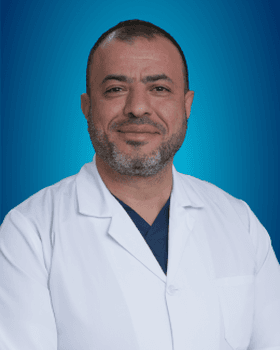
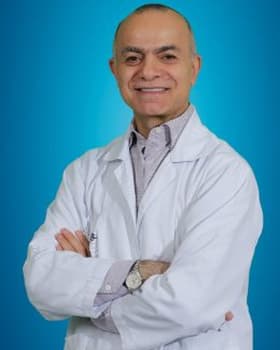
Dr. Munther Awni Al Saafin provides cardiology care at Jordan Hospital and Medical Centre. His interests include complex coronary intervention, chronic total co…
Dr. Imad Al Haddad practices cardiology and interventional cardiovascular medicine at Jordan Hospital. His work includes complex coronary disease and assessment…
Dr. Qasem Al Shamaileh is a consultant in cardiology and interventional cardiology. His practice includes coronary and valve assessment, selection of appropriat…
Finding Interventional cardiac catheterization services in Jordan
Which doctors are listed for Interventional cardiac catheterization in Jordan?
There are currently 3 doctor profiles linked to Interventional cardiac catheterization on ClinicsJo. Review the listed services and contact the practice to confirm availability with the doctor and branch you choose.
How can I find an appointment for Interventional cardiac catheterization?
Start with an available doctor's profile and use the contact or booking options shown there. Confirm the service, practice location and appointment time with the clinic. If this list is empty, broaden your search using the directory links on this page.
What does Interventional cardiac catheterization cost in Jordan?
Ask the practice for the current price and what it includes. A consultation fee shown on a profile is not necessarily the price of a procedure, tests or follow-up. Confirm any additional charges and insurance arrangements before your visit.
Explore related Cardiac Catheterization doctor directories