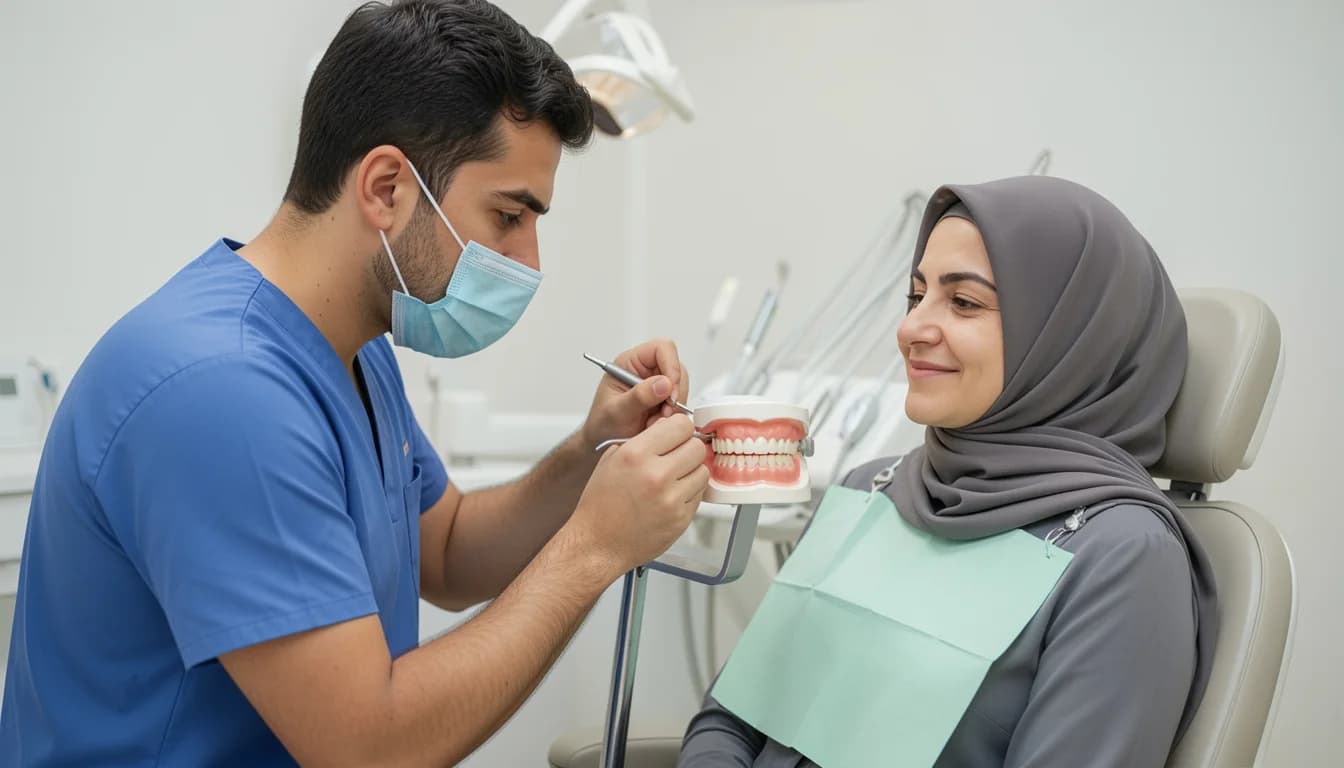
A complete denture is a removable prosthesis that carries a full row of teeth on an acrylic base resting on the gums and the bone beneath them, and on the palate in the upper jaw, and the patient takes it out to clean it. It is made when all the teeth in a jaw have been lost, and its stability depends on the shape of the bony ridges, the amount of saliva, and how closely the base matches the tissues, not on the strength of an adhesive.
A complete denture differs from a partial denture, which replaces some teeth and rests on the remaining ones, and from an implant-retained denture, which moves far less because it is supported by implants rather than by gum alone. Fixed restorations such as crowns and bridges need teeth or implants to carry them, so they are not an option for a completely empty jaw without implants. The choice among these options is clinical and depends on the amount of bone, the state of the gums, general health and the ability to maintain daily care, not on a preference for one type.
Making a denture is the stage that follows preparing the mouth: infections are treated, retained roots removed, unsalvageable teeth extracted, and the tissues are allowed to heal before the final impression, because a denture made over swollen gums no longer fits once they have healed. An immediate temporary denture may be made straight after extractions for functional reasons and later replaced by a definitive one.
The limits must be stated plainly. A denture does not stop bone resorption after tooth loss, so it loosens over time and needs relining or remaking. It does not restore biting force to natural levels, so hard and sticky foods remain difficult. A lower denture is less stable than an upper one because of anatomy and tongue movement. Denture adhesive is an aid, not a correction for a poorly fitting base. Two beliefs are genuinely harmful: that losing your teeth frees you from cleaning your mouth, when gums, tongue and palate need daily cleaning and an unclean denture causes inflammation, fungal infection and odour and may raise the risk of aspiration pneumonia in older people; and that extracting everything remaining is the easier, cheaper route, when remaining teeth or roots preserve bone and add stability to any prosthesis. How long a denture serves you depends on its hygiene and on changes in your tissues, not on a promised number of years.
4 specialists
Procedure steps
1
Examination and preparing the mouth
The bony ridges, gums, palate and salivary flow are examined, and radiographs look for retained roots, cysts or sharp bone. Whatever needs treatment is dealt with and healing time allowed, and the options are discussed with you, including an implant-retained denture if the bone allows.
2
Primary impression then definitive impression
A primary impression is taken in a stock tray and a custom tray is made on it, then a definitive impression records the moving borders of lip, cheek and tongue. The accuracy of these borders is what gives the denture its seal and stability on the tissues.
3
Recording the jaw relationship and bite height
The bite height suited to your facial proportions and comfortable muscle function is measured, and the relationship of the lower jaw to the upper is recorded in a stable position. An error here produces a denture that tires the muscles, alters facial appearance, or clicks during speech.
4
Wax try-in
The teeth are set on a wax base and tried in your mouth to assess their shape, colour and size, lip support, the look of your smile and your pronunciation. This is the best opportunity to request changes, and bringing a family member for a second opinion before processing is encouraged.
5
Delivery and adjustment visits
The finished denture is delivered, the bite adjusted, and pressure points that cause ulcers relieved. Adjustment appointments are scheduled through the first days and weeks because the tissues react to a new prosthesis, and you are shown how to clean the denture and gums and how to insert and remove it.
Before the procedure
Tell your dentist your chronic conditions and medicines, especially diabetes, blood thinners, drugs that dry the mouth and bone-density medication, because a dry mouth reduces denture stability. Bring any old denture you own even if you no longer wear it, as it helps estimate bite height and the tooth shape you are used to, and bring an old photograph of your natural teeth if you have one. Describe in detail what bothers you about your current denture: movement, ulcers, speech difficulty or trouble chewing. Mention a strong gag reflex and whether you smoke. Do not stop medication on your own, clean your mouth and tongue before each visit, and come unhurried, as some appointments need time and calm.
After the procedure
In the first two weeks expect more saliva, difficulty with some sounds and a feeling of fullness; read aloud to practise, start with soft food cut small, and chew on both sides together. Take the denture out at night and keep it in water or a dedicated cleaning solution, never hot water, and clean it morning and evening with a denture brush and mild soap outside the mouth over a basin filled with water so it does not break if dropped; do not use abrasive toothpaste or boiling water. Clean your gums, tongue and palate daily with a soft brush or gauze, because losing your teeth does not exempt you from oral cleaning, it transfers it to the tissues themselves. Attend a yearly review even if nothing bothers you, since bone changes and the denture will need relining. **Seek care immediately for an ulcer that does not heal within two weeks, a persistent white or red patch, swelling or fever, difficulty swallowing or breathing, increasing pain, or repeated bleeding under the denture.** Also return if the denture loosens or fractures, and never repair it with household glue.
Expected duration
Usually four to six visits over three to six weeks, each lasting 30 to 60 minutes, followed by short adjustment appointments.
تُعد د. يولا كوفالينكا من الكفاءات الطبية المتميزة في مجال طب الأسنان. تخرجت من جامعة لوغانسك الطبية الحكومية عام 2007، وكانت ضمن أوائل خمسة طلاب على دفعتها، وه…
يمتلك د. معتصم ارديسات خبرة مهنية واسعة في مجال طب الأسنان بدأت منذ عام 2007. تمتد مسيرته بين العمل الأكاديمي والممارسة السريرية في أوروبا والشرق الأوسط، مما من…
الدكتور محمد عرفات حسن هو طبيب أسنان وصاحب خبرات متقدمة في طب وجراحة الفم والأسنان، خرّيج جامعة دمشق العريقة في طب وجراحة الفم والأسنان (بكالوريوس)، وحاصل على ع…
الدكتور محمد أحمد علي الطراونة جرّاح فم ووجه وفكين، ومستشار في زراعة الأسنان وتجميل الوجه غير الجراحي. حاصل على البورد الأردني في جراحة الفم والوجه والفكين (201…
There are currently 4 doctor profiles linked to Dentures on ClinicsJo. Review the listed services and contact the practice to confirm availability with the doctor and branch you choose.
How can I find an appointment for Dentures?
Start with an available doctor's profile and use the contact or booking options shown there. Confirm the service, practice location and appointment time with the clinic. If this list is empty, broaden your search using the directory links on this page.
What does Dentures cost in Jordan?
Ask the practice for the current price and what it includes. A consultation fee shown on a profile is not necessarily the price of a procedure, tests or follow-up. Confirm any additional charges and insurance arrangements before your visit.
Explore related Prosthodontics (Crowns & Bridges) doctor directories