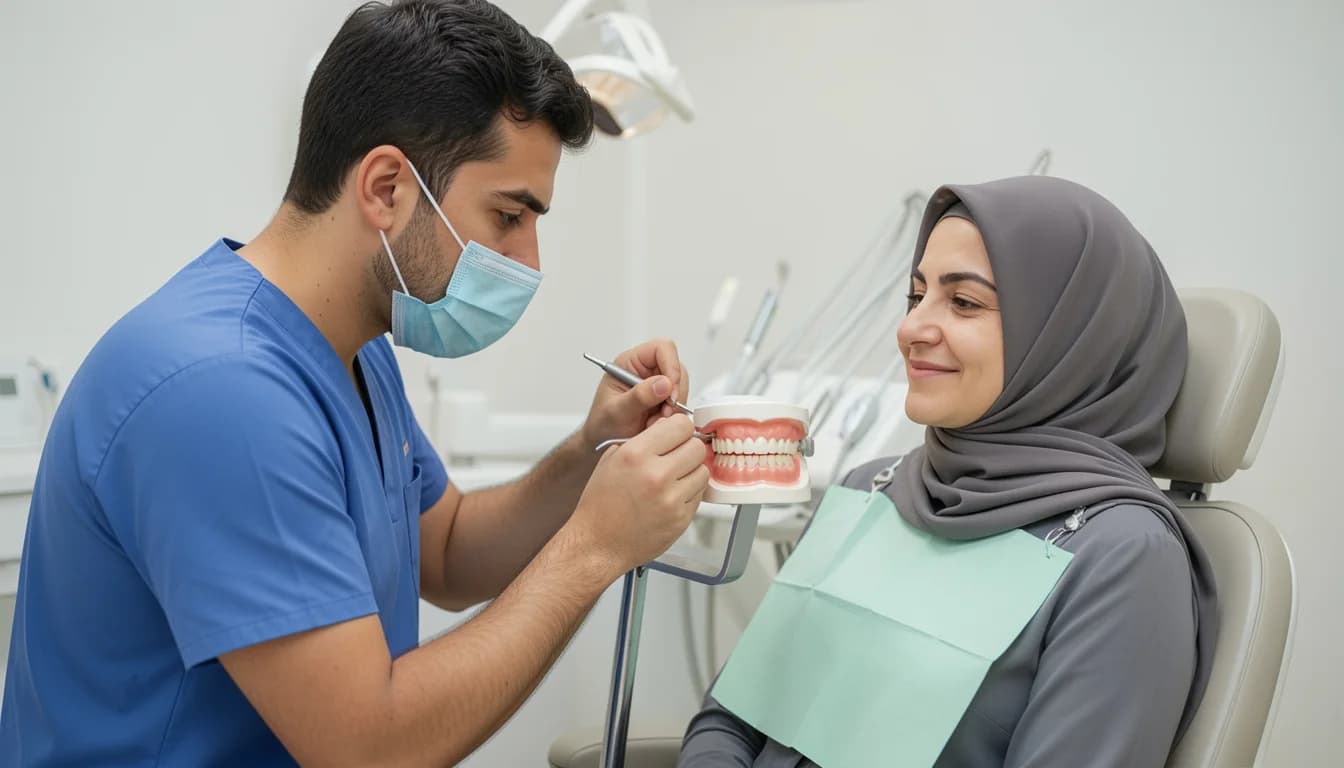
Zirconia teeth are fixed restorations, crowns, bridges or veneers, made from zirconium oxide, a white high-strength ceramic usually shaped by digital design and milling, then fired and shaded to approach the colour of the neighbouring teeth. They are used as an alternative to restorations with a metal substructure, and they are not a single material: some grades are more translucent and suit front teeth, others are harder and less translucent for back molars, and some are a zirconia core with a layer of cosmetic ceramic applied over it.
Comparing the options calls for neutrality rather than promotion. Metal-ceramic: a metal base covered with porcelain, strong and long-established, though a dark line can show at the gum margin if the gum recedes over the years. Glass ceramic of the lithium disilicate family: fine colour matching and natural translucency, generally preferred at the front and where biting load is lower. Zirconia: high strength and free of metal, requiring defined preparation and precise margins, with its strongest grades less translucent than glass ceramic. No type is best for everyone; the choice is clinical and balances tooth position, bite force, available tissue thickness, the colour of adjacent teeth and the state of your gums.
A restoration is the stage that follows treatment of the cause. A tooth is not prepared and zirconia is not cemented over decay that has not been fully removed, an irritated or non-vital pulp that has not been treated, or bleeding inflamed gums. Placing a fixed restoration over an existing problem seals it in, delays its diagnosis, and produces pain or inflammation that later forces removal of the restoration.
The limits are clear. Zirconia does not prevent decay in the remaining tooth beneath it, does not prevent gum inflammation around its margin, does not treat an infected root, does not correct a disturbed bite on its own, and does not respond to whitening agents, so its shade stays as it was made while your natural teeth around it may change over the years. How long any fixed restoration lasts depends on your hygiene and habits, since grinding and biting ice or pens chips ceramic and loosens margins, not on a number of years anyone can promise. The belief that a restoration frees you from cleaning is the fastest route to decay in the tooth carrying it, and the belief that extraction is easier and cheaper than saving a tooth costs more later through bone loss, drifting teeth and a wider replacement. Suitability is decided by clinical examination, not by reading.
4 specialists
Procedure steps
1
Examination, diagnosis and shade planning
The tooth, gums and bite are examined and a radiograph assesses the root and bone, to decide whether the tooth needs a crown, a filling or a veneer. The shade is then selected with a colour guide in natural light, and you are warned that zirconia holds a fixed shade that whitening will not change later.
2
Treating the cause before preparation
Decay is fully removed, the root is treated if the pulp is non-vital or severely irritated, and gum inflammation is controlled with cleaning and home-care instruction until bleeding stops. This step cannot be skipped: restoring an inflamed tooth fails and hides the problem from examination.
3
Tooth preparation, impression and temporary crown
The tooth is anaesthetised and prepared to a calculated thickness that gives the zirconia strength without weakening the tooth, then a digital scan or conventional impression is taken with a bite record. A temporary restoration is fitted to protect the tooth and preserve the gum contour until the final piece is ready.
4
Fabrication and try-in
The restoration is designed on computer, milled from a zirconia disc, then sintered and shaded, sometimes with a layer of cosmetic ceramic added. At try-in the colour, translucency, marginal fit and contact with adjacent teeth are assessed, and biting points are adjusted before final fitting.
5
Final cementation and bite adjustment
The tooth surface is cleaned and the restoration is secured with a suitable cement, with residual cement carefully removed from below the gum margin because it causes inflammation. The bite is then adjusted in closure and in side movements, and you are shown how to clean around the margin every day.
Before the procedure
Tell your dentist all your medicines and chronic conditions, any known allergy to materials or local anaesthetic, and whether you take blood thinners. Say if you are planning to whiten your teeth: whitening must be done before the zirconia shade is chosen, because the restoration will not change colour after it is made. Mention grinding or clenching during sleep, or biting ice and pens, since these habits change the thickness plan and may require a night guard. Clean your teeth well before the appointment, because bleeding gums distort the impression and the margins of the restoration. Come after a light meal, and allow enough time for the first visit, which is the longest.
After the procedure
While the temporary is in place, avoid sticky foods and forceful flossing on that side so it does not come off, and if it does, reseat it gently and contact the clinic. After final cementation, wait for the anaesthetic to wear off before eating and keep to soft food on the first day. Clean twice daily with a soft brush and fluoride toothpaste, and pass floss or an interdental brush once a day around the restoration margin; zirconia does not decay but the tooth beneath it does, and a restoration increases rather than removes your need to clean. Do not open packaging with your teeth or bite ice, and wear a night guard if one was prescribed. **Seek care immediately for swelling, fever, pus or a persistent foul taste, throbbing pain that your usual painkiller does not control, or gum bleeding that will not stop.** Also return if you feel a sharp edge or a high biting point, or if the restoration loosens or chips.
Expected duration
Usually two to three visits over one to three weeks: the first visit takes 60 to 90 minutes and the fitting visit 30 to 45 minutes.
تُعد د. يولا كوفالينكا من الكفاءات الطبية المتميزة في مجال طب الأسنان. تخرجت من جامعة لوغانسك الطبية الحكومية عام 2007، وكانت ضمن أوائل خمسة طلاب على دفعتها، وه…
يمتلك د. معتصم ارديسات خبرة مهنية واسعة في مجال طب الأسنان بدأت منذ عام 2007. تمتد مسيرته بين العمل الأكاديمي والممارسة السريرية في أوروبا والشرق الأوسط، مما من…
الدكتور محمد عرفات حسن هو طبيب أسنان وصاحب خبرات متقدمة في طب وجراحة الفم والأسنان، خرّيج جامعة دمشق العريقة في طب وجراحة الفم والأسنان (بكالوريوس)، وحاصل على ع…
الدكتور محمد أحمد علي الطراونة جرّاح فم ووجه وفكين، ومستشار في زراعة الأسنان وتجميل الوجه غير الجراحي. حاصل على البورد الأردني في جراحة الفم والوجه والفكين (201…
Which doctors are listed for Zircon Teeth in Jordan?
There are currently 4 doctor profiles linked to Zircon Teeth on ClinicsJo. Review the listed services and contact the practice to confirm availability with the doctor and branch you choose.
How can I find an appointment for Zircon Teeth?
Start with an available doctor's profile and use the contact or booking options shown there. Confirm the service, practice location and appointment time with the clinic. If this list is empty, broaden your search using the directory links on this page.
What does Zircon Teeth cost in Jordan?
Ask the practice for the current price and what it includes. A consultation fee shown on a profile is not necessarily the price of a procedure, tests or follow-up. Confirm any additional charges and insurance arrangements before your visit.
Explore related Prosthodontics (Crowns & Bridges) doctor directories