Istiklal Hospital Outpatient Clinics
Dr Malik Abu Al-Nadi is an orthopaedic consultant with a focus on foot and ankle disorders. He holds the Jordanian orthopaedic board; his official biography des…
Hours not listedInsurance not specified4 views
Trusted medical platform in Jordan

علاج انحراف أصبع القدم (إبهام القدم الأروح)
Hallux valgus, commonly called a bunion, is a deviation of the big toe towards the other toes together with a bony prominence at its base on the inner border of the foot. That prominence is not extra flesh or a skin callus as many believe; it is the head of the first metatarsal bone that has drifted out of alignment, which is why no non-surgical method can push it back into place. As the deviation progresses, the big toe crowds the second toe and lifts it into a hammer position, while load shifts onto the metatarsal heads and produces pain in the forefoot. The underlying cause is an inherited predisposition in foot shape and joint orientation, which is why bunions run in families and appear in people who have never worn a high heel. Narrow pointed shoes and high heels clearly accelerate the deviation and increase the pain, which is the origin of the belief that they are the only cause. Inflammatory joint diseases such as rheumatoid arthritis, generalised ligament laxity and flat feet also contribute. The limits of non-surgical care must be stated honestly. Toe spacers, night splints, corrective socks and insoles relieve pain, calm irritation and protect the skin, but they **do not correct the deviation, do not return the bone to its axis and do not shrink the prominence**. Their purpose is comfortable walking and delaying the need for surgery, not straightening the toe. The most practical and least costly measure is a shoe with a wide, deep toe box and a low heel. Surgery is considered when pain interferes with walking or severely restricts footwear choice, or when advanced deformity causes problems in the neighbouring toes; it is not performed for purely cosmetic reasons. It involves cutting the metatarsal to realign it and fixing it with a screw or plate, balancing the soft tissues around the joint, and in severe cases or with advanced arthritis, fusing the joint at the base of the big toe. Expect swelling lasting months, a special shoe for some weeks, possible joint stiffness, and a real chance of partial recurrence, particularly if you return to narrow shoes or if the deformity was severe from the outset. Which operation suits you is determined by clinical examination and weight-bearing X-rays, not by reading.
The big toe is examined standing and sitting, movement at the joint at its base and the flexibility of the deviation are assessed, and the clinician looks for pain over the prominence from shoe friction, callus under the metatarsal heads, an accompanying hammer second toe, flat feet or a tight Achilles tendon, since all of these change the correction plan.
X-rays are taken while you stand, because they show the true angles between the bones and the state of the joint cartilage, and these measurements determine which operation is appropriate if one is needed: a bone cut at the head or the base of the metatarsal, or joint fusion. Films taken lying down understate the deformity and are not adequate for planning.
The first treatment is a shoe with a wide, deep toe box, a low heel and material that gives over the prominence, together with a pad to protect the skin and a spacer between the big toe and the second toe where they crowd. It is clearly explained that these measures are for comfort and skin protection rather than correction, so that you do not wait for a straightening that will not happen.
An insole is prescribed to shift load away from the painful metatarsal heads and to support the arch when the foot is flat, along with exercises to strengthen the intrinsic foot muscles and stretch the calf, and local cooling during flare-ups. Painkillers are used for short periods when needed and on medical advice, not adopted as permanent treatment that masks a progressing deformity.
Surgery is usually performed as a day case under regional anaesthesia: the bone axis is corrected with an osteotomy fixed by a screw or plate, the soft tissues are balanced, and the neighbouring toe is corrected if needed. You leave in a postoperative shoe with specific weight-bearing instructions, bony healing is monitored on X-ray, and physiotherapy is started to improve joint movement and limit stiffness.
Bring the shoes you actually wear and any pads, spacers or night splints you have tried, and say whether they relieved the pain. Before the visit, decide what troubles you most: pain over the prominence in shoes, forefoot pain on walking, or the appearance of the foot, because the answer changes the treatment plan. Tell your doctor about family history of the same deformity, about rheumatoid or other inflammatory disease, diabetes or circulation problems, and list your medicines, especially blood thinners and steroids. If surgery is planned, follow the fasting instructions, do not apply cream to the foot on the day, wash your feet and trim your nails beforehand, arrange transport home and a place to elevate the foot, and ask how long the postoperative shoe and time off work will be.
Keep the foot elevated above heart level for most of the first days, follow the postoperative shoe and weight-bearing instructions to the letter, and do not return to your usual footwear before you are allowed. Keep the dressing clean and dry, do not wet the wound until permitted, and begin big toe movement exercises only at the time your surgeon specifies. Expect swelling that lasts months, some numbness around the scar, and gradual improvement in shape and pain. **Seek urgent review for fever or shivering, discharge or odour from the wound, spreading redness, pain that increases after having settled, numbness, pallor or blue discolouration of the toe, or a painful warm swollen calf, which with breathlessness is an emergency.** Once healed, avoid narrow pointed shoes and high heels, as returning to them is the strongest factor in recurrence.
An assessment visit with X-rays usually takes 20 to 40 minutes. Surgery itself takes 45 to 90 minutes and is usually a same-day procedure. A postoperative shoe is worn for weeks depending on the osteotomy, bony healing needs six weeks to three months, and swelling and the need for wide footwear continue for months.
Dr Malik Abu Al-Nadi is an orthopaedic consultant with a focus on foot and ankle disorders. He holds the Jordanian orthopaedic board; his official biography des…
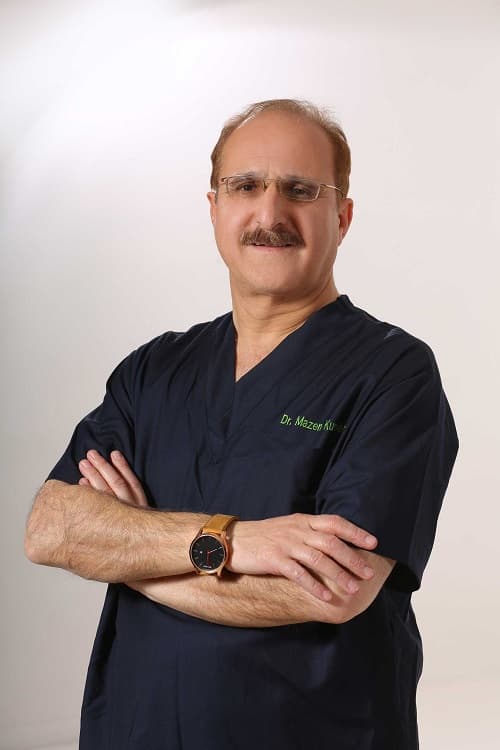
Dr Mazen Kurdieh practices orthopedics in Amman. Qualifications include Jordanian Board in Orthopaedic Surgery; Jordanian Board in General Surgery; German Fello…
There are currently 2 doctor profiles linked to Hallux valgus (bunions) treatment on ClinicsJo. Review the listed services and contact the practice to confirm availability with the doctor and branch you choose.
Start with an available doctor's profile and use the contact or booking options shown there. Confirm the service, practice location and appointment time with the clinic. If this list is empty, broaden your search using the directory links on this page.
Ask the practice for the current price and what it includes. A consultation fee shown on a profile is not necessarily the price of a procedure, tests or follow-up. Confirm any additional charges and insurance arrangements before your visit.