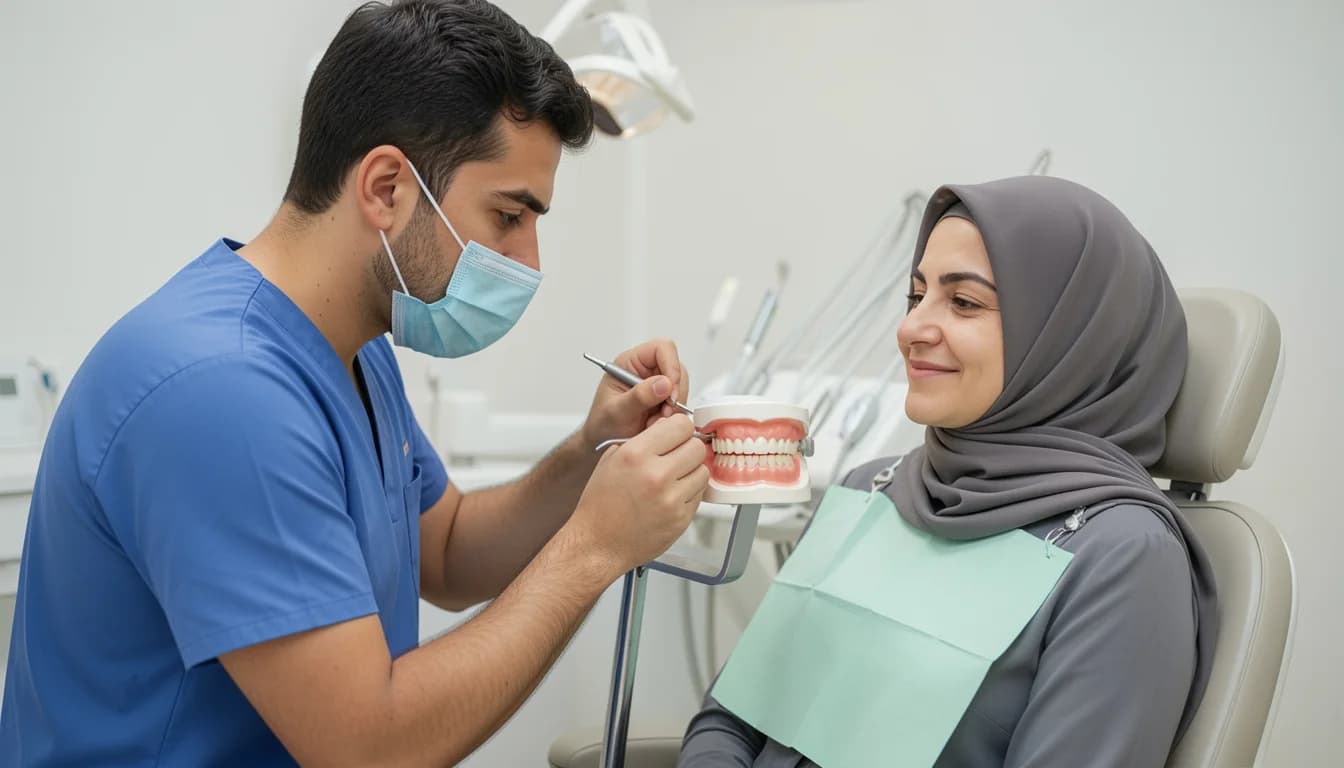
Top Laser lip & gum depigmentation Doctors in Jordan — A dentist examining a patient — directory of the best Laser lip & gum depigmentation doctors in Jordan
wavebreakmedia_micro / Freepik

Top Laser lip & gum depigmentation Doctors in Jordan

علاج تصبغ الشفاه واللثة بالليزر (توريد اللثة بالليزر)

Laser treatment of lip and gum pigmentation — widely known as gum depigmentation or gum lightening — is a cosmetic procedure in which the superficial melanin-bearing layer of the gum tissue or lip mucosa is removed or reduced with a laser, so the colour returns to a lighter, pinker shade. Melanin pigmentation of the gums is a common natural feature in people with darker skin tones and is not a disease; asking to change it is a cosmetic request, not a medical one. Before colour is discussed at all, one step must never be skipped: confirming the cause of the pigmentation. Not every dark area in the mouth is ordinary melanin. It may result from smoking, from a medicine you take, from metallic staining left by an old amalgam filling, or from a systemic condition. Any patch that is asymmetrical, newly appeared, growing, changing, bleeding or accompanied by an ulcer needs medical assessment before any cosmetic session, because some oral tumours begin as a silent, painless dark spot. What the procedure does not do must be stated plainly. It does not whiten teeth or alter their colour. It does not reshape the gums and does not treat gum recession or overgrowth. It does not cure gingivitis or periodontal pockets — those must be treated first. And it does not work on pigmentation caused by amalgam, metals or medicines, because that pigment is not melanin. More than one session may be needed, and pigmentation can partly return after months to years, returning faster and more heavily if smoking continues. The laser works by selective absorption of energy in the pigmented layer, removing it precisely with less bleeding and usually more comfort than traditional surgical scraping, and the session is normally carried out under topical or simple local anaesthesia. That does not make the laser the only option; other techniques remain in use, and the choice between them depends on the depth and extent of the pigmentation, the condition of the gums and the clinician's experience. Suitability is decided by clinical examination of the whole mouth and a review of your medical history and habits, not by result photographs online. The procedure should be postponed during acute oral inflammation, an active cold sore or uncontrolled systemic illness, and it should be planned with realistic expectations: an improvement in shade, with no guarantee of a specific tone and no promise that it is permanent.

4 specialists

Procedure steps

  1. 1

    Assessing the pigmentation and excluding disease

    The clinician examines the whole mouth, records the pattern, extent and symmetry of the pigmentation, and asks about smoking, medicines, when it appeared and whether it has changed. Any suspicious patch or non-healing ulcer is referred for medical assessment before any cosmetic work.

  2. 2

    Getting oral health ready

    Scaling and cleaning are completed and any gingival inflammation or periodontal pockets are treated first, because working on inflamed gums impairs healing and weakens the result. Standardised before photographs are taken under consistent lighting so the outcome can be judged objectively.

  3. 3

    Local anaesthesia and mapping the field

    A topical anaesthetic is applied and simple local anaesthesia added when needed. The target areas and their borders are marked so the result stays symmetrical and consistent with the smile line, and everyone present wears the eye protection required for laser safety.

  4. 4

    The laser session

    Laser energy is applied in regular overlapping passes over the pigmented layer, removing it precisely with good bleeding control, and the surface is rinsed and the colour reassessed in stages. Settings are matched to the depth of pigmentation to avoid injuring the tissue beneath.

  5. 5

    Healing, review and top-up sessions

    Post-session instructions on diet and cleaning are explained and a review appointment is set to assess healing and colour. A further session may be planned for deeper areas, and a maintenance plan is discussed, beginning with stopping smoking.

Before the procedure

Tell the clinician if you smoke or use tobacco in any form, since it affects the result, the healing and the likelihood of pigmentation returning. List all your medicines and supplements, especially blood thinners, antiplatelets, steroids, immunosuppressants and any drug that causes pigmentation. Mention recurrent cold sores, as prophylaxis may be needed before working on the lip, whether you are pregnant or breastfeeding, and any diabetes, bleeding disorder or local anaesthetic allergy. Complete your dental cleaning and treat any gum inflammation before the appointment. Do not apply lightening products or abrasive scrubs to the lips in the preceding days. Eat before you attend, agree on standardised before photographs, and ask how many sessions are expected and how long healing takes.

After the procedure

In the first days expect a mild burning sensation and a white or greyish surface covering the treated area; this is a normal healing membrane, so do not try to remove it, scratch it or suck at it with your tongue. Eat soft cool or lukewarm food, and avoid spicy, acidic and heavily seasoned foods, crisps, hot drinks, and strongly coloured drinks such as dark coffee and tea for the period your clinician specifies. Avoid smoking completely during healing — it is also the single best decision for keeping the result. Use a very soft brush and stay away from the treated area for the first few days, use only the mouthwash prescribed and never an alcohol-based rinse on your own initiative. Apply a lip balm with sun protection if the lips were treated. **Contact your clinician immediately for bleeding that does not stop with pressure, pain that increases after the third day instead of easing, spreading swelling with fever or difficulty swallowing or opening the mouth, pus or a foul odour, or a new dark patch or an ulcer that has not healed within two weeks — an ulcer that fails to heal in two weeks needs medical assessment, not another cosmetic session.**

Expected duration

A session usually takes 20 to 45 minutes per area, with surface healing typically taking five days to two weeks.

فلترة:
4 من 4 طبيب
Featured doctor
18 years experience
Free consultation
Wait: 5 min
عمان ، طبربور
Profile
منشورات ولقطات د. يولا كوفالينكا
20 years experience
Free consultation
Wait: 10 min
Ibn khaldoun St. Alshatil Bldg No.7. FL No.5
Profile
Laser Gum and Lip Depigmentation in Jordan | ClinicsJo