
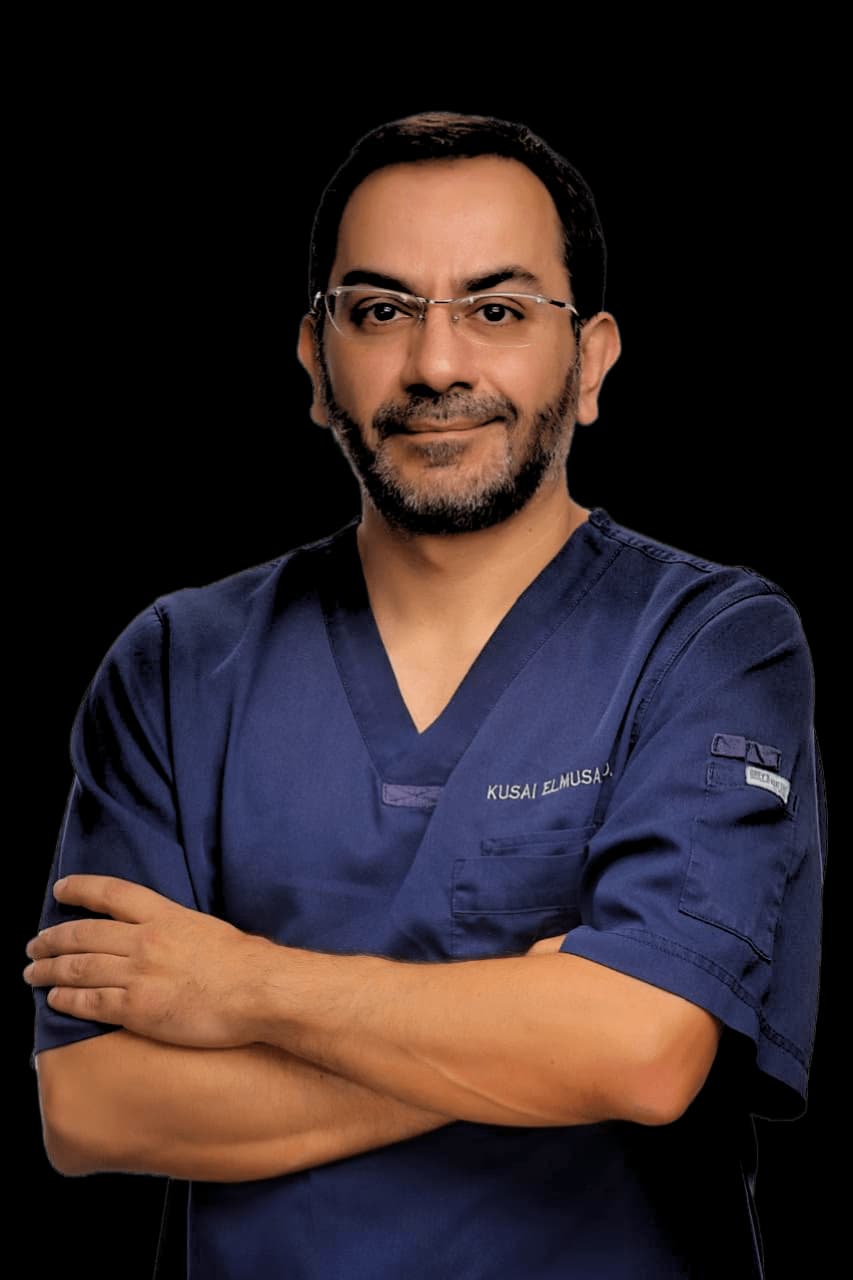
Dr. Kusai Awni Ibrahim El Musa Clinic
Dr. Kusai Awni Ibrahim El Musa is a plastic and reconstructive surgeon. He studied medicine at the University of Jordan, trained at the American University of B…
Hours not listedInsurance not specified7 views
Trusted medical platform in Jordan

Otoplasty, often called ear pinning, is a surgical procedure that reshapes the cartilage of the outer ear and brings it closer to the side of the head. It is used to correct excessive projection, an absent natural antihelical fold, or an oversized conchal bowl. The aim is anatomical and specific: to return the ear's angle and its distance from the skull to a normal range, not to change the appearance of the face. In children the operation is usually performed once most ear growth is complete, generally from around five or six years of age, under general anaesthesia. Adults can often have it under local anaesthesia with sedation. The technique depends on how the cartilage behaves: permanent sutures may be enough to recreate the fold, while thicker, stiffer cartilage may need thinning or partial conchal reduction through an incision hidden in the crease behind the ear. Suitability is decided by clinical examination, not by a photograph or by the patient's request alone. The surgeon measures the distance between the ear rim and the skull, assesses cartilage thickness and springiness, compares the two sides, and checks the skin behind the ears. A child with pliable cartilage and an adult with rigid cartilage do not undergo the same operation. The limits matter as much as the benefits. Otoplasty does not improve hearing, does not treat tinnitus, and does not reduce recurrent ear infections. It will not meaningfully shrink an ear whose real problem is size rather than projection. Perfect symmetry is not a realistic goal, because normal ears are not symmetrical either, so the target is an acceptable match rather than identical copies. Results usually last, but partial cartilage relapse can occur, particularly with suture-only techniques, and one side may later need adjustment. Before booking, confirm that the facility is licensed and that the doctor is certified in plastic surgery or otolaryngology through the official Jordanian authorities. Cosmetic demand attracts unqualified practitioners, and verifying credentials is the most practical safeguard available to you.
The surgeon examines both ears, measures projection angle and distance from the skull, records the difference between sides, and explains what can and cannot be corrected. Chronic illnesses, medications, anaesthetic history and any tendency to keloid scarring are reviewed, and a realistic written goal is agreed.
The incision line in the crease behind the ear is drawn and the points of the intended cartilage fold are marked. Children receive general anaesthesia and adults usually local anaesthesia with sedation. The area is disinfected, the hair is covered, and the head is positioned so both sides can be compared.
A small incision is made in the crease behind the ear and the skin is lifted over a limited, planned area to expose the cartilage while preserving its blood supply. A narrow strip of skin may be removed if needed, and the cartilage is bent by hand to judge whether sutures alone will hold the new shape.
Permanent sutures are placed to create the missing antihelical fold, and with thick cartilage the surgeon may thin it or remove part of the conchal bowl to reduce projection. Both sides are repeatedly compared by measurement and by viewing from the front and behind before the sutures are finally tightened.
The incision is closed with fine sutures and a supportive dressing or headband is applied to prevent the cartilage from folding and to limit haematoma. Follow-up visits are scheduled to remove the dressing and assess shape, and the warning signs that require immediate review, without waiting for the appointment, are explained.
Tell your doctor about every medicine and supplement you take, especially blood thinners, anti-inflammatory drugs and herbal products, and never stop a long-term medicine on your own; do it only on medical advice. Mention any clotting disorder, tendency to bleed, previous difficulty with anaesthesia, or a personal history of keloid scarring. Stop smoking before and after surgery, because it delays healing of the thin skin behind the ear. Postpone the appointment if you have dermatitis, a scratch, boils behind the ear, or an active ear infection. Wash your hair and face the day before, avoid hair products on the day, and remove earrings and all jewellery. If general anaesthesia is planned, follow the fasting instructions given by the anaesthetist and arrange someone to take you home. Prepare a wide headband and extra pillows so you can sleep with your head raised, and for a child arrange a few days off school in advance.
Wear the headband exactly as instructed, usually continuously for the first days and then at night for several weeks, since it protects the cartilage from folding. Sleep on your back with your head raised, avoid sleeping on your side, and never pull the band up over the ear. Keep the incision clean and dry as directed, do not scratch the ear, and avoid swimming and hair dye until your doctor allows it. Stay away from contact sports and anything that might strike the ear for several weeks. Swelling, numbness and cold sensitivity are expected and settle gradually. **Go to emergency care immediately if you develop sudden severe pain in one ear, increasing swelling, bleeding, or a feeling of tightness and fullness**, as this may be a haematoma needing urgent drainage to protect the cartilage. **Seek care immediately for fever, purulent discharge, spreading redness, or a foul smell from the incision.** Also report any suture poking through the skin or a side that starts to stick out again.
Usually one to two hours for both ears, with same-day discharge in most cases. Return to work or school is typically after five to seven days, with a night-time headband for several weeks, and the final shape settles as swelling resolves over roughly four to six weeks.
Dr. Kusai Awni Ibrahim El Musa is a plastic and reconstructive surgeon. He studied medicine at the University of Jordan, trained at the American University of B…
There are currently 1 doctor profiles linked to Otoplasty (Ear Pinning) on ClinicsJo. Review the listed services and contact the practice to confirm availability with the doctor and branch you choose.
Start with an available doctor's profile and use the contact or booking options shown there. Confirm the service, practice location and appointment time with the clinic. If this list is empty, broaden your search using the directory links on this page.
Ask the practice for the current price and what it includes. A consultation fee shown on a profile is not necessarily the price of a procedure, tests or follow-up. Confirm any additional charges and insurance arrangements before your visit.