
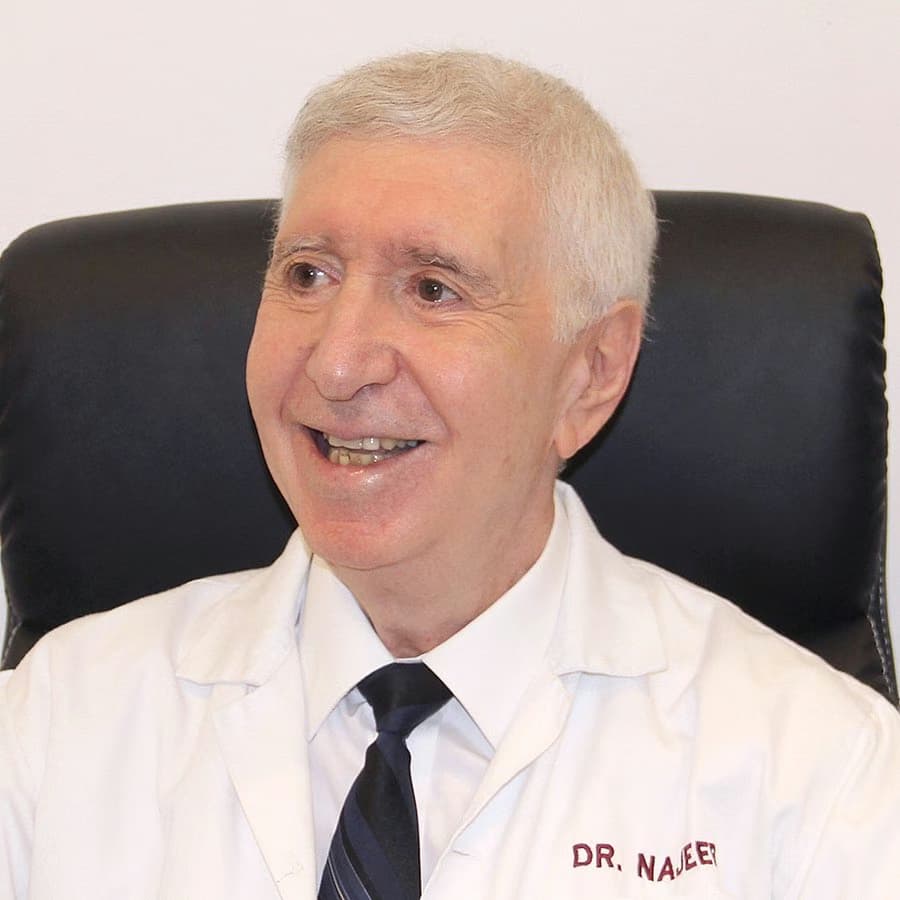
Dr Najeeb Layyous Clinic
Dr Najeeb Layyous practises obstetrics, gynaecology and fertility medicine in Amman. His published qualifications include the Jordanian Board, fellowship of the…
Treatments
Hours not listedInsurance not specified6 views
Trusted medical platform in Jordan

Myomectomy is an operation in which uterine fibroids, benign muscle tumours growing in the wall of the uterus, are removed while the uterus itself is preserved. It is usually considered when fibroids cause heavy bleeding or anaemia, pain, pressure on the bladder or bowel, abdominal enlargement, or when a fibroid sits in a position that prevents implantation or causes recurrent miscarriage. A silent fibroid that causes no symptoms usually needs monitoring rather than any procedure. The surgical route is chosen according to the number, size and position of the fibroids within the uterine wall. A fibroid projecting into the uterine cavity is removed through a hysteroscope via the vagina with no incision at all. A fibroid within the wall or on its outer surface is removed laparoscopically through small incisions, or by open surgery through a lower abdominal incision when the fibroids are large, numerous or awkwardly placed. Each route has different advantages and recovery times, and the choice is determined by clinical examination and imaging, ultrasound and sometimes magnetic resonance, rather than by preference alone. The limits of the operation should be understood before consent. Myomectomy removes what is present but does not prevent new fibroids forming over time, so recurrence is possible and a further procedure may eventually be needed. It is not abdominal cosmetic surgery and does not change body weight, it does not guarantee pregnancy because infertility has many causes, and it does not correct every cause of heavy bleeding if a hormonal or clotting disorder or endometrial disease is also present. Rarely a surgeon may need to change the plan during the operation, including hysterectomy for bleeding that cannot be controlled, which is why this possibility is discussed and consented to in advance. One point matters for women planning pregnancy: after the uterine wall has been opened and repaired, a waiting interval before conceiving is usually advised, set by the surgeon, and caesarean delivery may be recommended in a subsequent pregnancy depending on how deeply the muscle was incised. Non-surgical alternatives such as hormonal medicines shrink some fibroids temporarily rather than dissolving them permanently, and uterine artery embolisation is an option discussed in selected cases but is generally not preferred for women planning pregnancy soon. Everything removed is sent for histological examination. The great majority of these tumours are benign, but histology is what confirms it, so it is never omitted and never replaced by imaging.
Bleeding, anaemia, pain and the impact of symptoms on your life are assessed, the number, size and position of the fibroids are defined with ultrasound and sometimes magnetic resonance imaging, and your wish for future pregnancy is discussed. On this basis the hysteroscopic, laparoscopic or open route is chosen, and the recovery time and risks of each are explained.
Blood counts, clotting studies, kidney and liver function and cardiac assessment when needed are performed, and anaemia is corrected beforehand with iron or other treatment to reduce the need for transfusion. Blood-thinning medicines are reviewed with the doctor who prescribed them, and a short course of hormonal treatment before surgery is used in selected cases to reduce fibroid size or stop bleeding.
The operation is usually performed under general anaesthesia, and sometimes under regional anaesthesia for certain open procedures. The surgeon enters through a hysteroscope via the vagina, through small abdominal incisions with gas insufflation, or through a lower abdominal incision, and a plan to control bleeding is in place before the uterine wall is opened.
Each fibroid is separated from the surrounding muscle and extracted, then the uterine wall is closed in careful layers if it was opened, because the strength of that repair is what protects the uterus in a future pregnancy. Bleeding is meticulously controlled, the cavity is irrigated, measures are taken to reduce adhesions, and all tissue is sent for histological examination.
Vital signs, bleeding and pain are monitored after surgery, and early mobilisation is encouraged to reduce the risk of clots. Length of stay ranges from same-day discharge after hysteroscopic surgery to one to three days after laparoscopic or open surgery, and a review appointment is set to discuss the histology result and when pregnancy may be attempted.
Tell your surgeon clearly if you are planning pregnancy, because this changes the surgical route, the method of repair and the interval advised afterwards. Bring previous ultrasound or magnetic resonance reports and your blood tests, and a list of all medicines and supplements including iron, herbal products and contraceptive pills. Stop blood thinners and anti-inflammatory drugs only on the instruction of the doctor who prescribed them, never on your own. Follow the fasting period set by the anaesthetist. Report any drug or latex allergy, heart disease, diabetes or thyroid disease, any personal or family history of clotting or thrombosis, and any previous abdominal or caesarean surgery. Treat anaemia before the date if you have been asked to, arrange time off work and help at home according to the surgical route, and remove nail polish and jewellery and do not wear contact lenses on the day.
Expect cramping pain and light bleeding or spotting that gradually settles over days to about two weeks, and your first period afterwards may be heavier than usual. Mobilise early and walk a little every waking hour to reduce clot risk, drink enough fluids and avoid constipation. Avoid heavy lifting, strenuous effort, intercourse, vaginal pessaries and swimming for the period your surgeon specifies, typically about two weeks after hysteroscopic surgery and four to six weeks after open surgery. Do not start trying to conceive before the interval you are given, and keep the appointment for your histology result. **Go to the emergency department immediately if you develop: fever or shivering; bleeding soaking a full pad in under an hour or passing large clots; severe pain not relieved by the prescribed analgesia; abdominal distension with vomiting and no passage of wind; foul-smelling discharge; redness or discharge from the wound; severe burning or inability to pass urine; or breathlessness, chest pain, or swelling and pain in the leg.**
Usually 45 minutes to about 3 hours depending on the surgical route and the number and size of the fibroids, and longer in multiple fibroid cases.
Dr Najeeb Layyous practises obstetrics, gynaecology and fertility medicine in Amman. His published qualifications include the Jordanian Board, fellowship of the…
There are currently 1 doctor profiles linked to Uterine fibroids Removal on ClinicsJo. Review the listed services and contact the practice to confirm availability with the doctor and branch you choose.
Start with an available doctor's profile and use the contact or booking options shown there. Confirm the service, practice location and appointment time with the clinic. If this list is empty, broaden your search using the directory links on this page.
Ask the practice for the current price and what it includes. A consultation fee shown on a profile is not necessarily the price of a procedure, tests or follow-up. Confirm any additional charges and insurance arrangements before your visit.