Abdali Hospital Outpatient Clinics
Sign in to the platform to view the phone number
Hours not listedInsurance not specified40 views
Trusted medical platform in Jordan

Looking for the best electrocardiography doctors in Jordan? This page lists seven cardiologists, all based in Amman, whose ClinicsJo profiles publish electrocardiography (ECG) as a service. They were chosen from 17 profiles and are ordered by how complete their published information is, not by clinical quality. Compare clinic locations, related tests, insurers and confirmed hours, then open a profile to book.
| # | Doctor | Area | Suits | Profile score |
|---|---|---|---|---|
| 1 | Fadi Thabit Al-Qaisi | Abdali | Abdali patients wanting ECG with Holter or stress testing | 47/100 |
| 2 | Mahmoud Youssef Al-Hazaimeh | Khalda | Khalda residents wanting ECG with risk-factor and medication review | 45/100 |
| 3 | Marwan Adeeb AlNimri | Jabal Amman | Rhythm or pacing questions; evening slots until 19:00 in Jabal Amman | 45/100 |
| 4 | Ghassan Mohammad Shawabkeh | Shmeisani | ECG with rhythm or 24-hour blood pressure monitoring in Shmeisani | 45/100 |
| 5 | Yazan Moawia Al Kilani | Arjan | Pre-surgery ECG and cardiac risk review, hypertension follow-up in Arjan | 45/100 |
| 6 | Abdallah Walid Haydamous | Mecca Street | Ongoing heart or blood pressure follow-up near Mecca Street | 45/100 |
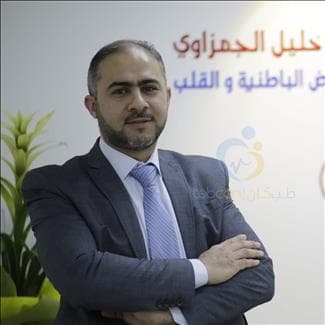
| 7 | Malek Mohammed Khalil Al Jemzawi | Gardens | Chest pain or palpitation checks with Holter in Gardens | 45/100 |
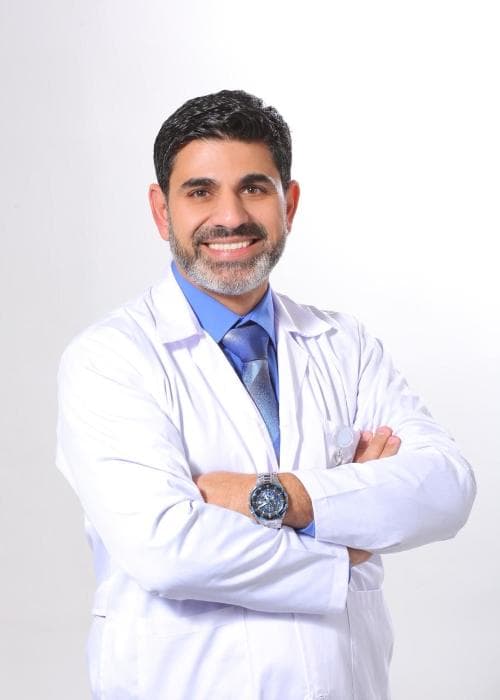
Dr. Fadi Thabit Al-Qaisi is a cardiology and interventional cardiology consultant. He completed an internal medicine residency and fellowships in cardiology and interventional cardiology at Henry Ford Hospital in the USA. He holds American Boards in internal medicine, cardiology and interventional cardiology. He sees patients on the seventh floor of Abdali Hospital Outpatient Clinics in Abdali, Amman. Alongside ECG, his published services include Holter monitoring, echocardiography, exercise stress testing, heart valve assessment and cardiac catheterization. Listed insurers include GlobeMed, MedNet, Euro Arab Insurance Group, OmniCare, Newton Insurance, NatHealth and Med Service. Confirmed hours run Saturday to Thursday, 10:00–17:00.
Suits: Abdali patients wanting ECG with Holter or stress testing
Dr. Mahmoud Youssef Al-Hazaimeh is a cardiovascular consultant who earned his medical degree at the University of Milan in 1972. His previous work includes Jordan's Royal Medical Services and leading cardiac and internal medicine departments in Tabuk. His Khalda clinic combines clinical review with ECG, echocardiography and exercise testing, followed by cardiovascular risk assessment, cholesterol review and medication follow-up for heart disease. He lists one of the longer insurer panels on this page, including NatHealth, MedNet, GlobeMed, Royal Care, MedVisa, Medexa, Delta Insurance Company and Middle East Insurance Company (MEICO). Confirmed hours are Saturday to Thursday, 10:00–17:00.
Suits: Khalda residents wanting ECG with risk-factor and medication review
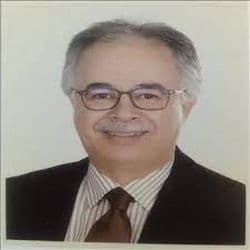
Dr. Marwan Adeeb AlNimri is a consultant cardiologist and interventional cardiologist at CardioCare Clinic in Jabal Amman. He graduated in medicine from Aristotle University in Greece in 1984 and holds the Jordanian Boards in internal medicine and cardiology from the Jordan Medical Council. His training includes a cardiac electrophysiology research fellowship at the University of California, San Francisco. Published services include ECG, echocardiography, exercise stress testing, 24-hour Holter monitoring, cardiac pacing assessment and coronary catheterisation. Arab Orient Insurance is listed. His confirmed hours, Saturday to Thursday 10:00–19:00, are the latest closing time on this page.
Suits: Rhythm or pacing questions; evening slots until 19:00 in Jabal Amman
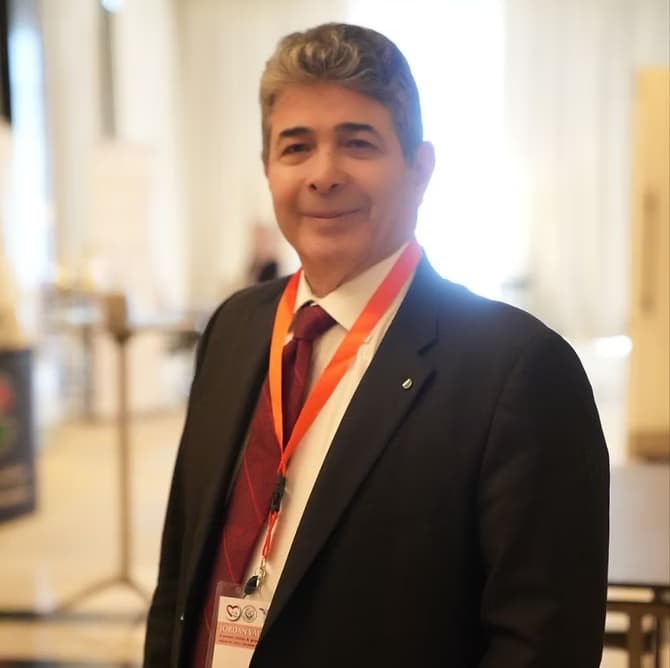
Dr. Ghassan Mohammad Shawabkeh is a cardiology and interventional catheterization consultant at his clinic in Shmeisani, Amman. He graduated from Poznan University in Poland in 2001, obtained the Jordanian Board in Internal Medicine in 2008, and holds the Arab and Saudi Boards in Cardiology. Besides ECG, his published services include echocardiography, exercise stress testing, ambulatory rhythm monitoring, 24-hour blood pressure monitoring, hypertension and lipid follow-up, and diagnostic and interventional catheterization. Arab Orient Insurance is listed. Confirmed hours are Saturday to Wednesday 11:00–17:00 and Thursday 11:00–15:00.
Suits: ECG with rhythm or 24-hour blood pressure monitoring in Shmeisani
Dr. Yazan Moawia Al Kilani holds German specialist certifications (Facharzt) in internal medicine from Münster and in cardiology from Hannover, plus a Hypertensiology qualification from the German Hypertension Society. He earned his medical degree at Jordan University of Science and Technology. His clinic is listed in Arjan, Amman, and his biography places his private outpatient clinic in Royal Hospital. Published services include ECG, echocardiography, exercise stress testing, preoperative cardiac risk assessment, cardiac rhythm follow-up, hypertension follow-up and catheter-based coronary treatment. Arab Orient Insurance is listed. Confirmed hours are Saturday to Thursday, 10:00–16:00.
Suits: Pre-surgery ECG and cardiac risk review, hypertension follow-up in Arjan
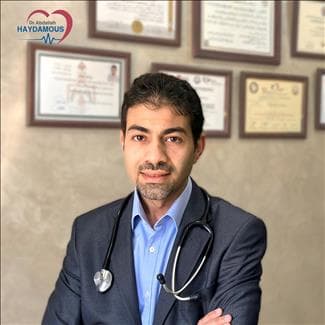
Dr. Abdallah Walid Haydamous is a cardiology and interventional catheterization specialist who sees patients at ELITE Medical Care in Crimson Plaza on Mecca Street, Amman. He holds the Arab Board in Cardiology and the Jordanian Board in Internal Medicine. He earned his medical degree at Al-Baath University in Syria, trained in internal medicine at the Islamic Hospital and completed a cardiology fellowship at Jordan University Hospital. Published services include ECG, echocardiography, hypertension and chronic cardiac follow-up, cardiovascular risk assessment and radial-access catheterization. Arab Orient Insurance is listed. Confirmed hours are Saturday to Thursday, 10:00–18:00.
Suits: Ongoing heart or blood pressure follow-up near Mecca Street
Dr. Malek Mohammed Khalil Al Jemzawi practises internal medicine and cardiology at his clinic in Gardens, Amman. He assesses chest pain, palpitations and blood pressure and follows patients with valve and heart muscle disease. He is a University of Jordan medical graduate with the Jordanian Board in Internal Medicine and trained in cardiology at Jordan University Hospital. Published services include ECG, echocardiography, exercise stress testing, Holter rhythm monitoring, cardiovascular screening, lipid management and cardiac catheterization. Arab Orient Insurance is listed. Confirmed hours are Saturday to Wednesday 10:00–17:00 and Thursday 10:00–15:00.
Suits: Chest pain or palpitation checks with Holter in Gardens
Every matching doctor profile in this country was scored out of 100 for how complete and checkable its published information is, and the highest scores appear here in order. Featured placement does not change a profile's score, and the score does not measure treatment quality or outcomes — it tells you how much you can check before you call.
Ties are broken by the number of approved reviews, then published years of experience. Confirm the service, branch, appointment, fees and insurance coverage with the practice before visiting.
An electrocardiogram (ECG) records the heart's electrical activity through sticky electrodes placed on the chest, arms and legs. It sends no electricity into the body and does not hurt. The recording takes seconds, and the whole visit usually takes 5 to 10 minutes. Because it is quick and widely available, it is usually the first test a doctor requests for heart-related symptoms.
An ECG can show:
It is worth booking a cardiology visit if you have recurring palpitations, unexplained dizziness, a past fainting episode, reduced exercise tolerance, or if a doctor has asked for an ECG before surgery or as part of blood pressure or cholesterol follow-up.
An ECG captures only the moment it is recorded. A normal trace does not rule out every heart problem, especially if symptoms come and go. In that case a doctor may suggest a Holter monitor, usually worn for 24 to 48 hours and sometimes for several days.
Call 911 straight away if you or someone with you has:
Do not drive yourself to a clinic in these situations.
All seven cardiologists here publish electrocardiography as a service, so the useful differences lie in what comes after the ECG and in practical fit. If you arrived searching for the best electrocardiography doctors in Jordan, remember that a basic ECG is a standard test. The more important choice is a doctor whose follow-up services match your situation.
A typical visit follows a few stages. The doctor first establishes why the ECG is needed. The electrodes are then attached and the trace recorded. The doctor interprets the result and, where possible, compares it with an earlier trace. Finally, you discuss whether longer monitoring or another test is needed.
None of the profiles here publishes a consultation fee, so ask the clinic before you go. Useful questions include:
Insurer lists on profiles show what the clinic has published. Your own policy terms decide coverage, so check with your insurer too.
This is a kingdom-wide list for Jordan, and each profile states its own city and district. Before you leave:
This page helps you compare published profiles; it is not medical advice and does not rank clinical skill. In an emergency call 911 or go to the nearest emergency department.