
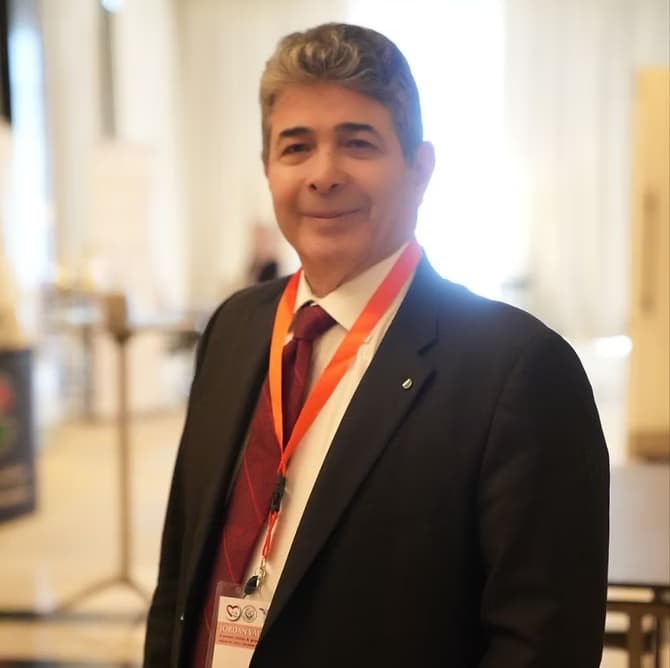
CardioCare Clinic – Dr Marwan AlNimri
Dr Marwan Adeeb AlNimri is a consultant interventional cardiologist with Jordanian boards in internal medicine and cardiology and international professional fel…
Hours not listedInsurance not specified5 views
Trusted medical platform in Jordan

An electrocardiogram, or ECG, records the electrical activity of the heart through adhesive electrodes placed on the chest and limbs and translates that activity into waveforms read on paper or a screen. The test puts no electricity into your body and causes no pain, the recording itself takes only seconds, and it is the first test requested for most cardiac symptoms because it is fast, widely available and immediately changes decisions. An ECG shows the rate and regularity of the heartbeat and any rhythm disturbance present at the time of recording, such as atrial fibrillation; signs of reduced blood supply or of a current or old heart attack; enlargement of the chambers; conduction problems that may need a pacemaker; and the effect of certain medicines and of electrolyte disturbances on the heart's electrical behaviour. It is requested for chest pain, palpitations, fainting, dizziness and breathlessness; for monitoring high blood pressure and cardiac medication; before surgery; in the assessment of athletes; and when palpitations need evaluation in pregnancy. When symptoms are intermittent, a ten-second recording is not enough, so Holter monitoring over a day or several days, or an event recorder over longer periods, is used — the aim is to capture the heart while it is doing what you are complaining about. The test is done while you lie still and quiet. Ten electrodes are attached at defined positions, and chest hair may be shaved locally so they stick properly. Movement, shivering and talking distort the trace, so the recording may be repeated. The limits are the most dangerously misunderstood part. **A normal ECG does not rule out heart disease.** It is a ten-second snapshot and can be entirely normal between episodes in someone with genuine angina. It does not show blocked arteries, does not measure blood pressure or cholesterol, and does not assess the valves or the pumping function — that is the work of an echocardiogram. Excluding a heart attack never rests on a single ECG but on serial recordings together with cardiac enzyme blood tests. Conversely, not every abnormal-looking ECG means disease: some patterns are normal in athletes and young people. Do not judge your own trace from a phone photograph or a smart-watch app; interpretation is clinical and needs a doctor who can see your symptoms and history.
You are asked precisely about the symptom: when it happens, whether it relates to exertion, rest or posture, and whether it comes with dizziness, fainting or breathlessness. This determines whether an ECG alone is enough or whether prolonged monitoring and other tests are needed.
The electrode sites are cleaned and may be shaved, and ten electrodes are attached to the chest and limbs. You lie still without talking and breathe normally while the electrical activity is recorded for a few seconds. If movement distorts the trace, the recording is simply repeated.
The trace is read alongside your symptoms, examination and medication history. Having an older ECG for comparison is genuinely valuable: a new change from a previous recording means something quite different from a pattern that has been stable for years, so always keep a copy of your own trace.
If symptoms come and go, a Holter monitor is fitted to record over a day or several days during your normal life, or an event recorder is used over longer periods. You are asked to note the time of every symptom so it can be matched to the recording, and that diary is an essential part of the test.
An ECG may be enough to diagnose a rhythm disorder, may prompt urgent cardiac enzyme tests, an echocardiogram, a stress test or coronary imaging, or may lead to urgent referral. A normal result does not close the file if symptoms persist or are worrying.
An ECG needs no fasting and no complicated preparation. Wear two-piece clothing so the chest can be exposed easily, and avoid creams, oils or powder on the chest that day because they stop the electrodes sticking. Avoid excess caffeine and smoking shortly beforehand, as both raise your heart rate. Bring a complete list of your medicines and supplements, and bring any previous ECG or cardiac report, since comparison matters. **Do not stop cardiac medicines, antiplatelets or anticoagulants before the test on your own; an ECG does not require stopping them, and any interruption before any procedure — including a tooth extraction or a dental cleaning — must be decided by your cardiologist.** Tell the technician if you have a pacemaker, an implanted device or a chest wound. And if you are having pain or palpitations right now, tell the staff immediately rather than waiting in the queue.
There are no restrictions after an ECG: return to your activity, food and medicines immediately, and any residual adhesive or gel can be wiped off. Ask for a copy of the trace and keep it with your records, because it is the comparison point at any future visit, and if your symptoms continue do not settle for the phrase your ECG is fine — ask what the next step is. **Call an ambulance immediately — do not wait for an appointment and do not drive yourself — for pain, pressure or heaviness in the centre of the chest lasting more than a few minutes or spreading to the arm, neck, jaw or back; for sudden breathlessness; for cold sweating and nausea with the pain; for fainting; or for a racing heartbeat with dizziness.** Remember that symptoms in women, older people and those with diabetes can be atypical: new profound fatigue, nausea or breathlessness without obvious chest pain. Never stop or adjust your medication because of a trace you read yourself or one interpreted by an app.
The recording itself takes seconds and the whole visit usually 5 to 10 minutes, while a Holter monitor is normally worn for 24 to 48 hours and sometimes for several days as requested.
Dr Marwan Adeeb AlNimri is a consultant interventional cardiologist with Jordanian boards in internal medicine and cardiology and international professional fel…
There are currently 1 doctor profiles linked to Electrocardiography on ClinicsJo. Review the listed services and contact the practice to confirm availability with the doctor and branch you choose.
Start with an available doctor's profile and use the contact or booking options shown there. Confirm the service, practice location and appointment time with the clinic. If this list is empty, broaden your search using the directory links on this page.
Ask the practice for the current price and what it includes. A consultation fee shown on a profile is not necessarily the price of a procedure, tests or follow-up. Confirm any additional charges and insurance arrangements before your visit.