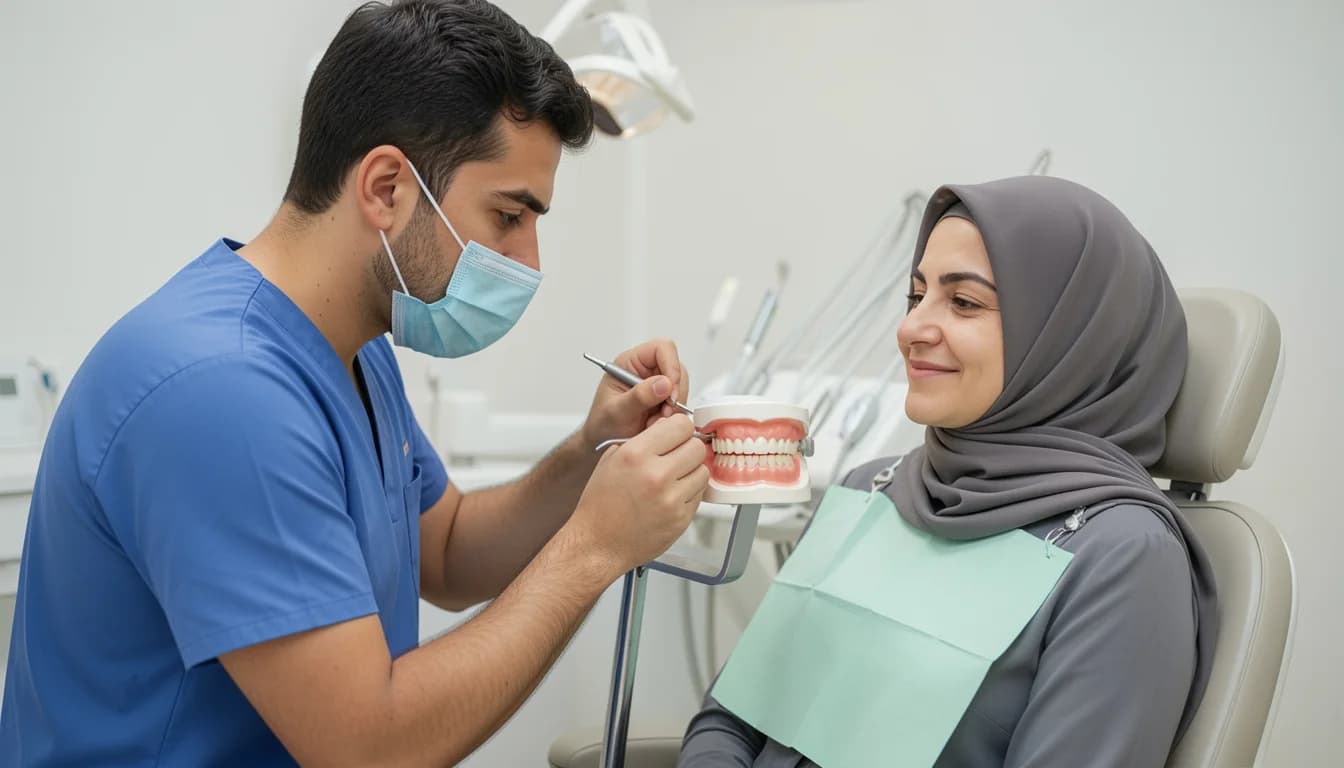
A dental filling is a restorative procedure in which decayed or fractured tooth structure is removed and the resulting cavity is rebuilt with a restorative material that restores the tooth's shape, its ability to bite and chew, and protects the pulp (nerve) from irritation. The first aim is to stop the decay process; the second is to re-create a smooth, well-sealed surface that does not trap bacteria.
Several materials are used. Composite resin (commonly called a light-cure filling) matches tooth colour and is bonded in layers. Amalgam is a silver-coloured metallic material long valued for its durability in back teeth. Glass ionomer cement releases fluoride and suits specific situations such as children's teeth or decay close to the gum line. Indirect restorations (ceramic or laboratory composite inlays and onlays) are fabricated outside the mouth and bonded in when tooth loss is extensive. The choice depends on the tooth's position, how much structure is missing, your bite forces, gum condition and aesthetic needs, and it is made after examination rather than before.
A filling also has clear limits. It replaces lost structure; it does not repair a damaged nerve. If decay has reached the pulp, or if pain is throbbing, spontaneous and wakes you at night, the expected pathway is root canal treatment followed by a restoration, not a surface filling. A filling does not prevent new decay around its margins if brushing habits and sugar intake stay unchanged; it does not whiten the tooth; and it does not correct crowding or spacing. A tooth that has lost a large part of its walls may need a crown or an indirect restoration, because a direct filling cannot support a weak wall and the tooth may fracture beneath it.
Fillings are not permanent. Service life varies with the quality of the work, oral hygiene, bite load and night-time grinding, so fillings are monitored clinically and with periodic radiographs to detect secondary decay beneath or around their margins before it reaches the nerve — early secondary decay is often painless.
Whether you need a filling, and which type, is determined by clinical examination and radiographs, not by reading a web page. Examination may show that a different plan is appropriate: cleaning and fluoride for early decay, root canal treatment, a crown, or extraction of a tooth that cannot be restored.
4 specialists
Procedure steps
1
Examination and diagnosis
The dentist examines the tooth with mirror and probe and, when needed, takes a radiograph to judge how deep the decay is and how close it lies to the nerve, and to detect interdental decay invisible to the eye. Options are then explained and a material chosen.
2
Local anaesthesia and isolation
The tooth is anaesthetised locally when required, then isolated with a rubber dam or cotton rolls and suction to keep the field dry. Dryness is essential for tooth-coloured materials to bond properly.
3
Decay removal and cavity preparation
Decayed tissue is removed with rotary or hand instruments while preserving as much sound structure as possible. The cavity is cleaned and its depth assessed; if it approaches the pulp, a protective liner is placed beneath the filling.
4
Placing and curing the material
Composite is placed incrementally and each layer is cured with a blue light; amalgam is condensed and carved; or a laboratory-made indirect restoration is bonded in place with a dedicated adhesive.
5
Bite adjustment and polishing
You bite on articulating paper so the restoration can be adjusted to your occlusion, then margins and surface are polished to reduce staining and plaque accumulation. A review visit is scheduled if needed.
Before the procedure
Tell your dentist about your long-term medications and any previous reaction to local anaesthetic or latex, whether you are pregnant or breastfeeding, and whether you have a prosthetic heart valve, a joint replacement, reduced immunity, or ongoing chemotherapy or radiotherapy. Mention blood thinners and bisphosphonate bone medication. Fasting is not usually required, but avoid arriving on a completely empty stomach because you may not be able to eat for an hour or two afterwards. Brush before the appointment, and tell the team if you have significant dental anxiety or a painful past experience — there are ways to reduce both pain and anxiety. If your pain is vague or poorly localised, expect a radiograph before any decision is made.
After the procedure
Wait until the anaesthetic wears off before eating (usually one to two hours) and avoid biting your lip, tongue or cheek while numb — this matters especially for children. Composite sets immediately and can be used carefully the same day; with amalgam you will be given a waiting time before heavy chewing. Mild sensitivity to cold or to chewing pressure may last from a few days up to two weeks and usually settles. Keep brushing twice daily and use floss, because the next episode of decay typically starts at the margins of a restoration. If you grind your teeth at night, discuss a night guard. **Contact your dentist promptly if you develop: persistent throbbing pain or pain that wakes you at night, facial or gum swelling or fever, a bad taste or pus discharge, sharp increasing pain on biting (the filling may be high), or a fractured or lost filling.** Spreading facial swelling with difficulty swallowing or breathing is an emergency and needs immediate care, not a later appointment.
Expected duration
Usually 20 to 45 minutes per tooth in a single visit; longer if several teeth are treated or the cavity is large.
تُعد د. يولا كوفالينكا من الكفاءات الطبية المتميزة في مجال طب الأسنان. تخرجت من جامعة لوغانسك الطبية الحكومية عام 2007، وكانت ضمن أوائل خمسة طلاب على دفعتها، وه…
يمتلك د. معتصم ارديسات خبرة مهنية واسعة في مجال طب الأسنان بدأت منذ عام 2007. تمتد مسيرته بين العمل الأكاديمي والممارسة السريرية في أوروبا والشرق الأوسط، مما من…
الدكتور محمد عرفات حسن هو طبيب أسنان وصاحب خبرات متقدمة في طب وجراحة الفم والأسنان، خرّيج جامعة دمشق العريقة في طب وجراحة الفم والأسنان (بكالوريوس)، وحاصل على ع…
الدكتور محمد أحمد علي الطراونة جرّاح فم ووجه وفكين، ومستشار في زراعة الأسنان وتجميل الوجه غير الجراحي. حاصل على البورد الأردني في جراحة الفم والوجه والفكين (201…
Which doctors are listed for Tooth Fillings in Jordan?
There are currently 4 doctor profiles linked to Tooth Fillings on ClinicsJo. Review the listed services and contact the practice to confirm availability with the doctor and branch you choose.
How can I find an appointment for Tooth Fillings?
Start with an available doctor's profile and use the contact or booking options shown there. Confirm the service, practice location and appointment time with the clinic. If this list is empty, broaden your search using the directory links on this page.
What does Tooth Fillings cost in Jordan?
Ask the practice for the current price and what it includes. A consultation fee shown on a profile is not necessarily the price of a procedure, tests or follow-up. Confirm any additional charges and insurance arrangements before your visit.
Explore related Dental Fillings doctor directories