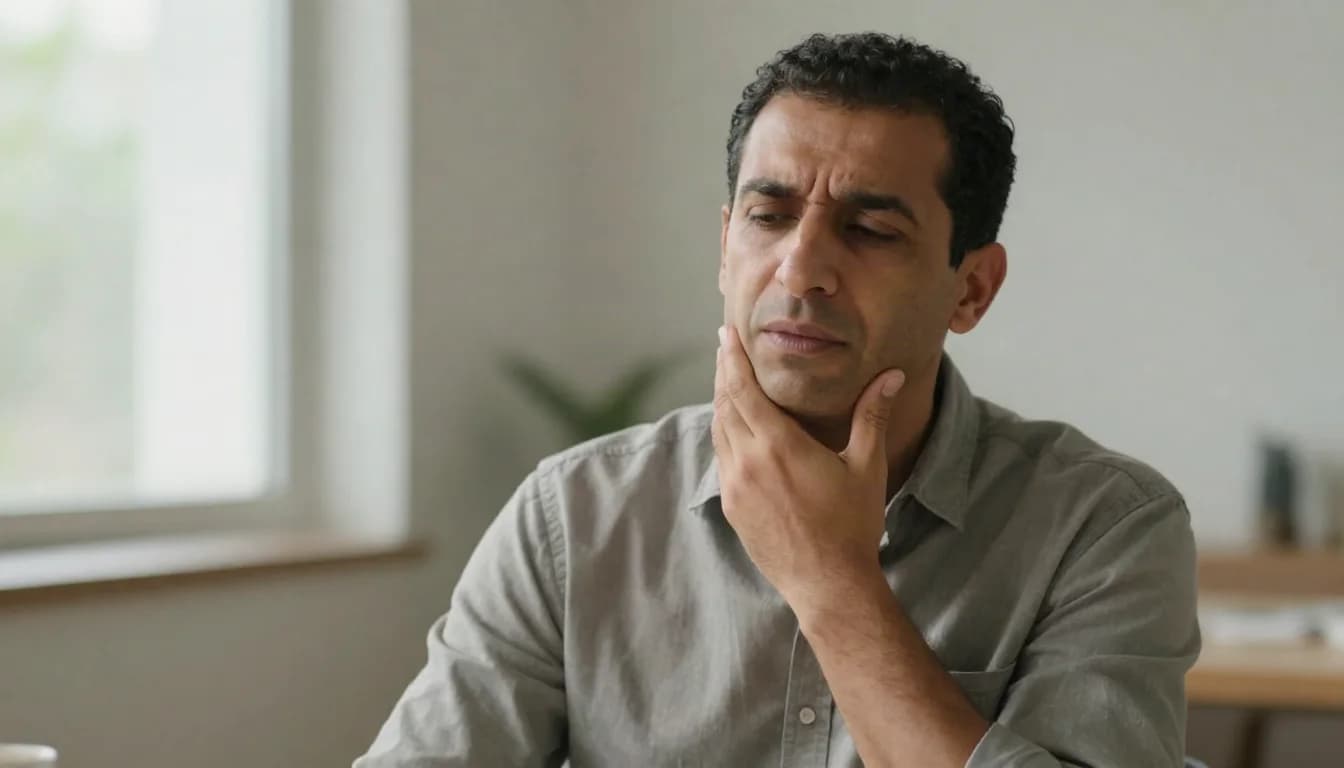
A dental cyst is a closed sac that forms inside the jaw bone or around the root of a tooth, containing fluid or soft tissue, and it slowly enlarges at the expense of the surrounding bone. The commonest types are a cyst arising around the root of a tooth whose nerve has died, and a cyst forming around the crown of an unerupted tooth such as a wisdom tooth or a canine.
Because it grows slowly and usually without pain, many cysts are found by chance on a routine dental radiograph. Signs may appear later: gradually increasing swelling, a tooth that loosens or shifts position, a feeling of pressure and heaviness, discharge with a salty taste, an acutely painful infection if bacteria enter, or numbness if a nerve is compressed.
Treatment depends on type, size and site. Complete removal of the cyst together with its lining is the mainstay, combined with treating the source: root canal treatment if the causative tooth can be saved, or extraction of that tooth or of the impacted tooth if it cannot. Very large cysts, or those close to important nerves, may first be opened and drained and kept decompressed so they shrink gradually before definitive removal, and the bony defect may be filled with graft material.
One point must never be skipped: every removed specimen should be sent for histopathology, because some lesions that look cystic on an image turn out to be locally aggressive benign tumours or cyst types known to recur, and that completely changes the follow-up plan. For certain types, radiographic review therefore continues for years.
The limits are explicit. Antibiotics do not dissolve or cure a cyst; they only temporarily settle an accompanying infection. Painkillers mask the sign without treating the cause. A cyst left alone does not disappear on its own but keeps expanding, can weaken bone enough for a minor blow to fracture it, and threatens healthy neighbouring teeth.
4 specialists
Procedure steps
1
Examination and reading the image
The surgeon examines the swelling and tests the vitality of neighbouring teeth, then reads a panoramic film and usually a three dimensional scan to define the size and borders of the cyst and its relation to roots, nerve and sinus.
2
Settling any active infection
If the cyst is infected or forming pus, drainage and treatment of the infection come first so that surgery is safer and more precise. This is a preparatory step, not a cure: the cyst itself remains and must still be removed.
3
Surgical access to the cyst
Under local or general anaesthesia depending on size, a gum flap is raised and a limited window is opened in the bone over the cyst, preserving as much healthy surrounding bone as possible.
4
Enucleation and histopathology
The cyst is removed together with its entire lining to reduce the chance of recurrence, the affected roots are treated or the causative tooth is extracted, and the specimen is sent for histopathology without exception to establish its true nature.
5
Closing the defect and radiographic follow-up
The bony defect may be filled with graft material or left to fill naturally, the gum is sutured, and periodic radiographic reviews are scheduled, continuing for years in types known to recur, according to the pathology result.
Before the procedure
Tell your surgeon about all your medicines, especially blood thinners, bone density drugs, steroids and immunosuppressants, and stop nothing on your own. Mention pregnancy or breastfeeding and any chronic condition such as diabetes, heart disease or a clotting disorder. Bring every old radiograph you have, even very old ones, because comparing the size of the lesion between an older and a recent image reveals how fast it is growing and can change the plan. Do not start an antibiotic on your own before assessment, as it masks the signs of infection without treating the cyst. Follow fasting rules if general anaesthesia or sedation is planned, arrange a driver, and prepare soft food and two days off.
After the procedure
Expect swelling and bruising for some days and a pressure sensation that eases gradually. Use cold packs in the first hours, sleep with your head raised, eat soft lukewarm food, avoid forceful rinsing and straws on the first day, and clean the other teeth gently with the prescribed rinse. If a decompression device or tube has been left in the cavity, irrigate it exactly as you were taught, since that is what makes the cyst shrink. Do not miss the appointment for your histopathology result or the later imaging reviews. **Seek care immediately if swelling increases after day three with fever, if bleeding will not stop with pressure, if there is pus or a foul smell, if numbness of the lip or chin persists, if pain becomes severe and increasing, or if swelling returns at the same site after weeks or months.**
Expected duration
Removing a small cyst under local anaesthesia usually takes 30 to 60 minutes, while large cysts or those near nerves may need one to two hours and possibly general anaesthesia. The bone generally takes six months to a year to fill in, with radiographic follow-up based on the cyst type.
تُعد د. يولا كوفالينكا من الكفاءات الطبية المتميزة في مجال طب الأسنان. تخرجت من جامعة لوغانسك الطبية الحكومية عام 2007، وكانت ضمن أوائل خمسة طلاب على دفعتها، وه…
يمتلك د. معتصم ارديسات خبرة مهنية واسعة في مجال طب الأسنان بدأت منذ عام 2007. تمتد مسيرته بين العمل الأكاديمي والممارسة السريرية في أوروبا والشرق الأوسط، مما من…
الدكتور محمد عرفات حسن هو طبيب أسنان وصاحب خبرات متقدمة في طب وجراحة الفم والأسنان، خرّيج جامعة دمشق العريقة في طب وجراحة الفم والأسنان (بكالوريوس)، وحاصل على ع…
الدكتور محمد أحمد علي الطراونة جرّاح فم ووجه وفكين، ومستشار في زراعة الأسنان وتجميل الوجه غير الجراحي. حاصل على البورد الأردني في جراحة الفم والوجه والفكين (201…
Which doctors are listed for Dental Cyst Operation in Jordan?
There are currently 4 doctor profiles linked to Dental Cyst Operation on ClinicsJo. Review the listed services and contact the practice to confirm availability with the doctor and branch you choose.
How can I find an appointment for Dental Cyst Operation?
Start with an available doctor's profile and use the contact or booking options shown there. Confirm the service, practice location and appointment time with the clinic. If this list is empty, broaden your search using the directory links on this page.
What does Dental Cyst Operation cost in Jordan?
Ask the practice for the current price and what it includes. A consultation fee shown on a profile is not necessarily the price of a procedure, tests or follow-up. Confirm any additional charges and insurance arrangements before your visit.
Explore related Oral & Maxillofacial Surgery doctor directories