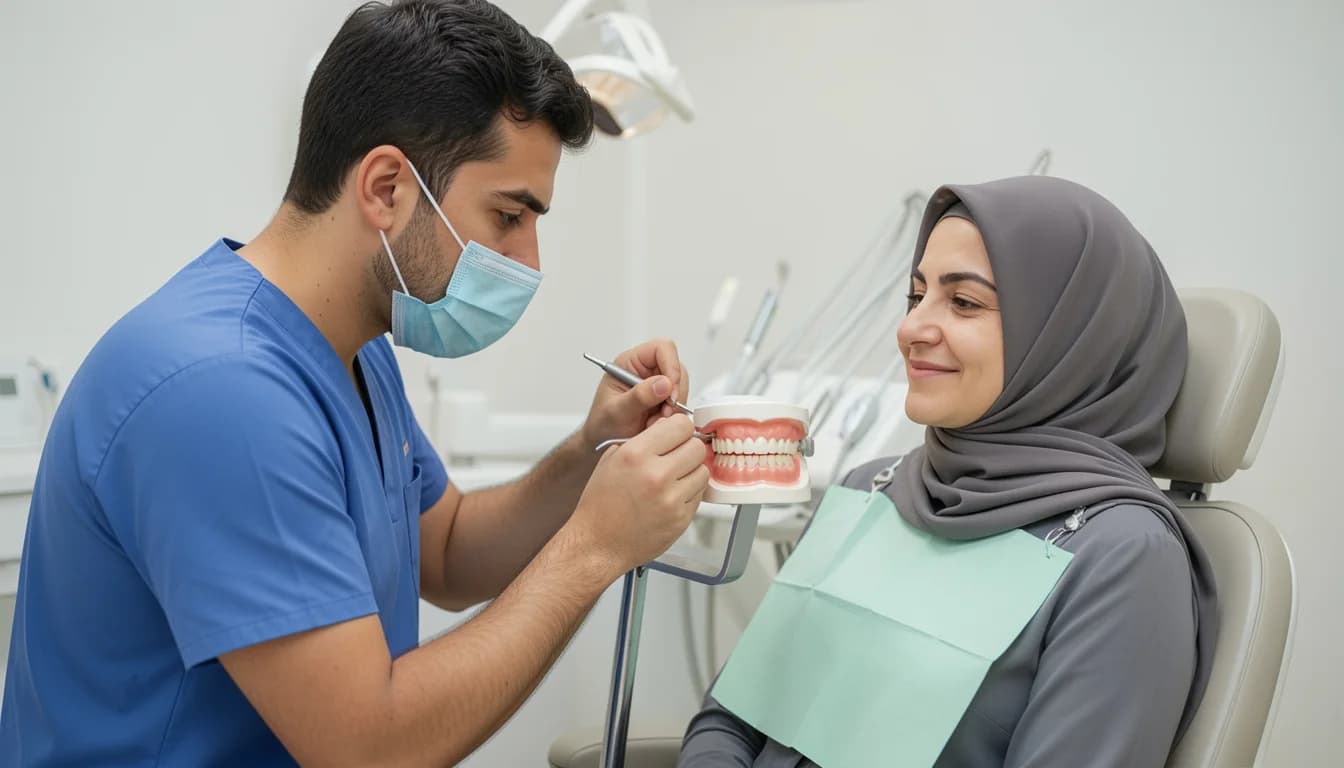
Treating a dental infection means dealing with a bacterial infection that began inside a tooth or in the gum around it and may have collected into pus, an abscess. The goal is not simply to silence the pain but to remove the source of infection: drain the pus, then clean the cause inside the tooth or around its root, because the infection will not resolve while its source remains.
Infection reaches a tooth in three common ways. Deep decay penetrates enamel and dentine and reaches the pulp, the nerve dies, and bacteria spread to the root tip. A deep periodontal pocket turns into an abscess beside the root. Or the gum around a partly erupted wisdom tooth becomes infected. Typical symptoms are increasing throbbing pain, a feeling that the tooth is raised and sore to bite on, swelling of the gum or face, a foul taste or smell, and sometimes fever with tender neck nodes.
Definitive treatment is source control. The dentist creates a drainage path for the pus, either through the root canal or with a small incision in the gum, then treats the cause: root canal therapy for a tooth that can be saved, extraction for a tooth that cannot be restored, or debridement of the pocket in a periodontal abscess. Antibiotics are an adjunct, decided clinically when there are signs of spread or systemic symptoms; they are not a replacement for drainage, because medication does not reach effectively into a closed collection of pus.
There is a common and dangerous mistake: the pain settles and the patient assumes the problem is cured. Usually the pain settles because the nerve has died, while the infection continues silently, expanding in the bone or turning into a chronic sinus tract, and later returns far more aggressively. Equally, an abscess must never be opened at home with a needle or any instrument, aspirin or caustic substances must never be placed on the tooth or gum because they burn the tissue, and leftover antibiotics from an old prescription must not be used.
The limits are important. Painkillers and antibiotics do not remove the source of infection. Drainage alone, without completing root canal treatment or extraction, means the abscess will return. Root canal treatment does not always succeed and may require retreatment, root surgery or extraction. Spread of infection into the deep spaces of the neck is a genuine emergency that comes before any clinic appointment. Which treatment suits your tooth is decided by clinical examination and radiographs, not by reading.
4 specialists
Procedure steps
1
Urgent assessment and severity triage
The dentist examines the tooth and gum, tests nerve vitality along with tapping and biting, and requests a radiograph or panoramic image to define the extent of infection around the root. Most important is looking for signs of spread: diffuse swelling, difficulty swallowing or opening the mouth, fever and feeling unwell; these go to emergency care, not to a routine appointment.
2
Draining the pus
The area is anaesthetised and a drainage path is created: either the crown is opened to reach the root canal and release the pressure, or a small incision is made in the gum when there is an obvious superficial collection. Drainage is what genuinely and rapidly relieves the pain, which usually eases noticeably within one to two days.
3
Removing the source of infection
Once the acute phase settles, definitive treatment is carried out: cleaning, shaping and filling the root canals in root canal therapy; extraction if fracture, decay or bone loss makes restoration unrealistic; or debridement of the periodontal pocket and root surface in a periodontal abscess.
4
Medication support when needed
The clinician decides whether an antibiotic is needed based on signs of spread, general health, chronic disease and immune status, and selects the medication and its duration. Painkillers are organised to cover the first two days. Do not start or stop any medication yourself, and never use an old prescription or someone else's medicine.
5
Final restoration and follow-up
A root-treated tooth needs a definitive restoration or crown to protect it from fracture, and the gap after extraction is planned later with a bridge or implant. A review is arranged to confirm healing of the bone around the root, and the drivers of recurrence are addressed, such as widespread decay, gum disease and blood sugar control.
Before the procedure
If you have facial swelling, fever, or difficulty swallowing or opening your mouth, do not wait for an appointment; seek urgent same-day care. For a routine appointment: note when the pain started, what it feels like, and whether it wakes you at night, whether pus has discharged or the taste in your mouth has changed, and take your temperature if you feel unwell. Tell the dentist about chronic conditions, especially diabetes, heart disease, prosthetic heart valves, immune deficiency or chemotherapy, about all your medications including blood thinners and bisphosphonates, and about any drug allergy. Bring any previous radiograph or report. Never open an abscess yourself with a needle or any instrument, never place aspirin or caustic substances on the tooth or gum, do not start an antibiotic from an old prescription, and do not apply a hot compress to facial swelling.
After the procedure
Keep every appointment needed to complete treatment even if the pain has gone completely; pain relief does not mean the infection has gone. Take any prescribed medication for the full course as directed and do not stop it when you feel better. After the first day, rinse several times daily with warm water and a little salt to help drainage inside the mouth, clean gently around the area, eat soft food and lukewarm drinks, keep well hydrated, and avoid smoking because it delays healing. Sleep with your head raised on two pillows if there is swelling, and use a cold pack on the outside during the first day.
Seek care immediately if you develop: **swelling that spreads quickly or reaches the eye, under the jaw or the neck, difficulty swallowing, breathing or speaking, inability to open your mouth, a temperature of 38.5C or above with shivering, confusion or severe dizziness, pain that increases after the third day instead of easing, or persistent numbness of the lip or chin**. Signs of spread into the neck are an immediate emergency: go to the nearest emergency department and do not wait for a clinic appointment.
Expected duration
The first drainage visit usually takes 30 to 60 minutes, pain typically begins to settle within 24 to 48 hours, and one or two further visits complete treatment
تُعد د. يولا كوفالينكا من الكفاءات الطبية المتميزة في مجال طب الأسنان. تخرجت من جامعة لوغانسك الطبية الحكومية عام 2007، وكانت ضمن أوائل خمسة طلاب على دفعتها، وه…
يمتلك د. معتصم ارديسات خبرة مهنية واسعة في مجال طب الأسنان بدأت منذ عام 2007. تمتد مسيرته بين العمل الأكاديمي والممارسة السريرية في أوروبا والشرق الأوسط، مما من…
الدكتور محمد عرفات حسن هو طبيب أسنان وصاحب خبرات متقدمة في طب وجراحة الفم والأسنان، خرّيج جامعة دمشق العريقة في طب وجراحة الفم والأسنان (بكالوريوس)، وحاصل على ع…
الدكتور محمد أحمد علي الطراونة جرّاح فم ووجه وفكين، ومستشار في زراعة الأسنان وتجميل الوجه غير الجراحي. حاصل على البورد الأردني في جراحة الفم والوجه والفكين (201…
Finding Dental infection treatment services in Jordan
Which doctors are listed for Dental infection treatment in Jordan?
There are currently 4 doctor profiles linked to Dental infection treatment on ClinicsJo. Review the listed services and contact the practice to confirm availability with the doctor and branch you choose.
How can I find an appointment for Dental infection treatment?
Start with an available doctor's profile and use the contact or booking options shown there. Confirm the service, practice location and appointment time with the clinic. If this list is empty, broaden your search using the directory links on this page.
What does Dental infection treatment cost in Jordan?
Ask the practice for the current price and what it includes. A consultation fee shown on a profile is not necessarily the price of a procedure, tests or follow-up. Confirm any additional charges and insurance arrangements before your visit.