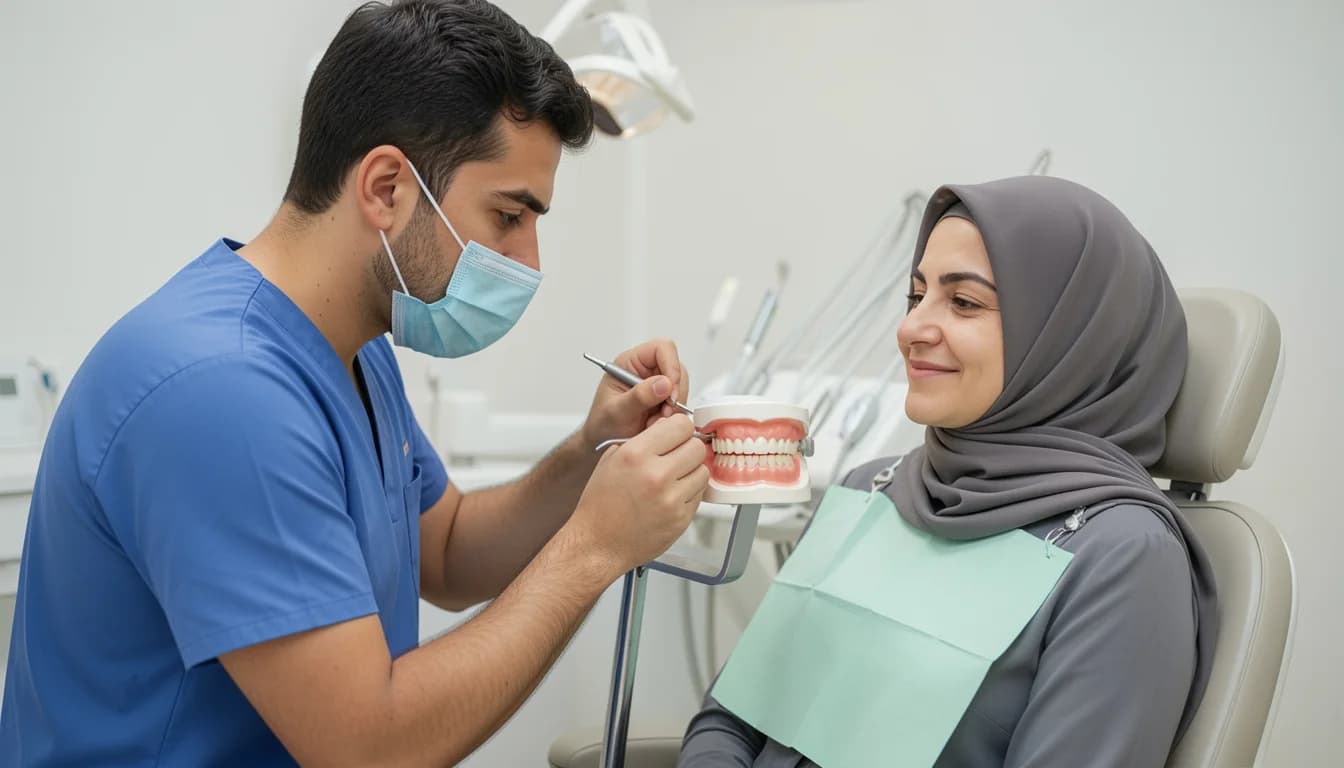
Denture repair restores the integrity of a removable prosthesis that has fractured or been damaged: an acrylic base split into two pieces, a tooth detached or lost from the base, a broken metal clasp, or cracking around a tooth position. The repair is carried out in the laboratory with a dedicated acrylic joint, by adding a new tooth, or by repairing the metal framework, and it may require a fresh impression if the gum underneath has changed shape.
Repair is distinct from relining. Relining treats a loose denture rather than a broken one: a layer of material is added to the inner surface so it matches the current shape of the gum after the bone beneath has changed. A soft liner is used for sensitive tissues and a hard liner for general use, and part of the work may be done at the chair or the denture may be sent to the laboratory. If, however, the denture is worn out, its teeth are abraded, or its bite height has been lost, remaking it is sounder than repeated patching that does not address the underlying problem.
One warning must not be skipped: never repair your denture with household or instant glue. These materials are not intended for the mouth and may harm the tissues; they alter the dimensions of the broken pieces and leave a layer that prevents a proper laboratory joint, making the repair harder or impossible and forcing a new denture to be made. Bring every fragment, however small, to the clinic exactly as it is, without trying to assemble it or clean it with abrasives.
The limits are explicit. A repair restores shape but does not restore a fit that has been lost; it does not treat the cause of the fracture when that is repeated dropping, an unbalanced pressure point, or bone that has changed shape; and it does not prevent new looseness, because bone keeps remodelling after tooth loss. A fracture recurring in the same place is not bad luck but a clinical sign of a fit or bite problem that deserves assessment rather than another weld. It is also a myth that a removable prosthesis frees you from cleaning your mouth: the denture base carries a bacterial film that needs daily cleaning, and the gums need cleaning and a nightly rest. And treating extraction of the remaining teeth as easier and cheaper than saving them costs you bone and reduces the stability of any future denture. How long a denture lasts depends on its hygiene and your habits, not on a promised number of years.
4 specialists
Procedure steps
1
Assessing the fragments and the cause of the fracture
The broken pieces are examined and their edges matched, and you are asked how the fracture happened: a fall, biting something hard, or a spontaneous break while chewing. A spontaneous or repeatedly recurring fracture in the same place points to a fit or bite problem rather than an accident.
2
Examining the mouth and the fit
The gums, bony ridges and any ulcers, tissue overgrowth or fungal inflammation beneath the base are examined, and the degree of looseness, the bite height and the wear of the denture teeth are assessed. This examination decides whether a repair alone, a repair with relining, or a remake is required.
3
Deciding and explaining the options
You are shown the difference between a quick repair that restores shape, a reline that restores fit, and a remake that addresses a worn-out denture. The limits of each are stated plainly, so you do not expect a weld to solve looseness, or a reline to correct abraded teeth or a collapsed bite.
4
Laboratory work and impression if needed
The fragments are held in their correct position and joined with acrylic, or a tooth matching the shade and size is added, or the clasp is repaired. If relining is needed, an impression is taken inside the denture itself to record the current gum shape and is then processed in the laboratory.
5
Try-in, delivery and relief of pressure points
The denture is reseated in your mouth and checked for rocking, the bite is marked so pressure points can be relieved, and the borders are polished. A short review is then arranged to confirm no ulcer has developed, and daily cleaning of the denture and gums is explained.
Before the procedure
Bring every fragment of the denture, however small, and do not try to glue it, clean it with abrasives, or boil it, because distortion prevents a laboratory repair. Tell your dentist when and how it broke, whether the fracture has recurred in the same place, and when the denture was originally made. Say whether you remove it at night or sleep in it, and whether you use adhesive and how much, since growing reliance on adhesive signals looseness that needs relining. Report your chronic conditions and medicines, especially those causing dry mouth, and any burning, ulcer or white patch you have noticed. Bring a spare old denture if you have one, and do not wear a broken denture until your appointment, as its sharp edge cuts the gum.
After the procedure
After collecting the repaired denture, start with soft food cut small and chew on both sides for the first two days, and do not bite hard food with the front teeth. Clean the denture morning and evening with a denture brush and mild soap outside the mouth, over a basin filled with water so it survives a drop, and never use abrasive toothpaste, hot water or household bleach, all of which damage acrylic. Take it out at night and keep it in water or a dedicated solution, and clean your gums, tongue and palate daily with a soft brush; a prosthesis does not exempt you from cleaning your mouth. Avoid relying on adhesive to mask looseness, and attend a yearly review to assess the need for relining. **Seek care immediately for an ulcer that does not heal within two weeks, a persistent white or red patch, swelling or fever, difficulty swallowing or breathing, or increasing pain or bleeding beneath the base.** Also return if the fracture recurs or the denture starts rocking again.
Expected duration
A simple repair usually takes one hour to 24 hours in the laboratory, while relining generally needs one or two visits over one to three days depending on the material.
تُعد د. يولا كوفالينكا من الكفاءات الطبية المتميزة في مجال طب الأسنان. تخرجت من جامعة لوغانسك الطبية الحكومية عام 2007، وكانت ضمن أوائل خمسة طلاب على دفعتها، وه…
يمتلك د. معتصم ارديسات خبرة مهنية واسعة في مجال طب الأسنان بدأت منذ عام 2007. تمتد مسيرته بين العمل الأكاديمي والممارسة السريرية في أوروبا والشرق الأوسط، مما من…
الدكتور محمد عرفات حسن هو طبيب أسنان وصاحب خبرات متقدمة في طب وجراحة الفم والأسنان، خرّيج جامعة دمشق العريقة في طب وجراحة الفم والأسنان (بكالوريوس)، وحاصل على ع…
الدكتور محمد أحمد علي الطراونة جرّاح فم ووجه وفكين، ومستشار في زراعة الأسنان وتجميل الوجه غير الجراحي. حاصل على البورد الأردني في جراحة الفم والوجه والفكين (201…
Which doctors are listed for Denture Repair in Jordan?
There are currently 4 doctor profiles linked to Denture Repair on ClinicsJo. Review the listed services and contact the practice to confirm availability with the doctor and branch you choose.
How can I find an appointment for Denture Repair?
Start with an available doctor's profile and use the contact or booking options shown there. Confirm the service, practice location and appointment time with the clinic. If this list is empty, broaden your search using the directory links on this page.
What does Denture Repair cost in Jordan?
Ask the practice for the current price and what it includes. A consultation fee shown on a profile is not necessarily the price of a procedure, tests or follow-up. Confirm any additional charges and insurance arrangements before your visit.
Explore related Prosthodontics (Crowns & Bridges) doctor directories