
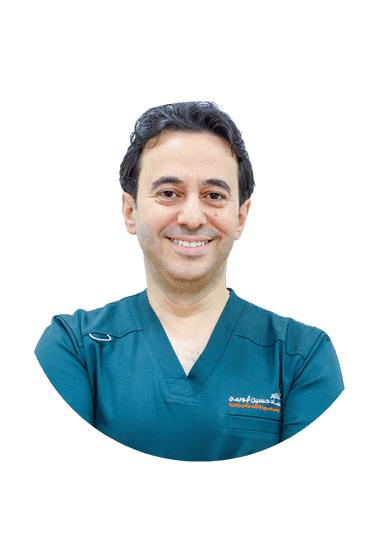
Dr. Imad Hussein Abu Romeh ENT Clinic
Imad Hussein Abu Romeh is an ENT surgery specialist in Amman. His qualifications include a medical degree from Cairo University, the Jordanian Board in otolaryn…
Hours not listedInsurance not specified7 views
Trusted medical platform in Jordan

علاج ضعف السمع عند الاطفال
Treatment of hearing loss in children is a coordinated pathway: first defining the type and degree of loss and which ear is affected, then giving the child adequate access to sound as quickly as possible, followed by language rehabilitation and support at home and in school. It is not a single procedure. Treatment may be medical, as with persistent middle ear fluid; it may be compensatory with hearing aids; and in severe loss it may involve cochlear implantation. Auditory and speech therapy accompanies every one of these options. The most important thing for parents to understand is that time itself is part of the treatment. The brain builds its language pathways during the earliest years, and a child who does not hear clearly does not only speak late: he also falls behind later in reading, comprehension and school achievement, and sometimes in social communication. Waiting for a child to "talk on his own" is therefore not safe, and reassurance drawn from a relative who spoke late and turned out fine is misleading. Children with hearing loss often appear responsive and attentive because they read faces and movement, which hides the problem from their family. The practical starting point is newborn hearing screening, performed in the first days of life before discharge from hospital. Passing that screen does not remove the need for continued observation, because some hearing loss appears later or progresses gradually. Watch for turning towards sound, cooing and then repeated syllables, responding to his own name, first words in the second year, clarity of speech later on, turning the television up, frequently asking for sentences to be repeated, and declining attention in the classroom. The limits of treatment should be stated plainly. A hearing aid provides access to sound but does not teach language; the child needs structured listening and speech training. Ventilation tubes treat middle ear fluid and do not repair a nerve-related loss. Cochlear implantation does not make hearing normal, is a multidisciplinary team decision with defined conditions, and requires prolonged speech rehabilitation afterwards. No medicine or supplement restores damaged sensory cells in the inner ear. The treatment plan is determined by clinical examination and audiological assessment, not by reading. The family is an essential part of that plan: talking to the child often, clearly and face to face, reading stories, reducing background noise at home, and making sure the child is seated close to the teacher all improve outcomes as much as the device itself.
Age-appropriate tests are used: auditory brainstem response and otoacoustic emissions for infants, conditioned play or behavioural audiometry for older children, together with middle ear testing. The aim is to define the type and degree of loss in each ear, because the type determines whether treatment is medical or compensatory.
If the cause is persistent middle ear fluid, recurrent infections, enlarged adenoids or impacted wax, this is addressed first through medical follow-up or a simple intervention such as ventilation tubes when indicated. Many childhood hearing problems fall into this group and improve once the underlying cause is treated.
For permanent loss, hearing aids are prescribed, programmed to the test results and held by an earmould made for the child's ear, with new moulds as the ear grows. Families are taught insertion and a daily check that the device is working, and close follow-up visits are arranged because a child cannot describe what is missing.
A programme of listening training, sound discrimination and vocabulary building begins with a speech therapist, with parents carrying out short daily exercises inside normal routines. This part cannot be skipped: the device delivers sound, while rehabilitation is what turns that sound into language the child understands and uses.
The school is asked to seat the child close to and facing the teacher, reduce background noise, check that instructions are understood, and use assistive listening systems when needed. Hearing is reviewed periodically because loss can progress or programming needs may change, and any decline in school performance should prompt a repeat hearing test.
Bring the newborn hearing screening report, any previous hearing tests, the birth report, a list of your child's medicines, and any records of recurrent ear infections or neonatal intensive care. Before the visit, write an honest record of speech development: when babbling started, when the first words appeared, how many words are used now, whether the child answers to his name from another room, and whether he turns the television up or asks for sentences to be repeated. Tell the audiologist if anyone in the family has had hearing loss since childhood. Do not clean inside your child's ear with cotton buds and do not put oil or drops in the canal before testing, as this pushes wax deeper and distorts results. Bring the child rested and fed, with a favourite toy for distraction, and tell the clinic if he currently has a cold, as postponing a few days may be better.
Follow the plan consistently, since regularity matters more than intensity. Have your child wear the hearing aid during all waking hours, check every morning that the device works and the mould is clean and not blocked with wax, and have a new mould made when it becomes tight or starts whistling as the ear grows. Talk to your child often, face to face, with good light on your face, name objects, read to him daily, and reduce television and fan noise while talking. Carry out the speech therapist's exercises within everyday situations rather than only in formal sessions, and note any changes for the next review. Seek care immediately if: **hearing drops suddenly or rapidly**, **there is discharge, blood or a foul smell from the ear**, **fever occurs with severe pain or swelling behind the ear**, **the child stops responding to sounds he used to hear**, or there is repeated dizziness and loss of balance.
A paediatric hearing assessment usually takes 30 to 90 minutes depending on age and the tests used, and may be split over two visits. Fitting a hearing aid and making an earmould needs one to two visits within about two weeks. Auditory and speech rehabilitation is an ongoing programme, typically with weekly sessions, alongside periodic hearing review that continues for years as the child grows.
Imad Hussein Abu Romeh is an ENT surgery specialist in Amman. His qualifications include a medical degree from Cairo University, the Jordanian Board in otolaryn…
There are currently 1 doctor profiles linked to Hearing Impairment treatment In Children on ClinicsJo. Review the listed services and contact the practice to confirm availability with the doctor and branch you choose.
Start with an available doctor's profile and use the contact or booking options shown there. Confirm the service, practice location and appointment time with the clinic. If this list is empty, broaden your search using the directory links on this page.
Ask the practice for the current price and what it includes. A consultation fee shown on a profile is not necessarily the price of a procedure, tests or follow-up. Confirm any additional charges and insurance arrangements before your visit.