

Dr Reem Al Qudah Clinic
Dr Reem Al Qudah is a dermatologist and venereologist with the Jordanian Board in dermatology. Her practice combines care for skin, hair and nail disorders with…
Hours not listedInsurance not specified7 views
Trusted medical platform in Jordan
"HydraFacial" is the best-known brand name for a facial cleansing session known medically as hydradermabrasion: a device that combines in a single handpiece four steps that used to be performed separately — loosening the surface layer of dead skin with a mild solution, extracting debris and oil from the pores using gentle suction, and delivering hydrating and antioxidant serums onto skin that has just been opened. The idea is that exfoliation and hydration happen at the same moment, so the skin looks cleaner and brighter without the visible peeling phase of a medium-depth chemical peel. What the treatment genuinely does: improve skin texture, pore cleanliness and radiance for a few weeks. What it does not do deserves equal clarity — **it is not a treatment for active acne, deep pigmentation, established wrinkles or atrophic scars**, and it does not replace medical treatment for anyone with an existing skin condition. Promoting it as a complete solution for the skin is marketing overreach with no medical basis. The result is **temporary by nature**: skin renews itself continuously, so the improvement fades gradually and needs repeating at intervals a dermatologist sets according to your skin type and the goal of the session. More important still, the session must be performed **in a licensed facility by a qualified person**. These devices are now used in salons and homes with unsterilised tips and serums of unknown origin, and that is the real source of harm in an otherwise safe procedure: dermatitis, or an infection transmitted by a handpiece that was never disinfected. Before any session, whoever performs it must know your skin history: are you using vitamin A derivatives or strong exfoliants? Do you get recurrent cold sores? Have you had a peel or laser recently? Are you pregnant? These questions change the plan or postpone the session, and their absence tells you the place does not deserve your skin.
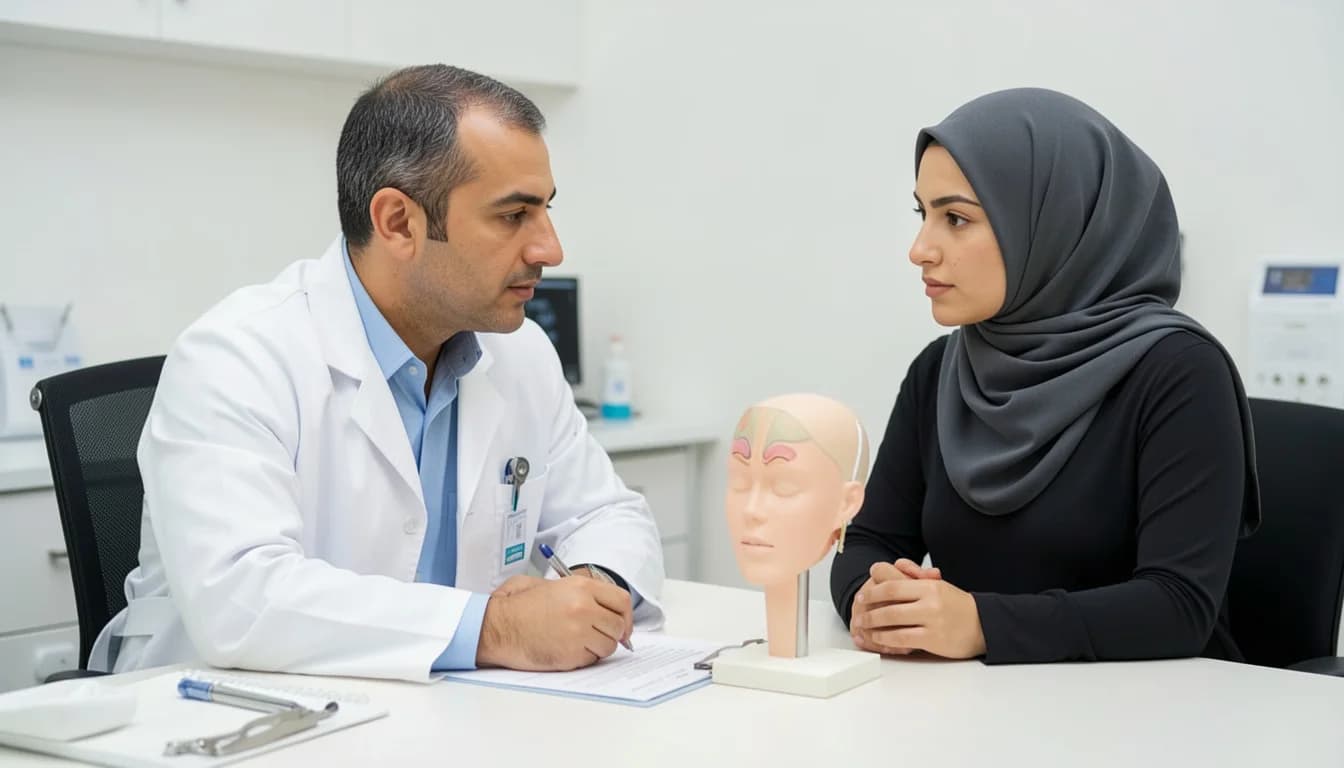
The doctor examines your skin type, sensitivity and any active inflammation, and asks about topical medicines, exfoliants, recent laser and pregnancy. This assessment sets the intensity of the session and the choice of serums, and may postpone it.
The face is cleared of make-up and oils, then the handpiece passes with a mild solution that loosens dead cells from the surface. The usual sensation is slight tugging and coolness, not pain.
The device draws out the loosened debris and oil using gentle negative pressure. Oilier areas such as the nose may feel more sensitive, and the pressure there is reduced.
Hydrating and antioxidant serums are applied to the prepared skin. The choice follows the skin assessment; it should never be dictated by a promotional package or a serum of unknown origin.
The skin is soothed and sunscreen applied, and a repeat interval is set if the goal requires a series. You should leave with written instructions, not verbal advice.
Stop strong exfoliants and vitamin A derivatives for the interval your doctor specifies — recent use thins the skin and invites irritation. Mention any recurrent cold sores (you may need preventive cover beforehand), any recent peel, laser or laser hair removal, and any allergy to skincare products. **Do not have the session on skin with active inflammation, pustular acne, an open wound or sunburn** — wait until it settles. Do not wax or thread facial hair the same day. Arrive with a clean face and no make-up if possible, and if you are pregnant or breastfeeding say so explicitly, because some serums are substituted. Verify the facility's licence and the qualification of whoever will perform the session before you book, and ask how the handpiece is sterilised between patients.
Skin is more permeable after the session, so treat it gently: lukewarm water, a mild cleanser, and daily sun protection — sun exposure after exfoliation is the fastest route to pigmentation that undoes the result. Postpone exfoliants, vitamin A derivatives and heavy make-up for a day or two as your doctor directs, and avoid sauna, steam, swimming pools and intense exercise the same day. Mild redness and a tight feeling for a few hours are expected. **See your doctor promptly if you develop increasing pain, swelling, local heat, clustered painful blisters (possibly reactivated herpes), purulent discharge or a spreading rash** — these are not a "normal reaction" and should not be treated with over-the-counter products without examination. And if your skin has not improved after a full series, the problem needs a medical diagnosis rather than more sessions.
A single session usually takes 30 to 45 minutes with no downtime; the initial course is typically a series set by assessment, followed by maintenance at intervals your dermatologist defines.
Dr Reem Al Qudah is a dermatologist and venereologist with the Jordanian Board in dermatology. Her practice combines care for skin, hair and nail disorders with…
There are currently 1 doctor profiles linked to HydraFacial skin treatment on ClinicsJo. Review the listed services and contact the practice to confirm availability with the doctor and branch you choose.
Start with an available doctor's profile and use the contact or booking options shown there. Confirm the service, practice location and appointment time with the clinic. If this list is empty, broaden your search using the directory links on this page.
Ask the practice for the current price and what it includes. A consultation fee shown on a profile is not necessarily the price of a procedure, tests or follow-up. Confirm any additional charges and insurance arrangements before your visit.