Dr Reem Al Qudah Clinic
Dr Reem Al Qudah is a dermatologist and venereologist with the Jordanian Board in dermatology. Her practice combines care for skin, hair and nail disorders with…
Hours not listedInsurance not specified8 views
Trusted medical platform in Jordan
تقشير وتجديد الجلد بالليزر
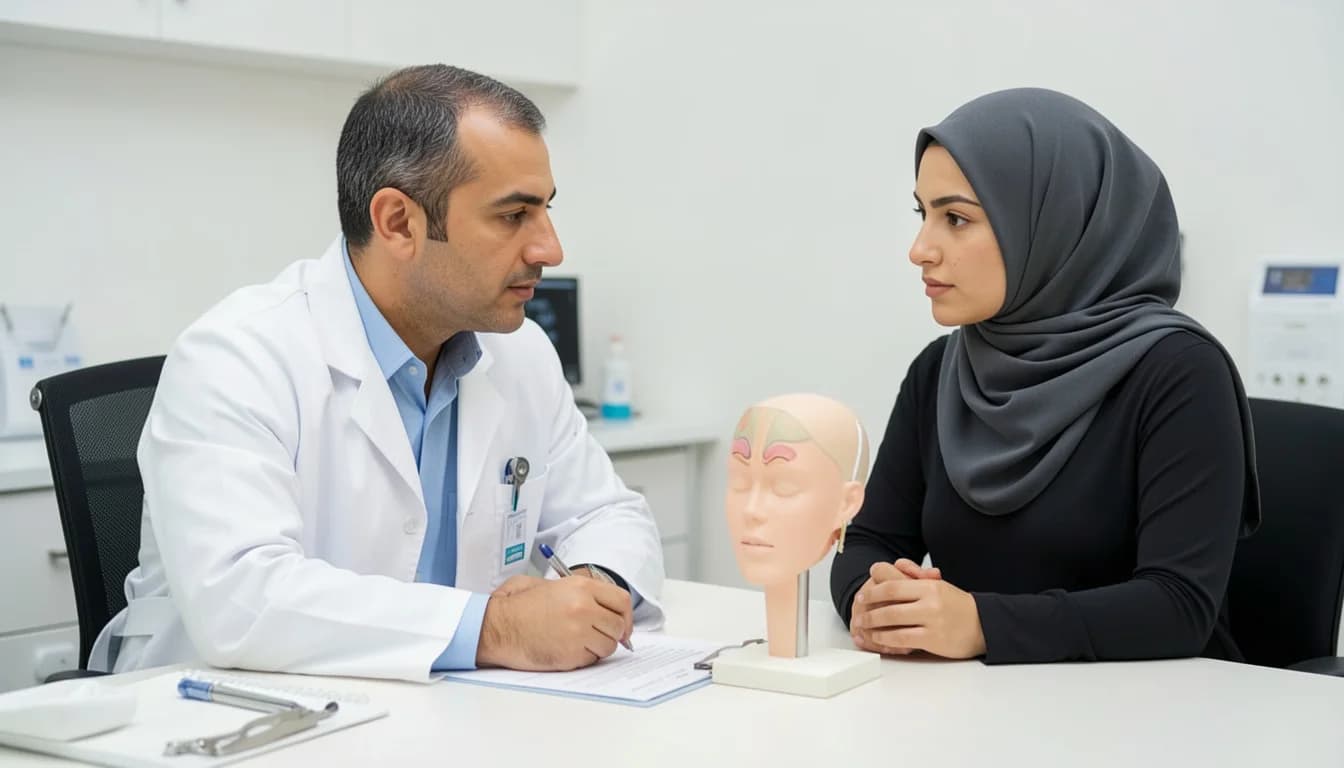
Laser skin resurfacing and rejuvenation is a dermatological procedure that delivers light energy at a wavelength absorbed by water in the skin, either removing extremely thin layers of the surface or heating the dermis without removing the surface. New collagen formation is stimulated, and texture and pigmentation improve over the weeks of remodelling that follow. In other words, the result comes from how the skin responds rather than from the device itself. There are two families. Ablative lasers remove the surface and give a more obvious change in exchange for a longer recovery with weeks of redness. Non-ablative lasers work beneath an intact surface and give gradual improvement with more sessions and shorter downtime. Both are commonly used in a fractional pattern that treats microscopic columns and leaves untreated skin between them to speed healing. Which option and what intensity suit you is decided by clinical examination of your skin type, thickness, and main concern, not by the brand name of a machine. Realistic indications include fine lines around the eyes and mouth, rough texture and enlarged pores, superficial to moderate acne scarring, sun-induced pigmentation and melasma treated with great caution, and some scars. In the medium and darker skin tones common in Jordan, the risk of post-inflammatory hyperpigmentation is higher, so settings are reduced, intervals lengthened, and sun protection enforced strictly, and preparing the skin with a topical regimen beforehand is often preferred. The limits deserve plain language. Laser renews the surface and quality of the skin; it does not tighten true laxity or lift sagging tissue, which is the work of surgery, threads, or other modalities. It does not completely erase deep ice-pick scars, and combined treatments are often needed. It does not stop ageing, so results require maintenance. It is not used on actively inflamed acne before that is controlled. And it does not prevent pigmentation from returning if sun exposure continues without protection, since sun protection influences the outcome more than the device does. Some situations mean postponing or avoiding treatment: pregnancy and breastfeeding, active skin infection or recurrent cold sores without prophylaxis, recent use of oral vitamin A derivatives for acne, a tendency to keloid scarring, recent tanning or heavy sun exposure, immune or clotting disorders, and unrealistic expectations of what one session can achieve.
Skin type, tone, thickness, the main concern, and sun damage are assessed, and the medication history, cold sores, keloid tendency, and pregnancy are reviewed. The area is photographed beforehand, and the expected outcome, the limits, the number of sessions, and the downtime are explained.
Sun exposure and tanning are stopped for weeks beforehand, a topical preparatory regimen may be prescribed to reduce the risk of hyperpigmentation, antiviral prophylaxis is given to those with recurrent cold sores, and some topical exfoliants are paused before the appointment.
The skin is cleansed and a topical anaesthetic is applied for an adequate time. Cooling or injected local anaesthesia is used for sensitive areas or deeper treatment, and eye protection is worn by everyone in the room before the device is switched on.
The skin is treated in successive passes with calculated coverage, settings are reduced on the eyelids, neck, and thin areas, and acne scars are treated with locally higher intensity. The immediate skin response is observed and settings are adjusted accordingly rather than following a fixed number.
Healing ointments and cooling are applied and daily care is explained. The skin is reviewed after a week and again at one to two months to measure improvement and watch for pigmentation, and the next session is scheduled after an interval long enough for collagen remodelling.
Stop sun exposure, tanning, and tanning devices for several weeks before the session, and use a high-protection sunscreen every day including cloudy days; this is the single most important preparation. Tell your doctor about all medications and supplements, especially any recent oral vitamin A derivative for acne, blood thinners, immune-modifying drugs, and anything that increases light sensitivity. Mention recurrent cold sores, as you will need prophylaxis before treatment, any tendency to raised or keloid scars, and any melasma or pigmentation that followed a previous procedure. Avoid chemical peels, waxing, and light-based hair removal in the area for two weeks beforehand. Arrive with a clean face without make-up or cream, tell your doctor if you are pregnant or breastfeeding, and plan your recovery days in advance rather than booking shortly before an event.
Expect redness, warmth, mild swelling, and a sunburn-like sensation in the first days, followed by fine peeling and dryness; this is normal healing, not a complication. Cool the area with clean compresses, cleanse gently with lukewarm water using clean fingers, and apply the prescribed ointment in thin frequent layers so the surface stays moist. Do not scratch, exfoliate, or pick crusts, as this causes pigmentation or scarring, and avoid acids, retinoids, and scrubs until your doctor allows them. Avoid sun completely, use a broad-spectrum sunscreen once the surface has healed, and wear a hat. Postpone swimming, steam rooms, saunas, vigorous exercise, and heavy make-up as directed. Drink enough water and keep your face off the pillow while sleeping. **Seek care promptly for increasing pain or spreading hot redness, yellow discharge or honey-coloured crusts, fever, painful clustered blisters suggesting a herpes flare, new white or dark patches, delayed healing, or a raised scar.**
A session usually takes 20 to 60 minutes depending on the area and is often repeated every 3 to 6 weeks for non-ablative treatment, while ablative treatment needs longer recovery and fewer sessions.
Dr Reem Al Qudah is a dermatologist and venereologist with the Jordanian Board in dermatology. Her practice combines care for skin, hair and nail disorders with…
Dr Huda Al Qudah is a consultant dermatologist and venereologist, a Jordan University of Science and Technology graduate and holder of the Jordanian Board. Her …
Dr Reem Mahmoud Al Awadi is a dermatologist and venereologist with the Jordanian Board in the specialty. At her Shmeisani practice, she assesses skin and hair c…
There are currently 3 doctor profiles linked to Laser skin resurfacing and rejuvenation on ClinicsJo. Review the listed services and contact the practice to confirm availability with the doctor and branch you choose.
Start with an available doctor's profile and use the contact or booking options shown there. Confirm the service, practice location and appointment time with the clinic. If this list is empty, broaden your search using the directory links on this page.
Ask the practice for the current price and what it includes. A consultation fee shown on a profile is not necessarily the price of a procedure, tests or follow-up. Confirm any additional charges and insurance arrangements before your visit.