
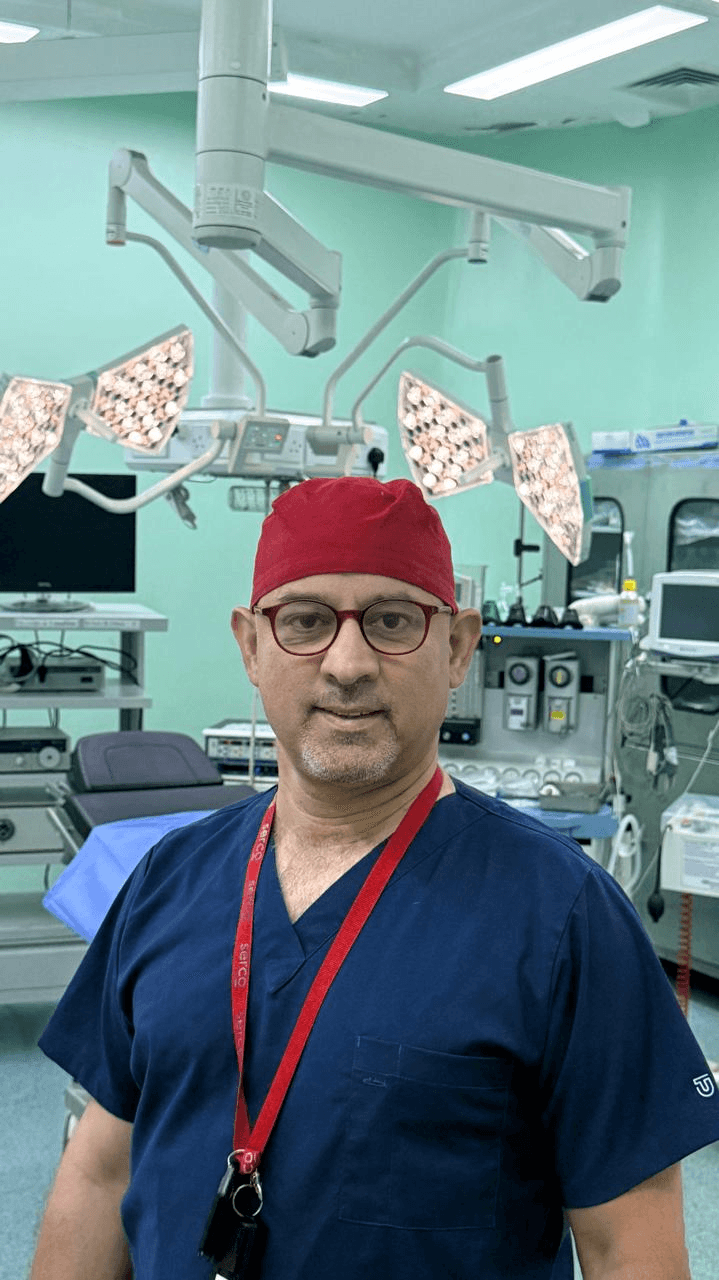
Dr. Khaled Hassan Badran ENT Clinic
Dr. Khaled Hassan Badran is a consultant ENT surgeon caring for adults and children at his clinic in Shmeisani, Amman. He holds European and Jordanian ENT Board…
Hours not listedInsurance not specified9 views
Trusted medical platform in Jordan

Treating nasal obstruction aims to identify and address the cause of reduced airflow through the nose, rather than simply opening the nose temporarily. Obstruction is a symptom, not a disease, and it has several causes that can coexist in the same patient: allergic or non-allergic rhinitis, a deviated nasal septum, enlarged turbinates, nasal polyps, adenoid enlargement behind the nose in children, rebound congestion from overuse of decongestant sprays, changes during pregnancy, and less common causes such as masses and tumours. Assessment begins with a careful history: whether the blockage is one-sided or alternates between sides, whether it worsens at night or on lying down, and whether it is accompanied by sneezing, itching and watery eyes, which points towards allergy; by purulent discharge and facial heaviness, which points towards the sinuses; or by nosebleeds and one-sided pain, which calls for greater caution. Nasal endoscopy then visualises the septum, turbinates, drainage openings, polyps and the nasopharynx, and allergy testing or imaging may be requested depending on the findings. Treatment follows the cause: saline irrigation and a topical intranasal steroid for chronic rhinitis; antihistamines and reduced allergen exposure in allergic rhinitis; treatment of sinus disease or polyps where present; turbinate reduction, by radiofrequency or another technique, for enlargement that resists medical therapy; septoplasty for a demonstrated deviation that explains the symptoms; and adenoidectomy in children when appropriate. The limits stated frankly: septoplasty widens the airway but does not treat allergy and does not prevent colds, which is why topical treatment continues afterwards in patients with allergic rhinitis. A decongestant spray opens the nose within minutes, but using it for more than a few days causes rebound congestion, leaving the nose dependent on it and more blocked than before. Some patients also feel obstructed despite a genuinely open airway, a functional or sensory problem that further surgery does not correct. Features that warrant assessment without delay, because they are not managed as ordinary blockage, include persistent one-sided obstruction in an adult, repeated nosebleeds from the same side, unilateral bloody or purulent discharge, facial pain with numbness, double vision or a protruding eye, and persistent loss of smell. In a child, one-sided foul-smelling obstruction suggests a foreign body, and in a newborn difficulty feeding and breathing is an emergency. Suitability for any treatment or surgery is determined by clinical examination and nasal endoscopy.
The clinician documents how long the blockage has lasted, which side is affected, whether it alternates, and its relation to sleep, seasons and odours, along with associated sneezing, discharge or loss of smell, and every spray used and for how long.
The inside of the nose is examined with a flexible or rigid endoscope after topical anaesthetic spray, to visualise the septum, turbinates, polyps, sinus openings and nasopharynx. This examination separates structural from inflammatory obstruction.
Skin or blood allergy tests may be requested if the picture is allergic, and a CT scan if chronic sinus disease or a mass is suspected. Not every blocked nose requires imaging.
Saline irrigation and a correctly used topical spray are started for an adequate period, with allergy treatment and reduced allergen exposure, and gradual withdrawal of decongestant sprays where dependence has developed.
When medical treatment fails and a clear structural cause exists, turbinate reduction, septoplasty or polyp removal is planned; the outcome is then followed and topical treatment continues in patients with chronic rhinitis.
Before the appointment, define which side is blocked, for how long, and whether it alternates, and whether it worsens at night, in particular seasons, or with exposure to dust, cats or perfumes. Bring the names of every spray and tablet you have used and for how long, especially fast-acting decongestant sprays if you have been using them for weeks or months, since this changes the plan. Tell the doctor about any old nasal fracture or injury, previous nasal surgery, asthma, aspirin sensitivity or seasonal allergy, any blood thinner or clotting disorder, and cigarette or waterpipe smoking. Nasal endoscopy needs no fasting and is done in the clinic with a topical anaesthetic spray. For a child, mention snoring, mouth breathing and any speech or growth delay.
Use saline irrigation and your spray regularly and for the full duration, because the effect of a topical steroid spray is cumulative and appears over two to four weeks rather than in a single day. Aim the nozzle slightly outwards, away from the septum, to reduce irritation and nosebleeds, and do not sniff forcefully after spraying. If you have become dependent on a decongestant spray, withdraw it gradually under a plan set by your doctor and expect a few days of worse blockage before improvement. After septal or turbinate surgery, expect blockage, crusting and lightly blood-stained discharge for one to two weeks, and follow instructions on saline rinses and on avoiding forceful nose blowing, heavy lifting and swimming. Seek urgent care for heavy nosebleeding that does not stop with pressure, high fever with severe headache or neck stiffness, swelling or redness around the eye or double vision, a persistent clear watery nasal drip, or one-sided obstruction with repeated bleeding or facial numbness.
An assessment visit with nasal endoscopy usually takes 20 to 35 minutes, in-clinic turbinate reduction 15 to 30 minutes, and septoplasty, when needed, 45 to 90 minutes.
Dr. Khaled Hassan Badran is a consultant ENT surgeon caring for adults and children at his clinic in Shmeisani, Amman. He holds European and Jordanian ENT Board…
There are currently 1 doctor profiles linked to Nasal Obstruction treatment on ClinicsJo. Review the listed services and contact the practice to confirm availability with the doctor and branch you choose.
Start with an available doctor's profile and use the contact or booking options shown there. Confirm the service, practice location and appointment time with the clinic. If this list is empty, broaden your search using the directory links on this page.
Ask the practice for the current price and what it includes. A consultation fee shown on a profile is not necessarily the price of a procedure, tests or follow-up. Confirm any additional charges and insurance arrangements before your visit.