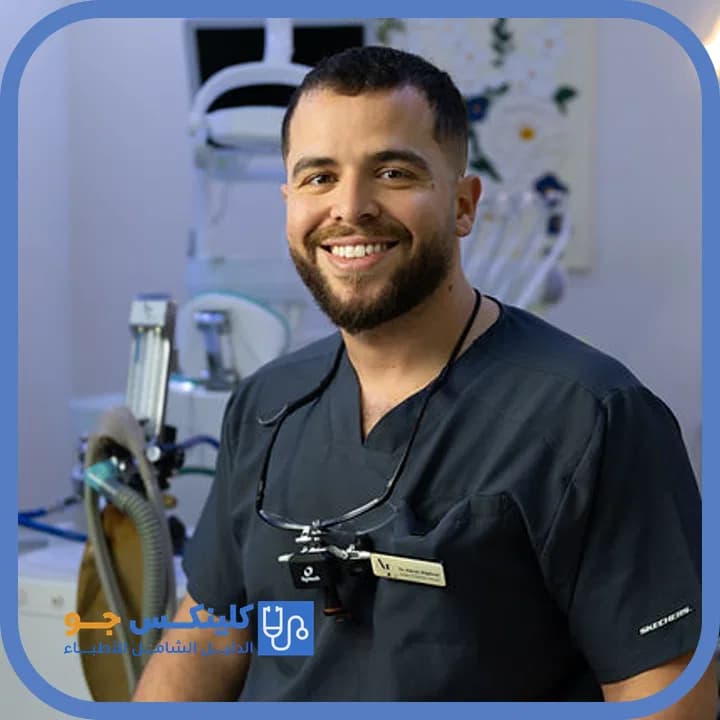
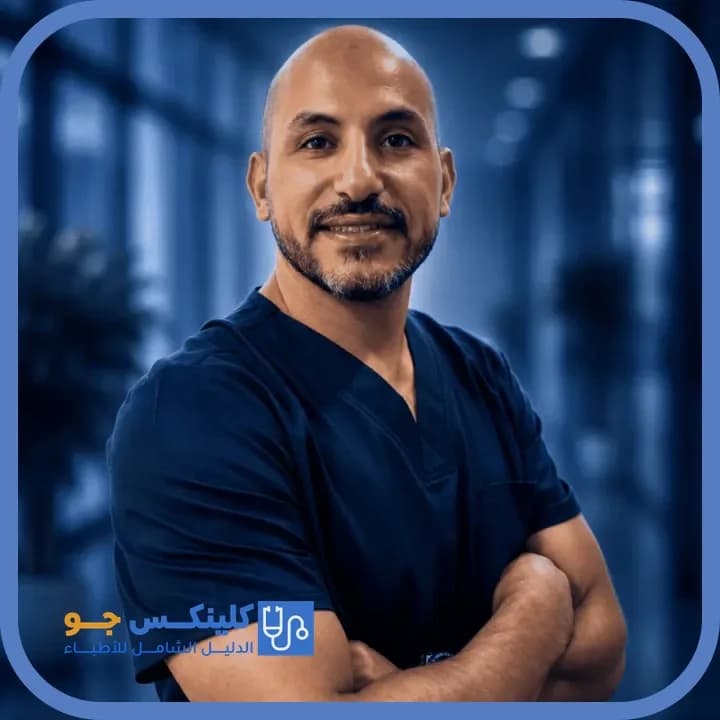
Dr. Mohammad Arafat Hasan is a Consultant in Oral & Dental Surgery and the founder of Arafat Dental Clinics in Tabarbour, Amman. He earned his Bachelor of Denta…

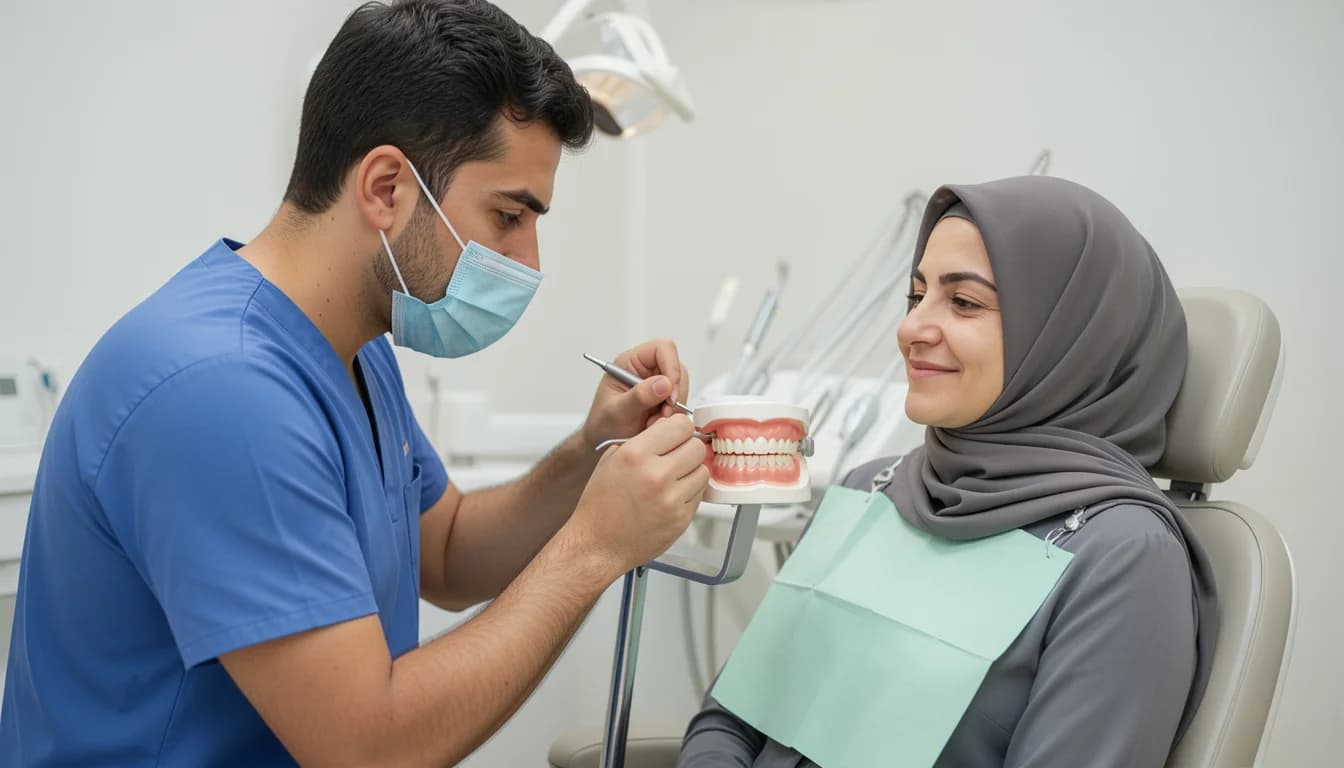
Periodontal surgery is a family of procedures performed on the gums and the bone supporting the teeth, for patients in whom non-surgical therapy has not brought periodontitis under control. The best known is flap surgery: the gum tissue is lifted slightly off the bone to reach the base of deep pockets, the inflamed tissue and residual calculus on the roots are removed under direct vision, and the tissue is then repositioned and sutured so the pocket becomes shallower and easier to clean.
The same family includes other procedures: recontouring bone deformed by the disease, bone grafting and guided tissue regeneration with a membrane in contained defects of suitable shape, excision of overgrown gum tissue, and specific techniques for pockets around multi-rooted molars. The choice is made at a reassessment visit after deep cleaning, based on which pockets remain deep and bleeding, how the pattern of bone loss appears radiographically, and how effective home care has become.
Surgery is usually performed under local anaesthesia, sometimes with sedation, treating one section of the mouth per session. Sutures are typically removed after one to two weeks, and swelling and discomfort peak in the first two days before settling. The gums will not return to exactly their previous appearance: expect the teeth to look longer, root sensitivity to increase temporarily, and interdental brushes to become necessary for spaces that are now wider.
The limits are explicit. Periodontal surgery does not cure periodontitis permanently and does not rebuild all the bone that has been lost. Its purpose is to reduce pocket depth to a level that daily cleaning can reach, and to stop further loss. Bone grafting does not suit every defect shape, since broad flat defects are far less favourable than deep defects with surrounding walls. It is not a cosmetic procedure, it does not treat decay, and it does not whiten teeth. Its results deteriorate if smoking continues, if diabetes stays poorly controlled, or if maintenance visits are abandoned.
Suitability is determined by clinical examination, pocket-by-pocket measurement and radiographs, together with a review of medications and chronic illnesses, not by reading a page or a general opinion. In some cases the more honest decision is extraction and replacement, rather than surgery that tries to save a hopeless tooth at the cost of bone that a future restoration will need.

Procedure steps
- 1
Reassessment after non-surgical therapy
Pocket depths and bleeding on probing are re-measured after deep cleaning and compared with the baseline chart to identify the sites that have not responded, and home care is assessed, since surgery in a mouth that is not kept clean does not deliver.
- 2
Surgical planning and patient preparation
The type of procedure for each section is chosen according to the shape of the bony defect on radiographs, medications, chronic illnesses and smoking are reviewed, the expected outcome, its limits and the alternatives are explained, and informed consent is taken.
- 3
Anaesthesia and flap elevation
Under local anaesthesia the incision is designed along the gum margin and the flap is gently elevated off the bone, only as far as needed to reach the base of the pocket while preserving as much gum tissue and interdental papilla as possible.
- 4
Direct debridement and bone procedures
Inflamed tissue and residual calculus on the roots are removed under direct vision, then irregular bone margins are recontoured, or a bone graft and membrane are placed only in defects whose shape is suitable. Grafting is not performed at every site.
- 5
Suturing, review and maintenance
The flap is repositioned and sutured as planned, and sutures are removed after one to two weeks. Pockets are re-measured some months later and the patient enters a maintenance programme every few months, since lapsed maintenance is the commonest reason results are lost.
Before the procedure
Give the team a complete list of your medicines, in particular anticoagulants, antiplatelet drugs, bone-density medication, steroids and immune-modifying drugs, and do not stop any of them yourself; the timing is a decision for your treating physician together with the periodontist. Mention diabetes and how well controlled it is, any heart condition or prosthetic valve, and any drug allergy. Complete the prescribed cleaning appointments and demonstrate good home care before the surgery date is set, because this influences your outcome more than any technical detail. Stop smoking before surgery and through the healing weeks. Eat lightly beforehand if only local anaesthesia is planned, arrange a driver if you will be sedated, and prepare soft food, ice packs and two rest days at home.
After the procedure
Apply cold packs to the outside of the face at intervals on the first day, sleep with your head raised on the first night, and expect swelling to peak in the first two days before easing. Do not brush the surgical site until your periodontist allows it, keep the rest of the mouth clean as usual, and use the prescribed rinse exactly as demonstrated. Avoid straws, hard, very hot and spicy food, do not lift your lip to inspect the site, and do not pull at the sutures with your tongue. Avoid strenuous physical activity in the first days. Do not smoke, keep blood sugar controlled, and attend the suture removal and later maintenance visits. Root sensitivity and teeth appearing longer are expected. Seek care immediately if bleeding does not stop after twenty minutes of pressure with clean gauze, if swelling increases after the third day with fever or pus, if pain increases instead of easing, if you have difficulty swallowing, breathing or opening your mouth, if a membrane or graft becomes exposed or the wound opens, or if numbness persists.
Expected duration
Usually 60 to 120 minutes per surgical session depending on the number of teeth and the section treated, under local anaesthesia.
Doctors who provide Periodontal Surgery
Omima Obiedat practises dentistry in Irbid’s New Amman Bus Complex area at Jumaa Center near Hayat Irbid Hall. Advertised care includes root canals, tooth-colou…
Dr Omar Bardaweel is a dentist in Jerash. His medical-platform profile lists a dental surgery degree from the University of Jordan in 2000, implant dentistry st…
Dania Adel Awwad is listed on Gardens Dental Implant Center’s official team page with a role in restorative dentistry. The practice is on the first floor of Sha…
Dr Khaled Al Sayed practices dentistry in Khalda, Amman, combining oral health care and restorative dentistry with cosmetic dental care. His centre provides ven…
Dr Ali Al Dmour is a dentist at Karak Smile Dental Center in Karak Governorate. Reception is at Al Marj, housing roundabout, opposite Al Saqr Markets, Al Karak.…
Taghreed Al Jabari practices dentistry at Zahran Street, Fifth Circle, Amman. Contact the practice to arrange consultation about dental or gum symptoms and oral…
Majdi Marrar practises dentistry at Dr Majdi Marrar Dental Clinics, Jamous Plaza, Airport Street, Amman. The practice provides routine examinations, root canal …
Dr Sherbel Sayel Al Khitan is a dentist at Dr Sherbel Sayel Al Khitan Dental Clinic in Karak Governorate. Reception is at Al Thaniya, above Bank Al Etihad, firs…
Dr. Alaa Yaseen Al-Zoubi is a Jordanian Board-certified endodontist. She earned her dental degree at the University of Jordan and completed specialist residency…
Dr Rema Salameh is a dentist at office104 on the first floor of Ibn Al Nafis Medical Complex in Abu Nseir. She provides oral and dental consultations, with care…
Ahmad Sammar practices dentistry on the first floor of Abu Eid Plaza in Shmeisani, opposite Specialty Hospital’s emergency department. Contact the practice abou…
Akram Al Adhami practises dentistry at Dr Akram Al Adhami Dental Centre, Al Hussaini Complex101, first floor, Kilo Circle, Mecca Street, Amman. The practice pro…
Samer Al Mabrouk practises dentistry at Dr Samer Al Mabrouk Clinic, Building 91, ground floor, Moussa Al Saket Street, Tlaa Al Ali, Amman. The practice provides…
Eyad Hawasheen practises dentistry at Dr Eyad Hawasheen Dental Clinic, 41 Amer Bin Malek Street, second floor, near the English schools, Khalda, Amman. The prac…
Osama Ghazi Al Ziadat practises dentistry at Dr Osama Ghazi Al Ziadat Orthodontics Clinic, Ziadat Centre, 74 Amer Bin Malek Street, Khalda, Amman. The practice …
Dr. Yola Kovalenko is recognized as one of the distinguished medical professionals in the field of dentistry. She graduated from Luhansk State Medical Universit…
Adnan Al Akhras holds a clinical master’s degree in paediatric dentistry from the University of the Western Cape, South Africa. Alakhras Dental welcomes childre…
Fadi Ibrahim is a dentist in Amman whose practice focuses on periodontal disease and dental implants. The center is on the first floor of Building71 in Dahiyet …
Osama Al Bakri practices dentistry on Wasfi Al Tal Street in Khalda. The profile provides a practice contact and map for arranging consultation about dental con…
Dr. Raad Al Maaita is a dentist and graduate of Jordan University of Science and Technology. His Zarqa clinic receives patients for dental examination and asses…
Dr. Mutasem Irdaisat has extensive professional experience in dentistry dating back to 2007. His career spans both academic and clinical practice across Europe …
Yussra Al Zubide practises dentistry at Dr Yussra Al Zubide Dental Clinic, Yousef Centre123, Al Madina Al Munawara Street, Amman. The practice provides preventi…
Haitham Al Muhaisen practises dentistry at Dr Haitham Al Muhaisen Dental Centre, Hazem Centre, fifth floor, Yajouz Street, Jubaiha, Amman. The practice provides…
Hanadi Wasfi Abdul Haleem practises dentistry at Dr Hanadi Wasfi Abdul Haleem Dental Clinic, Al Biruni Complex, ground floor, Al Khalidi Street, Amman. The prac…
Raghas Khasawneh is a dentist in Irbid with the Jordanian Board in Prosthodontics and Dental Implantology and a bachelor’s degree from Jordan University of Scie…
Finding Periodontal Surgery services in Jordan
Which doctors are listed for Periodontal Surgery in Jordan?
There are currently 26 doctor profiles linked to Periodontal Surgery on ClinicsJo. Review the listed services and contact the practice to confirm availability with the doctor and branch you choose.
How can I find an appointment for Periodontal Surgery?
Start with an available doctor's profile and use the contact or booking options shown there. Confirm the service, practice location and appointment time with the clinic. If this list is empty, broaden your search using the directory links on this page.
What does Periodontal Surgery cost in Jordan?
Ask the practice for the current price and what it includes. A consultation fee shown on a profile is not necessarily the price of a procedure, tests or follow-up. Confirm any additional charges and insurance arrangements before your visit.
How much does Periodontal Surgery cost in Jordan?
No clinic on ClinicsJo has published a price for Periodontal Surgery yet, so we do not quote an estimated figure. What is published is the consultation fee: free consultation (profiles: 1); 5–10 JOD (profiles: 14). The doctor sets the treatment price after assessing your case.
What clinics and doctors have published on ClinicsJo
- Published consultation fee — Dr. Mohammad Arafat Hasan: free consultation.
- Published consultation fee — Raafat Rebhi Shehdeh Abu Sara: 5 JOD consultation fee.
- Published consultation fee — Emad Amin Al Jamal: 5 JOD consultation fee.
- Published consultation fee — Alaa Yaseen Al Zoubi: 10 JOD consultation fee.
- Published consultation fee — Mohammad Khaled Nofal: 10 JOD consultation fee.
Other doctor profiles with a published fee: 10.
What sets the price of Periodontal Surgery?
- The number of teeth treated
- The material or system used (implant, crown, filling or brace type)
- Imaging needed beforehand (panoramic X-ray or CBCT scan)
- Accompanying procedures such as anaesthesia, extraction or bone grafting
- The number of sessions and follow-up visits
Expected duration (from the procedure guide): Usually 60 to 120 minutes per surgical session depending on the number of teeth and the section treated, under local anaesthesia.
How to ask about the price
Before booking, ask the clinic for the all-inclusive price and what it covers, any extra tests or scans, how many follow-up visits are included, the payment options, and whether your insurance is accepted. You can reach them through the contact details on the doctor and clinic profiles on this page.
The figures above were published by the clinics and doctors themselves on ClinicsJo and may change. We do not estimate prices. Confirm the all-inclusive price with the clinic before booking. Offers on ClinicsJo