Dr Reem Al Qudah Clinic
Dr Reem Al Qudah is a dermatologist and venereologist with the Jordanian Board in dermatology. Her practice combines care for skin, hair and nail disorders with…
Hours not listedInsurance not specified8 views
Trusted medical platform in Jordan
حقن البلازما للوجه
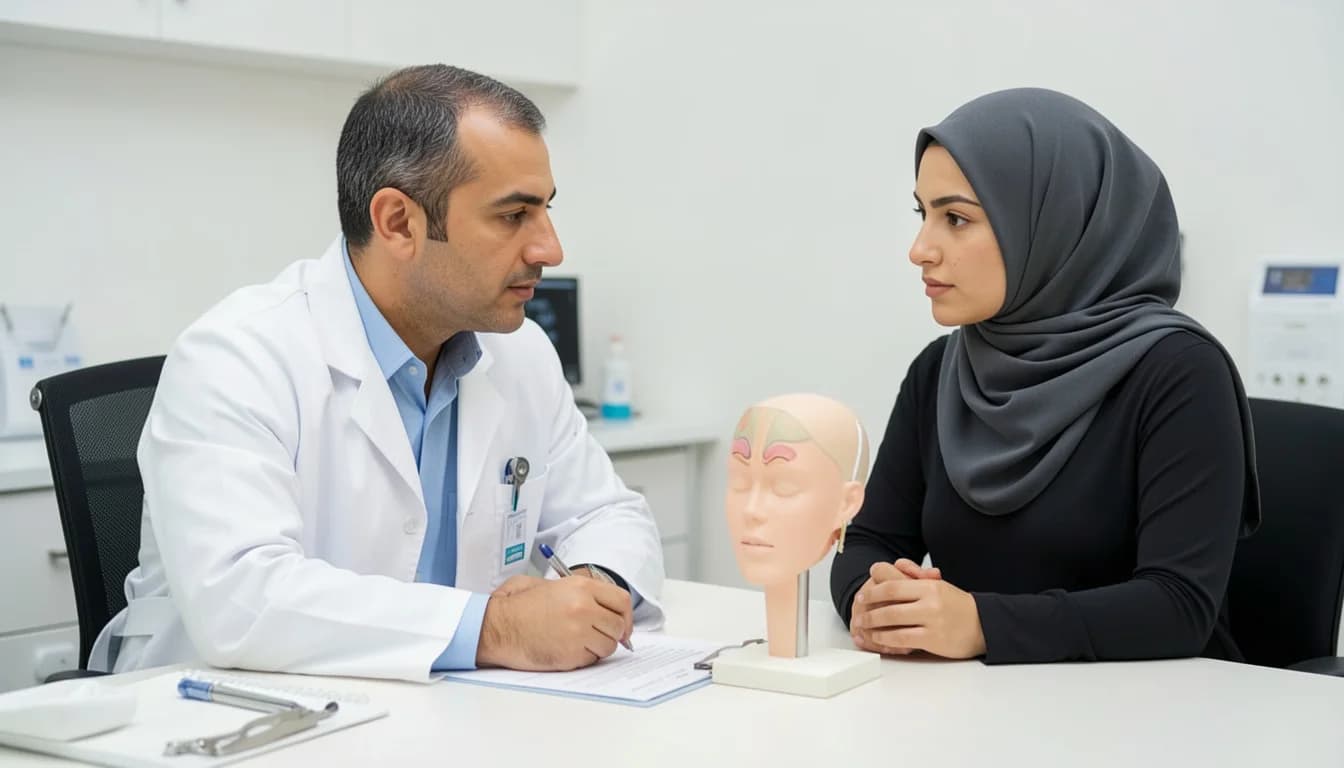
Platelet-rich plasma treatment of the face is a procedure in which a small volume of your own blood is drawn, spun in a centrifuge to separate plasma rich in platelets, and then returned into the facial skin by fine injections or through microneedling. The rationale is that platelets carry growth factors which, released into the tissue, stimulate repair and gradual collagen production. The material used comes from your own body and no volumising substance is added. Sessions are usually requested to improve the quality and texture of dull skin, to support the treatment of superficial acne marks, for the thin skin of the under-eye area, and to reinforce the result of other procedures. The effect is gradual and cumulative: a noticeable difference usually appears only after the second or third session, so a course of closely spaced sessions is planned followed by maintenance, because the effect fades with time. The limits are essential to state. Plasma does not add volume the way a filler does, does not tighten sagging skin, does not lift the cheek or jawline, does not erase deep static folds, and does not correct under-eye shadowing caused by bony hollowing or by deep pigmentation. It is not an alternative to surgery when there is true laxity or excess skin. The strength of the evidence also varies between indications, so no specific outcome or success figure should ever be promised. The procedure is postponed or avoided when there is a platelet or clotting disorder, significant anaemia, an active infection at the injection site or a systemic infection, certain blood diseases, or while taking anticoagulant medication without the doctor's assessment. Suitability is determined by clinical examination, and simple blood tests may be requested beforehand.
The doctor examines the skin and defines what the session can and cannot address, reviews medications and chronic illnesses, and may request a simple blood test to check platelets and haemoglobin before agreeing to the procedure.
A small volume of blood is drawn from a vein into dedicated tubes using sterile single-use equipment, labelled with your name to prevent any mix-up. The step feels like any routine blood test.
The tubes are spun at a defined speed and time to separate the blood components and obtain the platelet-rich plasma, which is prepared in the same room and used immediately without storage.
A numbing cream is applied and left to work, then the plasma is distributed by fine superficial injections in selected areas, or applied and driven in with microneedling, depending on the problem and the area treated.
The area is cooled, the expected redness and swelling are explained, warning signs are made clear, and the number of sessions, the intervals and a photographic review after the course are scheduled.
Tell the doctor about all your medications, especially anticoagulants, antiplatelet agents and anti-inflammatories, and never stop a prescribed medicine yourself — whether to pause it is your doctor's decision alone. Also report any platelet or clotting disorder, anaemia or blood disease, active infection, pregnancy or breastfeeding, and any history of cold sores around the mouth. Drink water well the day before and on the day, eat before you come to reduce dizziness during the blood draw, and avoid alcohol and heavy smoking beforehand. Arrive with a clean face without make-up, and do not book a few days before an important event, since redness and swelling are expected.
Expect mild facial redness and swelling for a few hours up to two days, and possible bruising at the injection points, especially under the eyes. Do not wash with hot water or rub the face on the first day; use a gentle cleanser and a simple moisturiser, and skip make-up for the rest of the day. For the first two to three days avoid strenuous exercise, sauna, steam, swimming pools, alcohol, direct sun and any peel or laser session, and start sunscreen from the next day. **Seek review immediately if you develop: fever, spreading redness with heat and pain that worsens after the second day, pus, severe swelling that does not settle, blanching or dusky bluish discolouration at an injection site, or any change in vision after injection near the eye.** Do not wait for a scheduled appointment in these situations.
The whole session, from blood draw to the end of injection, usually takes 45 to 75 minutes; the initial course is typically three sessions three to four weeks apart, with maintenance every 6 to 12 months as assessed.
Dr Reem Al Qudah is a dermatologist and venereologist with the Jordanian Board in dermatology. Her practice combines care for skin, hair and nail disorders with…
Dr Huda Al Qudah is a consultant dermatologist and venereologist, a Jordan University of Science and Technology graduate and holder of the Jordanian Board. Her …
Dr Reem Mahmoud Al Awadi is a dermatologist and venereologist with the Jordanian Board in the specialty. At her Shmeisani practice, she assesses skin and hair c…
There are currently 3 doctor profiles linked to Platelet Rich Plasma (PRP) facial rejuvenation on ClinicsJo. Review the listed services and contact the practice to confirm availability with the doctor and branch you choose.
Start with an available doctor's profile and use the contact or booking options shown there. Confirm the service, practice location and appointment time with the clinic. If this list is empty, broaden your search using the directory links on this page.
Ask the practice for the current price and what it includes. A consultation fee shown on a profile is not necessarily the price of a procedure, tests or follow-up. Confirm any additional charges and insurance arrangements before your visit.