Dr. Mohammad Arafat Hasan is a Consultant in Oral & Dental Surgery and the founder of Arafat Dental Clinics in Tabarbour, Amman. He earned his Bachelor of Denta…

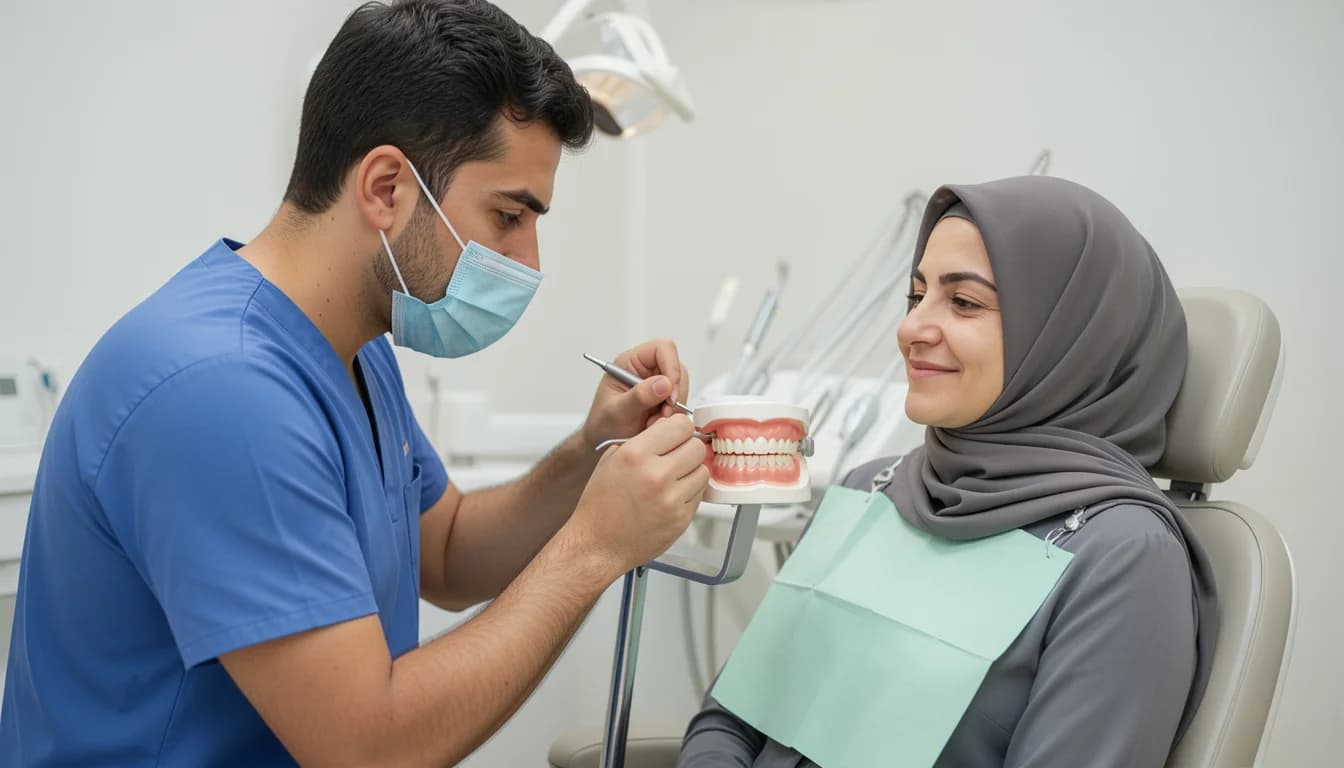
Dental care during pregnancy means treating a pregnant patient under a protocol that balances her need for treatment against the safety of the pregnancy. It covers examination, gum cleaning, fillings, management of infection and abscess, and pain control, with adjustments to visit timing, chair position, imaging and local anaesthesia.
Pregnancy itself changes oral health. Hormonal changes make the gums more reactive, so bleeding while brushing becomes common, and a benign gum swelling known as a pregnancy granuloma may appear and usually settles after delivery. Repeated vomiting exposes enamel to stomach acid, which causes erosion and sensitivity. Leaving a decayed tooth or an abscess untreated means pain, infection, poor sleep and more medication, and that carries more risk for the pregnancy than the treatment itself. Studies have linked untreated gum disease to preterm birth and low birth weight, but a definite cause-and-effect relationship has not been proven.
Timing drives most decisions. Painful or infected conditions are treated at any stage of pregnancy and are not postponed. Treatment that can safely wait is usually best done in the second trimester, when nausea is less troublesome and sitting is easier. Elective cosmetic work, whitening and starting orthodontic treatment are deferred until after delivery. In the third trimester appointments are kept short and the chair is tilted slightly to the left side to avoid dizziness and pressure on the large abdominal vessels.
Imaging and anaesthesia are the most common worries, and the answer is straightforward. A dental radiograph is a small, localised, very low dose study used only when it changes the diagnosis, taken with a lead apron and a thyroid collar. The local anaesthetic used in dental clinics is considered acceptable in pregnancy, and the dentist selects the type and the smallest effective amount. Under-treated pain is worse for a pregnancy than adequate local anaesthesia.
The limits matter. Dental treatment does not treat pregnancy complications and never replaces antenatal follow-up with your obstetrician, and improving gum health does not guarantee that preterm birth will be prevented. A widespread myth claims the baby draws calcium out of the mother's teeth and causes decay; that is not how teeth work. The real drivers are changes in diet, nausea and vomiting, and reduced brushing. Whether a procedure is suitable, and when, is decided by clinical examination and by coordination with your obstetrician in a high-risk pregnancy, not by reading.

Procedure steps
- 1
Pregnancy assessment before any treatment
The dentist records gestational age in weeks, whether the pregnancy is normal, high risk or twin, blood pressure, gestational diabetes or anaemia, all medications and supplements, and any previous bleeding or contractions. In a high-risk pregnancy the plan is coordinated with the obstetrician before the appointment.
- 2
Setting priorities and timing
Needs are sorted into three groups: urgent problems treated now, such as an abscess, severe pain or spreading infection; short-term deferrable work such as fillings and gum cleaning, ideally in the second trimester; and work postponed until after delivery, such as whitening, cosmetic procedures and starting orthodontics.
- 3
Preparing the appointment and position
The visit is kept short and comfortable, with the chair tilted slightly to the left and a cushion under the right side in later pregnancy, and short breaks allowed to sit up or use the bathroom. A radiograph is taken only when it is needed for diagnosis, with a lead apron and thyroid collar in place.
- 4
Treatment with adequate local anaesthesia
The needed treatment is carried out: scaling and gum cleaning, a filling, root canal treatment, drainage of an abscess, or extraction when the tooth cannot be saved. Local anaesthesia is given in the smallest effective amount so the visit is pain free, and systemic medication is avoided unless prescribed by a clinician with pregnancy in mind.
- 5
Home prevention and follow-up
You are shown gentle brushing twice a day with a soft brush and fluoride toothpaste, daily cleaning between the teeth, and rinsing with water or a baking soda rinse after vomiting without brushing straight away. A review is booked during the pregnancy and another after delivery to complete any deferred work.
Before the procedure
Tell the dentist you are pregnant and how many weeks at the very first visit. Bring a list of your medications and supplements and any report from your obstetrician, and mention any bleeding, contractions, high blood pressure, gestational diabetes or drug allergy. Do not come completely fasting; have a light meal beforehand to reduce nausea and dizziness, and book a time of day when your nausea is usually mildest. Wear comfortable clothing, and ask for a cushion or a change in chair position if you feel short of breath or light-headed. Tell the dentist immediately if you feel heartburn, palpitations or a need to sit up. Do not stop any medication prescribed by your obstetrician on your own, do not take painkillers or antibiotics on your own initiative or from an old prescription, and ask what is safe for you before the appointment rather than after it.
After the procedure
Keep brushing gently twice a day, clean between your teeth, drink plenty of water, and split meals into smaller portions to limit nausea. After vomiting, rinse with water or with a teaspoon of baking soda in a glass of water, and wait about half an hour before brushing so you do not scrub acid-softened enamel. If your gum is numb, avoid hot food and biting your lip until sensation returns, use a cold pack on the outside for mild swelling, and take only the painkiller your clinician approved for you.
Seek dental care immediately if you develop: facial or jaw swelling that grows quickly or reaches the eye or neck, difficulty swallowing, breathing or opening your mouth, a temperature of 38C or above with shivering, severe pain that does not respond to your painkiller, or bleeding from an extraction site that does not stop after biting on gauze for half an hour. Go to obstetric emergency care immediately if you have: vaginal bleeding or fluid leaking, regular contractions or persistent abdominal pain, a severe headache with blurred vision or sudden swelling of the face and hands, vomiting that stops you drinking water, or a clear reduction in your baby's movements.
Expected duration
A visit usually takes 20 to 40 minutes, and longer treatment is split across several short appointments
Doctors who provide Pregnant Teeth Treatment
Raghas Khasawneh is a dentist in Irbid with the Jordanian Board in Prosthodontics and Dental Implantology and a bachelor’s degree from Jordan University of Scie…
Dr. Mutasem Irdaisat has extensive professional experience in dentistry dating back to 2007. His career spans both academic and clinical practice across Europe …
Adnan Al Akhras holds a clinical master’s degree in paediatric dentistry from the University of the Western Cape, South Africa. Alakhras Dental welcomes childre…
Majdi Marrar practises dentistry at Dr Majdi Marrar Dental Clinics, Jamous Plaza, Airport Street, Amman. The practice provides routine examinations, root canal …
Hanadi Wasfi Abdul Haleem practises dentistry at Dr Hanadi Wasfi Abdul Haleem Dental Clinic, Al Biruni Complex, ground floor, Al Khalidi Street, Amman. The prac…
Dr. Mohammad Khaled Nofal practices dentistry, cosmetic dentistry and dental implant care at Fifth Circle in Amman. His clinical work includes crowns, bridges, …
Dr Omar Bardaweel is a dentist in Jerash. His medical-platform profile lists a dental surgery degree from the University of Jordan in 2000, implant dentistry st…
Dr Banan Alhawamdeh is a dentist with a Bachelor of Dental Surgery from Jordan University of Science and Technology. She practices on Wakalat Street in Sweifieh…
Ibrahim Jamal Khalifeh practises dentistry at Dr Ibrahim Jamal Khalifeh Centre, 109 Sharif Nasser Bin Jameel Street, Amman. The practice provides dental examina…
Dr. Yola Kovalenko is recognized as one of the distinguished medical professionals in the field of dentistry. She graduated from Luhansk State Medical Universit…
Omima Obiedat practises dentistry in Irbid’s New Amman Bus Complex area at Jumaa Center near Hayat Irbid Hall. Advertised care includes root canals, tooth-colou…
Dr Sherbel Sayel Al Khitan is a dentist at Dr Sherbel Sayel Al Khitan Dental Clinic in Karak Governorate. Reception is at Al Thaniya, above Bank Al Etihad, firs…
Fares Al Majali has a dental practice at Near The Specialty Hospital, Amman. Use the professional contact to arrange symptom assessment, review previous investi…
Dr. Alaa Yaseen Al-Zoubi is a Jordanian Board-certified endodontist. She earned her dental degree at the University of Jordan and completed specialist residency…
Dr. Raad Al Maaita is a dentist and graduate of Jordan University of Science and Technology. His Zarqa clinic receives patients for dental examination and asses…
Mohammad Saleh Abu Sbeit practises dentistry at Dr Mohammad Saleh Abu Sbeit Dental Clinic, Adel Al Qasim Complex, third floor, 220 Khalid Bin Al Waleed Street, …
Abeer Ammouri is a dentist practicing at Ibn Khaldoun Street, Amman. This profile provides the professional practice contact and reception timetable for consult…
Dr Bahaa Khattab practises dentistry at FirstMed Medical Complex in Shmeisani, Amman. He completed a diploma in dental implants at the University of Jordan. His…
Osama Ghazi Al Ziadat practises dentistry at Dr Osama Ghazi Al Ziadat Orthodontics Clinic, Ziadat Centre, 74 Amer Bin Malek Street, Khalda, Amman. The practice …
Saud Abu Jamaa practises dentistry at Tabibak Dental Clinics Sahab, Sahab, Amman. The practice provides dentistry, fillings, root canal treatment and veneers. A…
Dr Baraa Alkhateeb is a dentist at Ibn Al Nafis Medical Complex near Applied Science University Roundabout in Abu Nseir. She provides dental and oral care consu…
Sanaa Qasem practices dentistry at Al Watan Street, Amman. Contact the practice to arrange consultation about dental or gum symptoms and oral health. Confirm cl…
Finding Pregnant Teeth Treatment services in Jordan
Which doctors are listed for Pregnant Teeth Treatment in Jordan?
There are currently 23 doctor profiles linked to Pregnant Teeth Treatment on ClinicsJo. Review the listed services and contact the practice to confirm availability with the doctor and branch you choose.
How can I find an appointment for Pregnant Teeth Treatment?
Start with an available doctor's profile and use the contact or booking options shown there. Confirm the service, practice location and appointment time with the clinic. If this list is empty, broaden your search using the directory links on this page.
What does Pregnant Teeth Treatment cost in Jordan?
Ask the practice for the current price and what it includes. A consultation fee shown on a profile is not necessarily the price of a procedure, tests or follow-up. Confirm any additional charges and insurance arrangements before your visit.
How much does Pregnant Teeth Treatment cost in Jordan?
No clinic on ClinicsJo has published a price for Pregnant Teeth Treatment yet, so we do not quote an estimated figure. What is published is the consultation fee: free consultation (profiles: 1); 5–10 JOD (profiles: 14). The doctor sets the treatment price after assessing your case.
What clinics and doctors have published on ClinicsJo
- Published consultation fee — Dr. Mohammad Arafat Hasan: free consultation.
- Published consultation fee — Raafat Rebhi Shehdeh Abu Sara: 5 JOD consultation fee.
- Published consultation fee — Emad Amin Al Jamal: 5 JOD consultation fee.
- Published consultation fee — Alaa Yaseen Al Zoubi: 10 JOD consultation fee.
- Published consultation fee — Mohammad Khaled Nofal: 10 JOD consultation fee.
Other doctor profiles with a published fee: 10.
What sets the price of Pregnant Teeth Treatment?
- The number of teeth treated
- The material or system used (implant, crown, filling or brace type)
- Imaging needed beforehand (panoramic X-ray or CBCT scan)
- Accompanying procedures such as anaesthesia, extraction or bone grafting
- The number of sessions and follow-up visits
Expected duration (from the procedure guide): A visit usually takes 20 to 40 minutes, and longer treatment is split across several short appointments
How to ask about the price
Before booking, ask the clinic for the all-inclusive price and what it covers, any extra tests or scans, how many follow-up visits are included, the payment options, and whether your insurance is accepted. You can reach them through the contact details on the doctor and clinic profiles on this page.
The figures above were published by the clinics and doctors themselves on ClinicsJo and may change. We do not estimate prices. Confirm the all-inclusive price with the clinic before booking. Offers on ClinicsJo