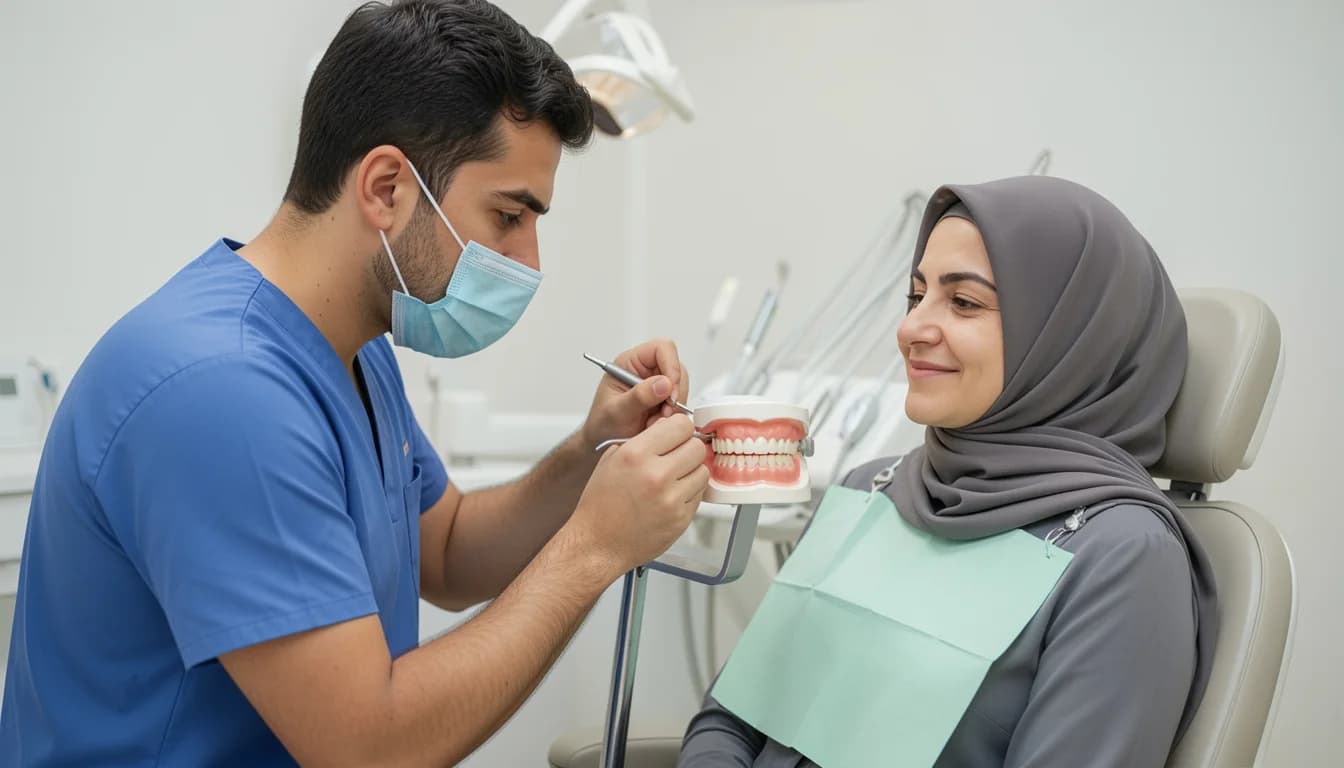
Calculus (tartar) is plaque that remained on the teeth until it calcified and hardened, so brushing and flossing can no longer remove it. Dental scaling removes this deposit from tooth surfaces and from below the gum line using hand instruments or an ultrasonic device, then polishes the surfaces to slow plaque re-accumulation.
This is not a cosmetic procedure as often assumed. Calculus is a rough, porous surface on which bacteria multiply right at the gum margin, producing chronic inflammation that begins with redness, bleeding on brushing and bad breath. If it persists, **it can progress to periodontitis, which destroys the bone supporting the tooth** — and that loss does not return with cleaning, because it is structural damage. Regular scaling is what breaks the chain before that stage.
Many patients misunderstand scaling and therefore delay it, believing it “widens the gaps between teeth” or “makes teeth sensitive”. In reality the gaps and sensitivity existed behind the calculus that was filling them, and the calculus was worsening gum loss, not protecting against it. Sensitivity after scaling is usually temporary and eases within days.
Also important: scaling **does not whiten teeth**. It removes deposits and surface staining so the tooth’s natural shade shows — anyone wanting a lighter shade needs whitening, which is a different procedure.
Scaling frequency is individual: roughly every six months for healthy mouths, and more often with rapid accumulation, smoking, diabetes, orthodontic appliances, or a history of gum disease.
4 specialists
Procedure steps
1
Gum examination and pocket probing
Gum colour and bleeding are examined, periodontal pocket depths measured and tooth mobility assessed, to decide whether supragingival scaling suffices or subgingival deep cleaning is needed.
2
Removing supragingival calculus
Visible deposit on tooth surfaces is removed with an ultrasonic scaler under water spray, or with hand instruments in delicate areas.
3
Subgingival cleaning when indicated
If pockets are deep, calculus is removed from within them and root surfaces smoothed, sometimes over several sessions and under local anaesthesia for comfort.
4
Polishing and fluoride application
Surfaces are polished to reduce roughness so plaque accumulates more slowly, and fluoride may be applied to strengthen enamel and reduce sensitivity.
5
Hygiene coaching and setting frequency
The patient is coached in correct brushing and use of floss or interdental brushes, and the next appointment is set according to how fast calculus accumulates for them.
Before the procedure
Tell your dentist about chronic conditions and medications, especially blood thinners (inflamed gums bleed more), diabetes because it affects gum health and healing, and any prosthetic heart valve or condition requiring prophylactic antibiotics beforehand — important information not to forget. Mention a cardiac pacemaker, as certain scaling devices are discussed in that situation. Report tooth sensitivity if present. Do not expect whitening — if a lighter shade is your goal, ask about whitening as a separate procedure.
After the procedure
Expect cold sensitivity and gum tenderness for a day or two, and slight bleeding on brushing that eases as inflammation settles. Use toothpaste for sensitive teeth if sensitivity appears, with a soft brush and gentle strokes. Do not stop brushing because of bleeding — stopping increases inflammation and bleeding, while gentle persistence is what stops it. Use floss or interdental brushes daily, since professional cleaning complements rather than replaces daily cleaning. Avoid heavily staining drinks on the first day after polishing. **Contact your dentist if gum bleeding persists beyond a week, if increasing pain, swelling, pus or an abscess appears, if any tooth becomes looser, or if severe sensitivity lasts more than two weeks.**
Expected duration
30–60 minutes for routine scaling; deep cleaning is done over several sessions
تُعد د. يولا كوفالينكا من الكفاءات الطبية المتميزة في مجال طب الأسنان. تخرجت من جامعة لوغانسك الطبية الحكومية عام 2007، وكانت ضمن أوائل خمسة طلاب على دفعتها، وه…
يمتلك د. معتصم ارديسات خبرة مهنية واسعة في مجال طب الأسنان بدأت منذ عام 2007. تمتد مسيرته بين العمل الأكاديمي والممارسة السريرية في أوروبا والشرق الأوسط، مما من…
الدكتور محمد عرفات حسن هو طبيب أسنان وصاحب خبرات متقدمة في طب وجراحة الفم والأسنان، خرّيج جامعة دمشق العريقة في طب وجراحة الفم والأسنان (بكالوريوس)، وحاصل على ع…
الدكتور محمد أحمد علي الطراونة جرّاح فم ووجه وفكين، ومستشار في زراعة الأسنان وتجميل الوجه غير الجراحي. حاصل على البورد الأردني في جراحة الفم والوجه والفكين (201…
Which doctors are listed for Teeth Tartar Removal in Jordan?
There are currently 4 doctor profiles linked to Teeth Tartar Removal on ClinicsJo. Review the listed services and contact the practice to confirm availability with the doctor and branch you choose.
How can I find an appointment for Teeth Tartar Removal?
Start with an available doctor's profile and use the contact or booking options shown there. Confirm the service, practice location and appointment time with the clinic. If this list is empty, broaden your search using the directory links on this page.
What does Teeth Tartar Removal cost in Jordan?
Ask the practice for the current price and what it includes. A consultation fee shown on a profile is not necessarily the price of a procedure, tests or follow-up. Confirm any additional charges and insurance arrangements before your visit.
Explore related Periodontics (Gum Disease) doctor directories