Urticaria, also called hives, is a rash of raised red weals or plaques that itch intensely, move around the body and change location. Its hallmark is that each individual weal fades within less than twenty-four hours leaving no mark and no scaling. In some people it comes with deeper swelling of the lips, eyelids or hands, known as angioedema. It is called acute when it lasts under six weeks and chronic beyond that.
In acute urticaria a clear trigger may exist — a viral infection, a medicine, a food or an insect sting. In chronic spontaneous urticaria, which is what most patients attending clinic actually have, **there is no external cause in the majority of cases, and nothing wastes a patient's time and money more than hunting for one through broad food-allergy panels. Untargeted tests of that kind produce many misleading results and lead to harsh, pointless diets.** Appropriate testing is limited and guided by the history and examination. There are also physical forms triggered by pressure, scratching, cold, heat, water, exercise or sunlight, diagnosed with simple provocation tests in clinic.
Treatment rests on modern non-sedating antihistamines as first line, and the doctor may adjust the dose, combine agents or add a second line if that is not enough. **For stubborn chronic disease, biologic or immunosuppressive medicines are used; these are prescribed under specialist supervision only, require investigations before starting and periodic laboratory monitoring, and must never be taken on personal initiative or on someone else's advice.** Oral steroids have a very short-term role in a severe flare and are not a long-term treatment; repeating steroid injections every time the rash appears is a harmful practice that masks the problem and adds serious side effects.
The limits should be stated plainly. The realistic goal is **to control disease activity and reduce the number and severity of flares, not to erase the underlying tendency. Chronic urticaria may persist for months or years and then settle by itself, and it can return after a long quiet period.** No diet cures chronic urticaria and no medicine prevents it forever; taking daily preventive treatment regularly works better than waiting for a flare and rescuing it. Activity often rises with stress, poor sleep, heat, tight clothing and certain painkillers.
For clarity: urticaria is not contagious — it does not pass by shaking hands or sharing belongings — and in most cases it is not a sign of serious disease. But hives with breathing symptoms or throat swelling is an emergency needing immediate care, and eligibility for any treatment line is decided by clinical assessment.
1 specialists
Procedure steps
1
Assessment and mapping the pattern of flares
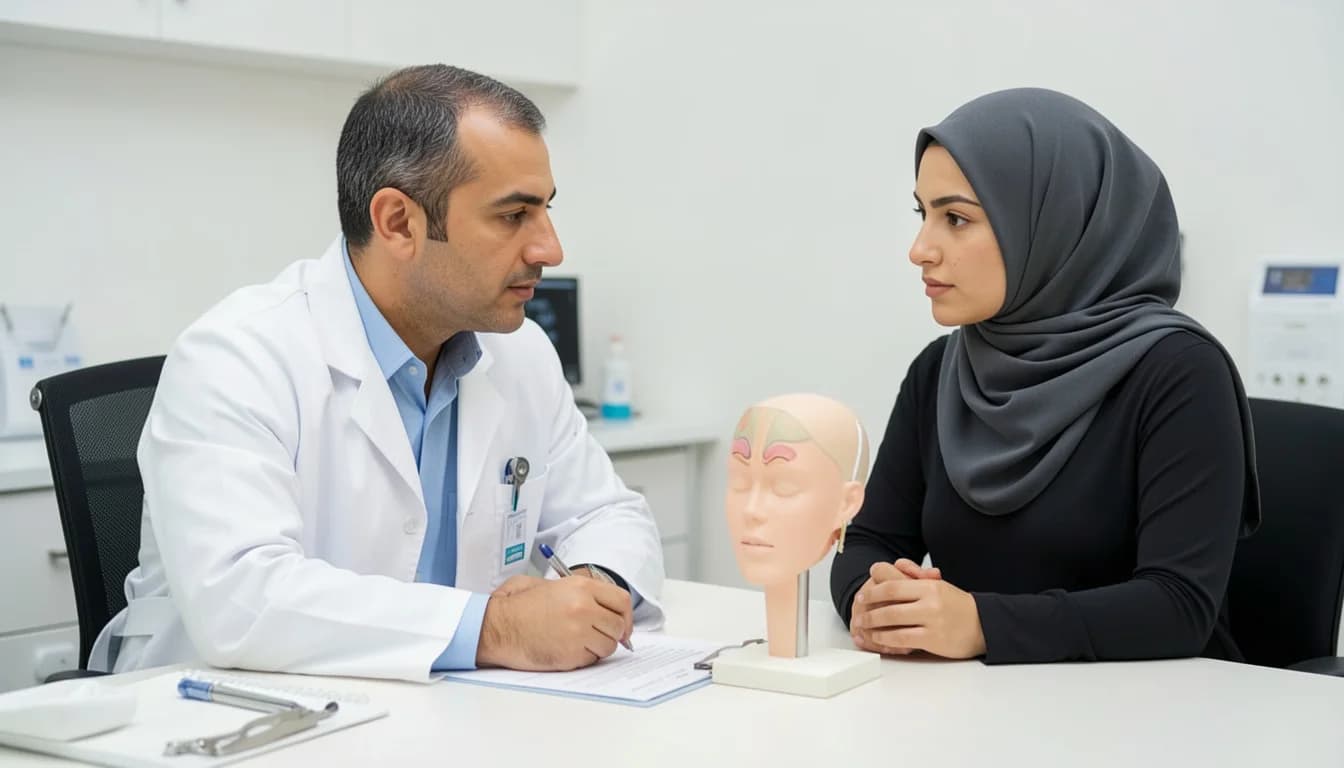
The doctor asks what the rash looks like, how long a single weal lasts and whether it leaves any mark, about deeper swelling and breathlessness, and about timing in relation to pressure, cold, exertion or medicines. The skin is examined, and a light stroke on the back may be used to test for friction-induced hives.
2
Targeted search for a trigger or associated condition
Only limited, history-driven tests are ordered — general inflammatory markers, thyroid function, or whatever the examination raises — rather than random allergy panels. Medicines and painkillers are documented, active infection is looked for, and conditions that mimic urticaria but need a different pathway are excluded.
3
Starting daily preventive treatment
A modern non-sedating antihistamine is prescribed to be taken regularly every day rather than only when the rash appears, because prevention works better than rescue. You are told that improvement begins within days to two weeks, and that success is measured by fewer weals, less itch and better sleep — not by everything vanishing in the first week.
4
Escalating treatment in resistant cases
If activity persists, the doctor may adjust the dose or add another agent, and in severe chronic disease biologic or immunosuppressive options are discussed under specialist supervision — with baseline investigations, regular laboratory monitoring, a clear account of benefits and risks, and the instruction never to stop or change them on your own.
5
Follow-up and a plan for acute flares
The plan is reviewed every one to three months according to response, and treatment is stepped down gradually after a long quiet period rather than stopped abruptly. The patient is given a written flare plan: what makes it worse, what to take, and the red flags that mean going straight to the emergency department instead of waiting at home.
Before the procedure
Bring a simple record of the last two weeks: when the rash appeared, how long a single weal lasted, whether it left a bruise or pigmentation, and how badly the itch affected your sleep. Photograph the rash on your phone when it appears, since it usually fades before the appointment. Write out all your medicines and supplements, especially painkillers, anti-inflammatories and blood pressure medicines, with the dates you started them. Mention any recent infection, dental treatment, insect sting or change of detergent, and any clear link to cold, heat, pressure, exercise or sunlight. Women should mention pregnancy or breastfeeding. If a provocation test is planned in clinic you may be asked to pause your antihistamine for a few days beforehand — do that only on the doctor's instruction. And do not start a harsh elimination diet before the visit.
After the procedure
Take your preventive medicine every day, including on quiet days, and do not stop it yourself at the first improvement. Keep a weekly count of rash days so progress can be judged objectively. Reduce general aggravators: extreme heat, very hot showers, tight clothing, friction, poor sleep and stress; and check with your doctor before using anti-inflammatory painkillers, which increase activity in some patients. **Go to the emergency department immediately if: the tongue, lip or throat swells; your voice becomes hoarse or swallowing is difficult; you are short of breath or wheezing; you feel dizzy, pale or faint; or you have vomiting and severe abdominal pain with the rash — these are signs of a life-threatening allergic reaction and must not be waited out at home. If your doctor has prescribed an adrenaline auto-injector, carry it at all times and know how to use it.** See your doctor in clinic if an individual weal lasts more than twenty-four hours, leaves a bruise or pigmentation, or comes with fever, joint pain or marked fatigue, since that may not be simple urticaria.
Expected duration
The assessment visit usually takes 20 to 40 minutes; preventive treatment typically begins to work within days to two weeks, and the plan is reviewed every one to three months depending on response.
Dr. Rania Zihlf is a dermatologist and venereology specialist, a University of Jordan graduate and holder of the Jordanian Board. She completed specialty traini…
Which doctors are listed for Urticaria treatment in Jordan?
There are currently 1 doctor profiles linked to Urticaria treatment on ClinicsJo. Review the listed services and contact the practice to confirm availability with the doctor and branch you choose.
How can I find an appointment for Urticaria treatment?
Start with an available doctor's profile and use the contact or booking options shown there. Confirm the service, practice location and appointment time with the clinic. If this list is empty, broaden your search using the directory links on this page.
What does Urticaria treatment cost in Jordan?
Ask the practice for the current price and what it includes. A consultation fee shown on a profile is not necessarily the price of a procedure, tests or follow-up. Confirm any additional charges and insurance arrangements before your visit.