Jordan Eye Center
Sign in to the platform to view the phone number
73 viewsHours 08:00–19:00 · 6 days a weekInsurance not specified
Trusted medical platform in Jordan

If you are looking for the best cataract specialists in Amman, this page lists seven ophthalmologists whose ClinicsJo profiles include cataract surgery. They are ordered by how complete and checkable their published information is. The order does not reflect surgical skill or outcomes. Compare their qualifications, services, clinic locations and confirmed hours, then use the guidance below to prepare for your consultation.
| # | Doctor | Area | Suits | Profile score |
|---|---|---|---|---|
| 1 | Muataz Mohammad Harara | Mecca Street | Cataract patients who also need retinal assessment or injections | 40/100 |
| 2 | Qaseem Jameel Naser | Mecca Street | Cataract patients who also have eyelid, ptosis or tear-duct concerns | 40/100 |
| 3 | Mohammad Akram Hawari | Mecca Street | Families seeking cataract, children's eye and squint care in one centre | 40/100 |
| 4 | Mais Khaled Al Jbour | Mecca Street | Patients wanting a female ophthalmologist for cataract or tear-duct care | 40/100 |
| 5 | Saif Al Rawashdeh | Mecca Street | Patients wanting cataract and refractive options discussed together | 40/100 |
| 6 | Yazan Abdulkarim Shabaneh Al Tamimi | 7th Circle | Cataract patients with glaucoma, raised eye pressure or diabetes | 40/100 |
| 7 | Khaled Sharif | Jabal Amman | Cataract patients with corneal conditions or needing evening appointments | 40/100 |
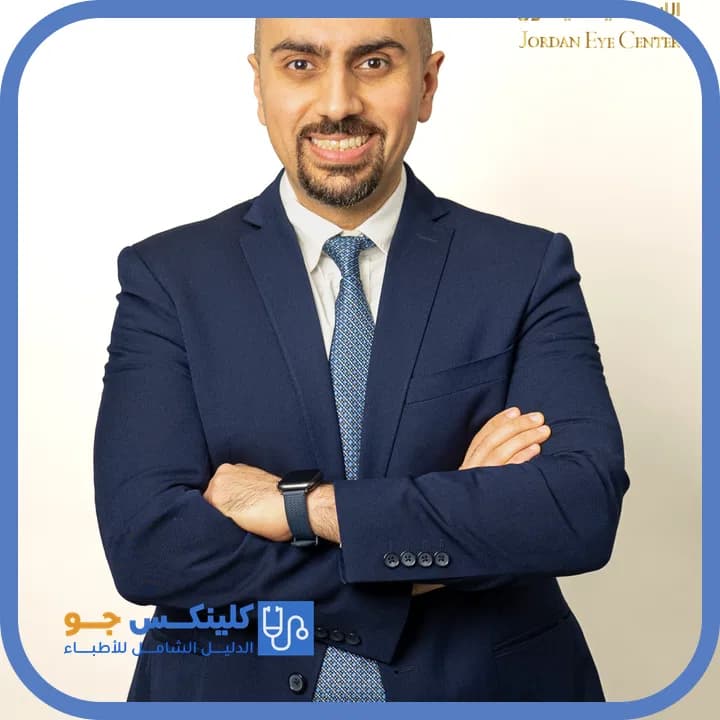
Dr. Muataz Mohammad Harara is a consultant ophthalmologist and vitreoretinal surgeon at Jordan Eye Center. He holds the Arab Board and the Jordanian Board in Ophthalmology, plus an International Council of Ophthalmology qualification. His published services include cataract surgery with intraocular lens implantation. They also cover retinal care, including intravitreal injections, corneal work such as keratoplasty and cross-linking, laser vision correction and implantable lenses. His biography notes that examination guides the choice of treatment. Confirmed hours run Saturday to Wednesday 08:00–19:00 and Thursday 08:00–16:00.
Suits: Cataract patients who also need retinal assessment or injections
Dr. Qaseem Jameel Naser is a consultant in oculoplastic surgery at Jordan Eye Center. His published qualifications are MRCOphth, FEBO and FRCS(Ed). His biography mentions oculoplastic training in Houston and cataract and refractive training at Moorfields Eye Hospital in London. Alongside cataract surgery, his services centre on eyelid and ptosis surgery, tear-drainage and lacrimal duct repair, orbital surgery and non-surgical periocular aesthetics. He also offers assessment for vision correction. Confirmed hours are Saturday to Wednesday 08:00–19:00 and Thursday 08:00–16:00.
Suits: Cataract patients who also have eyelid, ptosis or tear-duct concerns
Dr. Mohammad Akram Hawari is an ophthalmic surgeon at Jordan Eye Center. He holds the Arab Board in Ophthalmology, membership of the Royal College of Surgeons of Edinburgh and FICO. His biography adds membership of the European refractive surgery society. His practice combines cataract surgery and intraocular lens implantation with paediatric ophthalmology, including vision tests for children and strabismus surgery. He also performs corneal cross-linking and corneal transplantation. Confirmed hours are Saturday to Wednesday 08:00–19:00 and Thursday 08:00–16:00, which allows appointments later in the day.
Suits: Families seeking cataract, children's eye and squint care in one centre
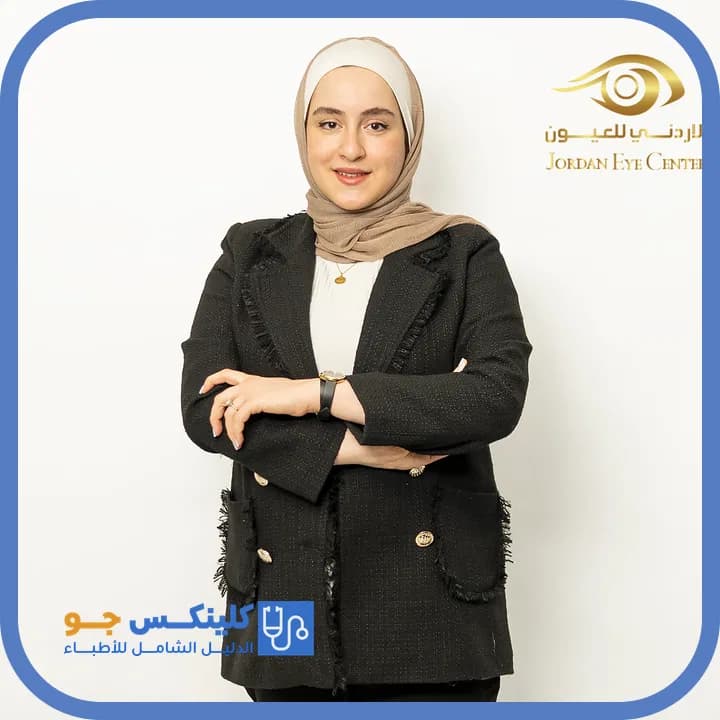
Dr. Mais Khaled Al Jbour studied medicine at the Hashemite University and holds the Arab Board in Ophthalmology and FICO. Her biography also mentions a Royal College of Surgeons of Edinburgh credential and training in the Royal Medical Services and specialist hospitals in Jordan. She practises at Jordan Eye Center with interests in oculoplastic care, tear-drainage conditions, children's eye care and strabismus. Her services include cataract surgery with intraocular lens implantation, laser vision correction and implantable vision-correction lenses. The centre's team coordinates appointments. Confirmed hours run Saturday to Wednesday 08:00–19:00 and Thursday 08:00–16:00.
Suits: Patients wanting a female ophthalmologist for cataract or tear-duct care
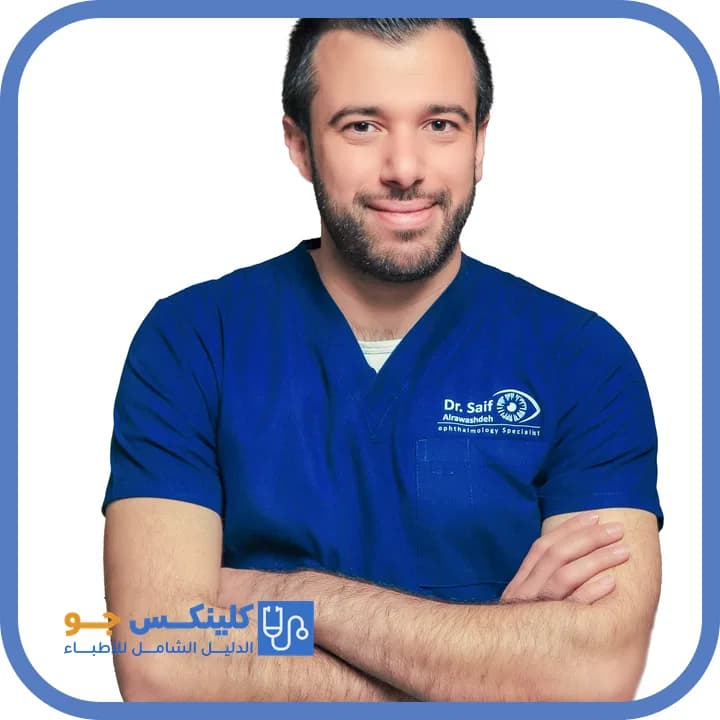
Dr. Saif Al Rawashdeh is an ophthalmology specialist with a Bachelor of Medicine and Surgery from Jordan University of Science and Technology. He holds the Arab Board in Ophthalmology and FICO, and his biography notes membership of the Jordanian ophthalmology society. At Jordan Eye Center his services include cataract surgery and intraocular lens implantation, laser and LASIK vision correction, strabismus surgery and children's eye care. The centre coordinates appointments according to the eye condition and the doctor's availability. Confirmed hours are Saturday to Wednesday 08:00–19:00 and Thursday 08:00–16:00.
Suits: Patients wanting cataract and refractive options discussed together
Dr. Yazan Abdulkarim Shabaneh Al Tamimi studied medicine (2008) and completed higher specialty training in ophthalmology (2013) at Jordan University of Science and Technology. He holds the Jordanian Board in Ophthalmology (2013) and FRCS Glasgow (2019). He lists fellowship training at King's College Hospital in anterior segment and cataract surgery (2021) and in glaucoma surgery (2022). At Shami Eye Center — Seventh Circle, his services include phacoemulsification with intraocular lens implant, glaucoma treatment and surgery, eye-pressure measurement and corneal topography. He also treats dry eye and astigmatism and offers diabetic eye screening. Confirmed hours are Saturday to Wednesday 09:00–17:00 and Thursday 09:00–14:00.
Suits: Cataract patients with glaucoma, raised eye pressure or diabetes
Dr. Khaled Sharif is a consultant ophthalmologist and medical director of Sharif Eye Centers. He sees patients at the Amman branch in Jabal Amman. He holds FRCS Glasgow and the Fellowship of the Royal College of Ophthalmologists, London. His biography notes that he co-authored an atlas of corneal dystrophies and degenerations with T. A. Casey and has trained ophthalmic surgeons in refractive procedures. Published services include cataract surgery, permanent lens implantation, keratoplasty, LASIK, corneal topography and cross-linking for keratoconus. Confirmed hours are Saturday to Thursday 09:00–22:00. Sessions are arranged once the centre confirms the clinic time.
Suits: Cataract patients with corneal conditions or needing evening appointments
Every matching doctor profile in this area was scored out of 100 for how complete and checkable its published information is, and the highest scores appear here in order. Featured placement does not change a profile's score, and the score does not measure treatment quality or outcomes — it tells you how much you can check before you call.
Ties are broken by the number of approved reviews, then published years of experience. Confirm the service, branch, appointment, fees and insurance coverage with the practice before visiting.
A cataract is a clouding of the eye's natural lens. It usually develops slowly with age. It can also be linked to diabetes, long-term steroid use, eye injury or previous eye surgery, and some babies are born with one.
In the early stages, an updated glasses prescription and brighter lighting may be enough. Once cloudy vision starts to interfere with reading, driving, work or safety, mainstream guidance is that surgery is the standard treatment. The clouded lens is replaced with an artificial intraocular lens. No eye drop or medicine has been proven to reverse a cataract.
Book an assessment with an ophthalmologist if you notice:
Cataracts develop gradually, so a sudden change in vision usually points to something else. Seek urgent care the same day at an emergency department, or call 911 in Jordan, if you have:
After cataract surgery, worsening pain, increasing redness or a drop in vision needs urgent contact with your surgical team.
There is no single answer to who the best cataract specialists in Amman are. The right fit depends on your eyes, your general health and your practical needs. All seven doctors list cataract surgery, so start with whatever else is going on in your eyes.
Ask how the lens will be chosen for you. Useful points to discuss:
Several doctors here also list refractive services, such as laser vision correction or implantable lenses. You can ask whether these are relevant to you, but only an examination can decide what suits your eye.
Five of the doctors practise at Jordan Eye Center, which may make a second opinion within the same centre easier to arrange. Dr. Al Tamimi is at Shami Eye Center — Seventh Circle. Dr. Sharif sees patients at Sharif Eye Center in Jabal Amman, with confirmed hours until 22:00.
Cataract care usually involves several visits before and after surgery, so choose a location you can reach easily. Remember that the order on this page reflects profile completeness, not surgical results.
The first visit often takes longer than a routine eye check. Drops are usually used to widen (dilate) your pupils, which blurs vision and causes light sensitivity for several hours. Do not plan to drive yourself home: bring a companion or arrange a taxi.
Typical steps include:
If surgery is being considered, the doctor may also take measurements of the eye (biometry) to calculate the power of the replacement lens.
Bring:
Questions worth asking:
Costs and coverage vary, so confirm the details before you commit. When you book, ask:
Get written confirmation of anything your insurer must approve before the surgery date.
Amman is home to around 5 million people, and traffic can be heavy at rush hour, so allow extra time. The doctors on this page practise from three locations:
Use the map location on each profile to plan your route. This matters especially if you are coming from further districts such as Khalda, Tla' Al-Ali, Jubeiha or Dabouq.
Because dilation and surgery both affect your vision for a time, plan the return trip in advance. On surgery day you will need someone to accompany you home.
If you are referred for hospital-based care, Amman's major hospitals include Jordan University Hospital, Al-Bashir Hospital and King Hussein Medical Center.
Consultation fees of Cataract doctors in Amman published on ClinicsJo: 20–30 JOD (profiles: 5), median 25 JOD. They are the fees the doctors' profiles show, for the consultation only; tests and procedures depend on your case.
Before booking, ask the clinic for the all-inclusive price and what it covers, any extra tests or scans, how many follow-up visits are included, the payment options, and whether your insurance is accepted. You can reach them through the contact details on the profiles on this page.
The figures above are the ones the profiles on ClinicsJo show and may change. We do not estimate prices. Confirm the price with the clinic before booking. Offers on ClinicsJo
This page helps you compare published profiles; it is not medical advice and does not rank clinical skill. In an emergency call 911 or go to the nearest emergency department.