
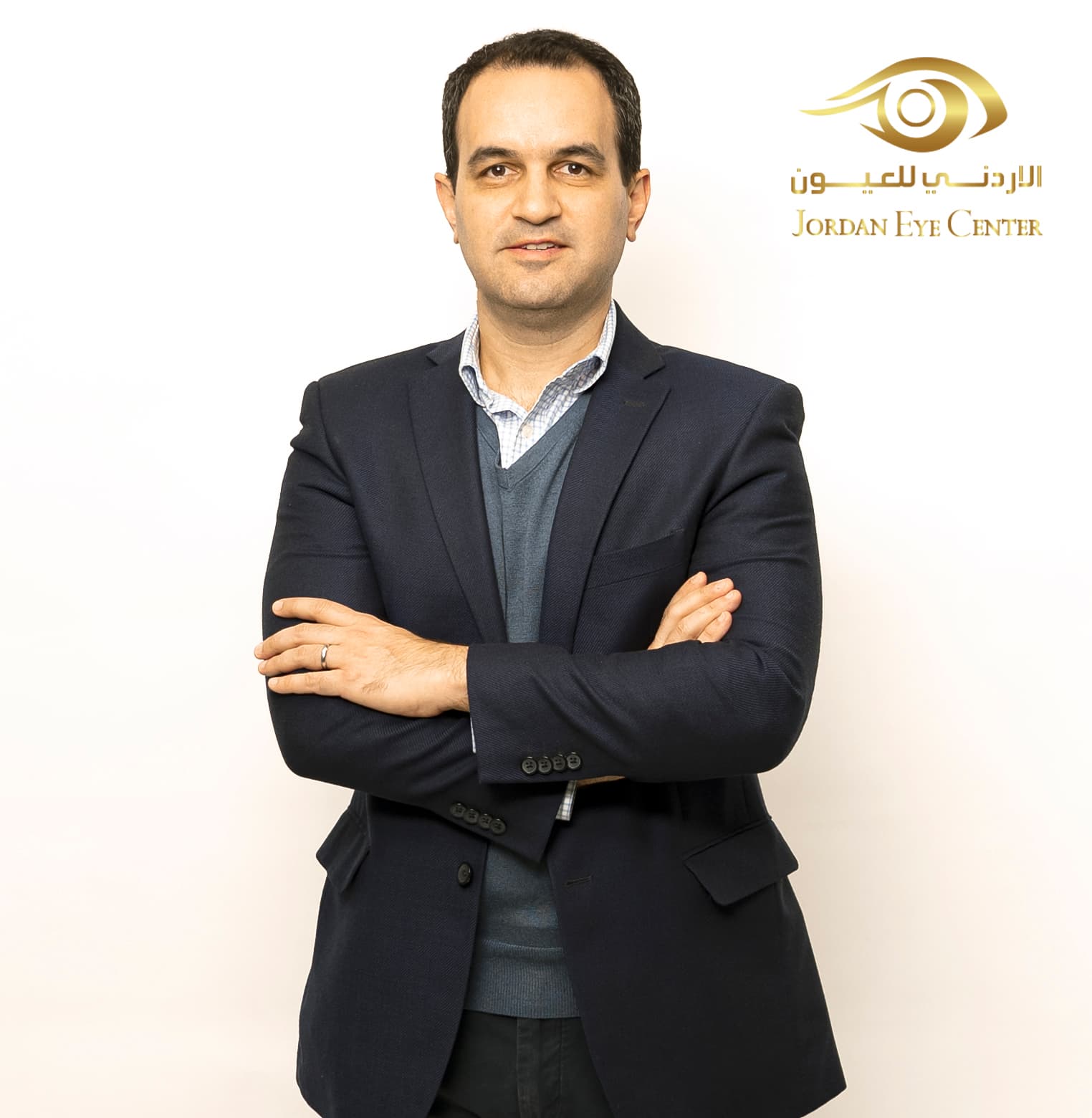
Jordan Eye Center
Dr Qaseem Jameel Naser focuses on oculoplastic and reconstructive eye surgery, including eyelid, ptosis, tear-drainage and orbital procedures. His areas of work…
Hours not listedInsurance not specified8 views
Trusted medical platform in Jordan

Lacrimal duct repair covers a group of operations that restore the natural path of tears from the eye into the nose when that path is blocked or torn. The best known creates a new opening between the tear sac and the nasal cavity when the obstruction lies below the sac; another repairs a lacerated tear canaliculus after trauma or a cut at the inner corner of the eye. A small tube or stent may be placed temporarily to keep the passage open while healing takes place. Some of these procedures are performed endoscopically through the nose, others through a small skin incision at the inner corner. The symptoms that lead to repair are constant tearing that runs down the cheek, repeated sticky discharge, lashes stuck together in the morning, recurrent infection of the tear sac with a painful red swelling at the inner corner, and blurring caused by an unstable tear film. In infants, congenital nasolacrimal duct obstruction is very common and usually opens spontaneously during the first year with massage and hygiene, so intervention is not rushed and is guided by an ophthalmologist. The most important limit is that the operation does not stop tearing when obstruction is not the cause. Dry eye itself triggers heavy reflex tearing, and so do allergy, blepharitis, an in-turned or lax eyelid, a weak lid pump, a malpositioned tear opening, and corneal problems. That is why the drainage system is probed and irrigated and the lids assessed before any decision, because opening an already patent passage will not end the complaint. It also does not treat sinus disease or a deviated nasal septum if those are the real obstacle, and it cannot guarantee that the new passage will never narrow again. Suitability and the choice of procedure are determined by clinical examination, nasal endoscopy and imaging when needed, not by a description of symptoms. Tell your doctor if you take blood thinners, have a clotting disorder, or have had previous nasal surgery, because these change the chosen route and the preparation.
The doctor examines the ocular surface, tear-film stability, lid position and the tear opening, then probes and irrigates the system to confirm whether it is truly blocked and at what level, using nasal endoscopy when required. This step prevents surgery that cannot help tearing caused by dryness, allergy or a lid abnormality.
The route is chosen according to the level of obstruction and the state of the nose: through the skin with a small incision at the inner corner, or endoscopically through the nose with no external scar. It is done under local anaesthesia with sedation or under general anaesthesia, and the nose is prepared topically to reduce bleeding.
For obstruction below the tear sac, a window is made in the bone and the sac is joined directly to the nasal lining. In a traumatic laceration, the two cut ends of the canaliculus are identified and brought together over a fine stent that is secured to prevent scarring closed during healing.
A fine silicone tube is often placed in the new passage and left for weeks to months, then easily removed in clinic. Bleeding is controlled, a temporary nasal pack may be used, and you are given explicit instructions not to blow your nose forcefully.
You are reviewed after a few days and again after some weeks to assess drainage, irrigate the system and remove the stent at the right time. Improvement in tearing may be gradual, and if it persists after the passage is open, the lids and ocular surface are reassessed, since the cause may be more than one thing.
Tell your doctor about every medicine you take, especially blood thinners, anticoagulants, antiplatelet drugs and herbal supplements, and never stop any of them yourself; only the prescriber decides. Mention any previous nasal, sinus or facial surgery, any old injury to the inner corner of the eye, and any deviated septum, chronic nasal allergy or frequent nosebleeds, since all of these change the route chosen. Report heart disease, high blood pressure, diabetes, clotting disorders and any drug allergy. Stop smoking before and after the appointment. Follow the fasting period set by the anaesthetic team, arrange for someone to take you home, and bring a written list of your medicines.
Sleep with your head raised for the first few nights, apply cold compresses intermittently to the inner corner, and use the drops, saline nasal spray and ointment exactly as prescribed. Do not blow your nose forcefully, sneeze with your mouth open, avoid heavy lifting, deep bending, swimming and saunas until your doctor allows them, and never pull on the stent if you see its end. Expect light blood-stained nasal discharge, swelling, bruising and a full feeling in the nose that improve over days. **Seek care immediately for heavy nosebleeding that does not stop with pressure, increasing swelling, redness and pain at the inner corner or around the eye with fever, any drop or doubling of vision, pus discharge, or a stent that has come out completely.** Also return if tearing is unchanged after healing, because the cause may lie in the lid or ocular surface rather than the duct.
Usually 30 to 60 minutes for probing, irrigation and stent placement, and 45 to 90 minutes to create a new passage or repair a torn canaliculus, most often as a same-day discharge; longer if combined with lid surgery or a nasal correction.
Dr Qaseem Jameel Naser focuses on oculoplastic and reconstructive eye surgery, including eyelid, ptosis, tear-drainage and orbital procedures. His areas of work…
There are currently 1 doctor profiles linked to Lacrimal Duct Repair on ClinicsJo. Review the listed services and contact the practice to confirm availability with the doctor and branch you choose.
Start with an available doctor's profile and use the contact or booking options shown there. Confirm the service, practice location and appointment time with the clinic. If this list is empty, broaden your search using the directory links on this page.
Ask the practice for the current price and what it includes. A consultation fee shown on a profile is not necessarily the price of a procedure, tests or follow-up. Confirm any additional charges and insurance arrangements before your visit.