Professor Freih Abu Hassan Orthopaedics Center
Sign in to the platform to view the phone number
Hours 11:00–15:00 · 1 day a weekInsurance not specified106 views
Trusted medical platform in Jordan
Looking for the best orthopedic oncology specialists in Amman? This page lists five orthopaedic surgeons in Amman whose profiles cite bone and soft-tissue tumour work, including consultants at King Hussein Cancer Center. They are ordered by how complete and checkable their published profiles are, not by clinical skill. Compare services, clinic locations and hours, then read practical guidance on referral, first visits and booking.
| # | Doctor | Area | Suits | Profile score |
|---|---|---|---|---|
| 1 | Freih Odeh Abu Hassan | Fifth Circle | Bone tumour, spine or paediatric concerns; Saturday visits near Fifth Circle | 40/100 |
| 2 | Yousef Abu Odeh | Jabal Amman | Tumour assessment, limb salvage and joint care; six-day hours, Jabal Amman | 40/100 |
| 3 | Samer Abdel Al | Jubaiha | Orthopedic Oncology | 34/100 |
| 4 | Ahmad Shehadeh | Jubaiha | Orthopedic Oncology | 31/100 |
| 5 | Khaled Atta | Jabal Amman | Arabic, English or German speakers seeking bone tumour or joint assessment | 22/100 |
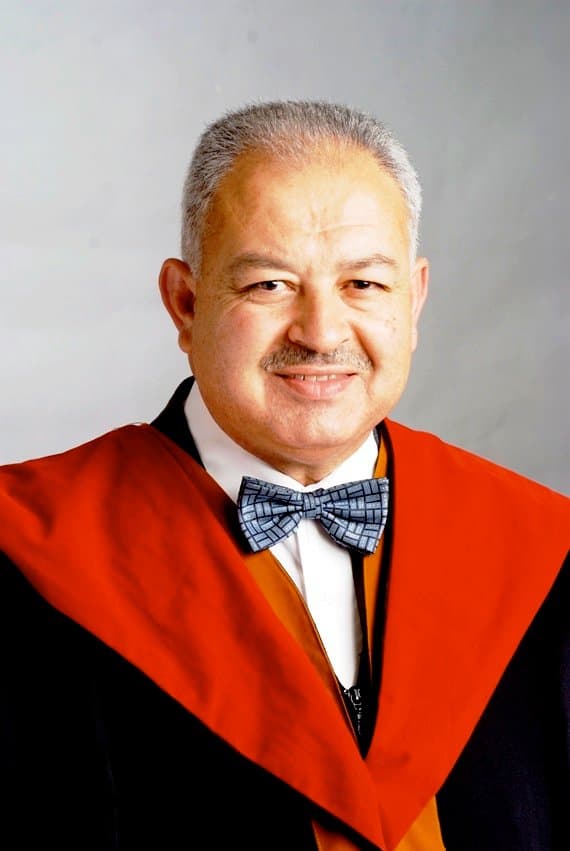
Professor Freih Abu Hassan is a consultant in orthopaedic, joint and spinal surgery. He obtained the Jordanian Board in 1990 and holds a Fellowship of the Royal College of Surgeons, London. He trained at Robert Jones Hospital and completed paediatric orthopaedic and spinal training at RCSI hospitals in Dublin in 1997. His biography notes University of Jordan teaching and bone tumour surgery at King Hussein Cancer Center from 2004 to 2009. Published services include bone and soft tissue tumour surgery, spinal and disc surgery, limb lengthening, joint replacement and complex fracture surgery. He sees patients at his orthopaedics center near Fifth Circle. Confirmed hours are Saturday, 11:00–15:00.
Suits: Bone tumour, spine or paediatric concerns; Saturday visits near Fifth Circle
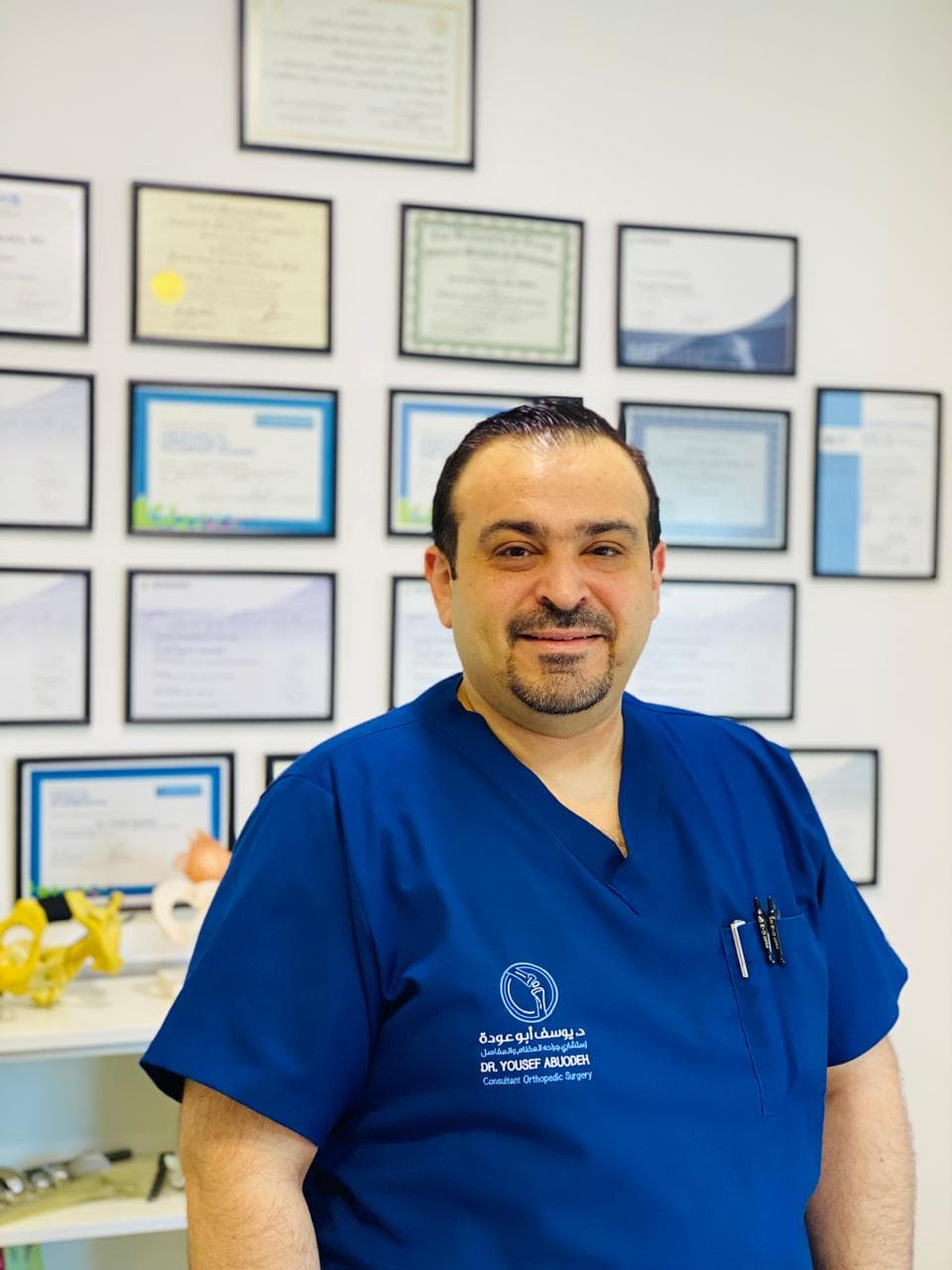
Dr Yousef Abu Odeh is an orthopaedic consultant with the Arab Board in orthopaedics. He completed a fellowship in orthopaedic oncology and limb salvage at the University of Miami, and trauma fellowship training with the University of Texas Medical Branch and Hamad Medical Corporation. His listed services include bone and soft-tissue tumour assessment and limb salvage surgery. His biography describes biopsy planning and limb reconstruction after removal of bone and soft-tissue tumours. He also lists hip and knee replacement and revision, cruciate ligament repair, and pelvic and acetabular fracture surgery. Consultations are at Al Khalidi Medical Plaza in Jabal Amman. Hours run Saturday to Wednesday 09:00–18:00 and Thursday 09:00–13:30.
Suits: Tumour assessment, limb salvage and joint care; six-day hours, Jabal Amman
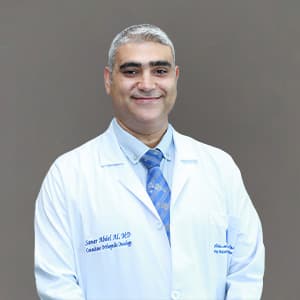
Samer Abdel Al serves at King Hussein Cancer Center as consultant Orthopedic Oncology, Hand, and Microsurgery. Professional qualifications include: Orthopedic Surgery Board Certificate, Arab Board of Higher Specializations; Higher sub-specialization certificates in Microsurgery, Arthroplasty, and Orthopedic Oncology, USA. Education and training include: M.B./B.S. Jordan University of Science and Technology (JUST), Jordan; ECFMG Certificates including USMLE step 3.
Suits: Orthopedic Oncology
Ahmad Shehadeh serves at King Hussein Cancer Center as consultant, Orthopedic Oncology and Limb Salvage Surgery. Professional qualifications include: Jordanian Board of Orthopedic Surgery. Education and training include: M.B./B.S. Jordan University, Jordan; 2004-2006 Fellowship in Orthopedic Oncology, Georgetown University Hospital.
Suits: Orthopedic Oncology
Dr Khaled Atta is a consultant orthopaedic and joint surgeon at Jordan Hospital and Medical Centre Outpatient Clinics in Jabal Amman. His biography cites Jordanian orthopaedic board certification and German and Austrian specialist qualifications. It also cites fellowship training in joint reconstruction and tumours at Heidelberg. His clinical interests include joint reconstruction, knee arthroscopy and bone tumours. Published services include bone tumour assessment, joint reconstruction, and orthopaedic and joint surgery consultation. Consultations are available in Arabic, English and German. His profile advises patients to bring previous imaging and reports to support assessment and discussion of treatment options.
Suits: Arabic, English or German speakers seeking bone tumour or joint assessment
Every matching doctor profile in this area was scored out of 100 for how complete and checkable its published information is, and the highest scores appear here in order. Featured placement does not change a profile's score, and the score does not measure treatment quality or outcomes — it tells you how much you can check before you call.
Ties are broken by the number of approved reviews, then published years of experience. Confirm the service, branch, appointment, fees and insurance coverage with the practice before visiting.
Orthopaedic oncology is the surgical field that deals with tumours of the bones and soft tissues, such as muscle, fat and the tissue around nerves and joints. Most of these tumours are benign (not cancer). The field also covers rarer cancers called sarcomas, and cancer that has spread to bone from another organ.
The surgeon is usually one member of a wider team. Chemotherapy, immunotherapy and targeted therapy are given by medical oncologists. Radiotherapy is given by radiation oncologists. Physiotherapists support recovery and rehabilitation, and the team shares long-term follow-up after treatment.
Mainstream guidance, such as that used by the NHS, suggests seeing a doctor promptly about any of the following:
A family history of cancer is worth mentioning to your doctor. In most people it does not mean a bone tumour is likely.
An important point from sarcoma guidance: try not to have a suspicious deep lump removed or biopsied before a tumour specialist has reviewed it. A biopsy is ideally planned by the team that would carry out the final surgery. Where the needle or incision goes can affect later limb-sparing options.
Call 911 or go to an emergency department straight away if you notice any of these:
People searching for the best orthopedic oncology specialists in Amman are usually looking for the right fit for their situation. This list cannot rank clinical ability. Instead, use the published profiles to check practical points:
The page shows each profile's verification status. Read the record yourself and confirm key details directly with the clinic.
The surgeon will take a history, examine the area, and review your scans and any reports. Many first visits end with a plan for more tests rather than a final diagnosis. These may include an MRI, a CT scan, a bone scan or a planned biopsy.
What to bring:
Bringing a relative or friend helps, because tumour consultations can involve a lot of information.
Questions worth asking:
Tumour care often involves several steps: consultation, imaging, biopsy, possibly surgery, then follow-up. Clarify costs and approvals early.
Amman hosts the largest concentration of hospitals and specialty clinics in Jordan. Two of the listed consultants are based at King Hussein Cancer Center in Jubeiha. The other clinics are in different parts of the city, so check the exact address on each profile before you travel.
If you are coming from western districts such as Khalda, Dabouq, Tla' Al-Ali or Sweifieh, allow extra time for cross-city traffic. Consider asking someone to drive you, especially if a biopsy or procedure is possible on the day. If you are travelling from outside Amman, try to book a slot that leaves time for imaging or tests the same day. Ask the clinic in advance whether this is possible.
This page helps you compare published profiles; it is not medical advice and does not rank clinical skill. In an emergency call 911 or go to the nearest emergency department.