Dr. Dana Faraneh is a specialist in dermatology, aesthetics and laser treatment, and co-founder of Skin Clinic360 in Fifth Circle, Amman. She earned her medical…

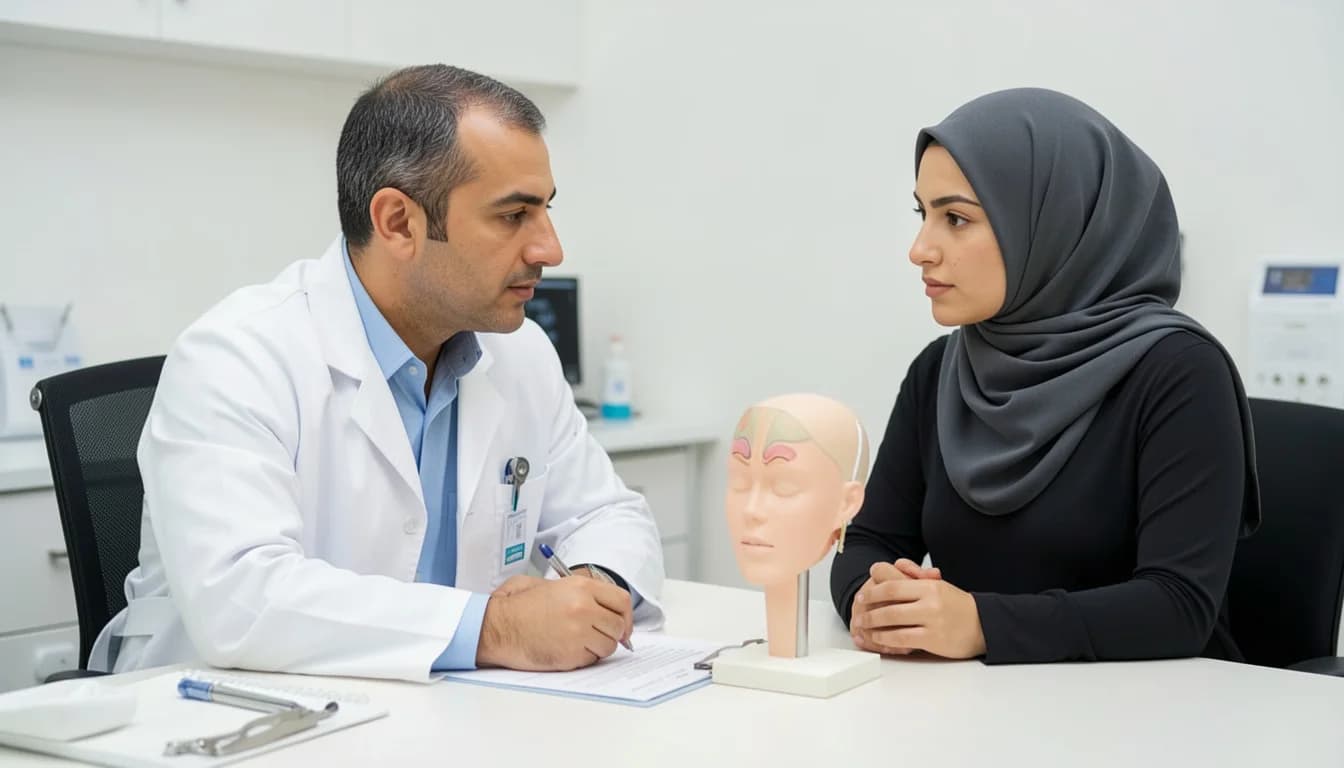
A chemical peel is a dermatological procedure in which a medical acid solution is applied to the skin for a carefully timed period, removing defined layers of surface cells and prompting the skin to renew itself. Peels are classified by the depth they reach — superficial, medium and deep — and the type of acid, its strength and how long it stays on the skin are chosen according to the problem, the skin type and tone, and the previous treatment history, rather than according to a wish for a faster result.
Peels are commonly used for acne and its superficial marks, for surface pigmentation, for melasma as one part of a wider plan rather than a stand-alone cure, for fine lines, for rough texture and enlarged-looking pores, and for darkening of areas such as the neck and underarms. Superficial peels are usually given as a course of closely spaced sessions, while medium-depth peels involve a longer recovery period and are spaced much further apart.
The limits of a peel deserve to be stated plainly. A peel does not tighten sagging skin and does not lift facial contours. It does not fully remove deep depressed or ice-pick scars. It does not stop dynamic wrinkles produced by muscle movement. It does not cure melasma permanently, because melasma is a chronic, relapsing condition driven by sun exposure and hormones. And it never replaces daily sun protection — in fact, neglecting sunscreen after a peel can leave the skin darker than it was before.
The most important risk to understand is post-inflammatory hyperpigmentation, which is more likely in brown and easily tanning skin and becomes more likely with an inappropriate depth or with sun exposure afterwards. Other risks include stinging, prolonged redness, reactivation of cold sores and, rarely, scarring. For these reasons both suitability and depth are decided by clinical examination and skin-type assessment, and the procedure is postponed when there is an active infection, a wound, or recent use of certain medications that the doctor will ask about.

Procedure steps
- 1
Examination, skin typing and depth selection
The doctor examines the skin, determines the skin type and its tendency to pigment, reviews medications, medical history and any history of cold sores, then selects the solution and the peel depth appropriate for your case specifically.
- 2
Priming the skin
You may be asked to use priming topical preparations for a period before the session and to stop exfoliating products or vitamin A derivatives some days beforehand, while using sunscreen consistently, to lower the risk of pigmentation afterwards.
- 3
Cleansing and degreasing
The skin is thoroughly cleansed and surface oils and make-up are removed so the solution spreads evenly, and sensitive areas such as the corners of the eyes, the nostrils and the corners of the mouth are protected with a barrier.
- 4
Applying the solution and watching the skin
The solution is applied in layers while the skin reaction is watched moment by moment; application is stopped or neutralised once the intended end point is reached. You may feel stinging or burning that eases with cooling and a fan.
- 5
Soothing, protection and recovery instructions
The skin is soothed with a barrier moisturiser and sunscreen, the expected stages and duration of peeling and the warning signs are explained, and the next session is scheduled according to the depth used and the skin response.
Before the procedure
Tell the doctor if you use topical or oral vitamin A derivatives, exfoliating products, lightening agents or any prescribed medication, and do not stop a prescribed medicine on your own. Mention pregnancy or breastfeeding, any history of cold sores, keloid or thickened scarring, immune disease, or recent cosmetic procedures in the same area. Stop waxing, depilatory creams and laser hair removal in the treatment area for the period your doctor specifies, and avoid sun exposure and tanning beforehand. Use sunscreen daily in the weeks before the peel, arrive with a clean face and no make-up, and do not schedule the session close to an important event, since redness and flaking are an expected stage rather than a complication.
After the procedure
Do not peel or pull flaking skin with your fingers — this is the commonest cause of dark marks and scarring after a peel. Wash with a gentle cleanser and lukewarm water, use the barrier moisturiser your doctor prescribed generously, apply sunscreen every day and reapply it, and avoid direct sun, sauna, steam, swimming pools and strenuous exercise until peeling is complete. Stop all exfoliating products and vitamin A derivatives until your doctor allows you to restart them. Seek review immediately if you develop: severe burning that persists after the session, blisters or erosions, spreading redness with skin that feels hot, yellow crusting, pus or fever, painful clustered blisters resembling cold sores, or areas that stay very pale or painful and do not heal. These should not be waited out or self-treated.
Expected duration
A superficial peel usually takes 15 to 30 minutes to apply and is often given as a course of four to six sessions two to four weeks apart, while medium-depth peels need longer intervals and a longer recovery.
Doctors who provide Chemical peel
Dr Hannah Naasan is a consultant dermatologist in Abdali, Amman, caring for adults and children and providing dermatological procedures and aesthetic care. She …
Dr Huda Al Qudah is a consultant dermatologist and venereologist, a Jordan University of Science and Technology graduate and holder of the Jordanian Board. Her …
Maha Marji is a dermatologist with the Jordanian board qualification and a degree from Jordan University of Science and Technology. Her practice is on Al Mawada…
Dr. Manal Al Hammouri is a specialist in dermatology, aesthetics and laser care practising in Seventh Circle, Amman. Her clinical work covers acne, psoriasis, v…
Dr Reem Qudah is a Jordanian Board-certified dermatologist. Her practice in Amman combines assessment of skin, hair, scalp and nail conditions in children and a…
Dr. Ammar Batayneh is a dermatologist specialising in aesthetic and laser care and a co-founder of Skin Clinic360 in Amman. He studied medicine at the Universit…
Dr Muath Zuraikat is a dermatologist with Jordanian and Arab board qualifications in dermatology. He practices at Ivory Derma and Laser Clinic in Abu Nseir and …
Dr. Taghreed Jamil Al Maaita is a consultant dermatologist with the Jordanian Board and a dermatology fellowship from Wake Forest University in the United State…
Ramzy Omari practices dermatology on Kamal Jumblat Street near Amman’s Fifth Circle. Consultations address skin, acne and hair concerns; the clinic also adverti…
Dr. Mohammad Helalat is a consultant dermatologist and venereologist practicing at Helalat Clinic in Dabouq. He assesses acne and acne scarring, pigmentation, d…
Dr Reem Mahmoud Awadi is a Jordanian Board-certified dermatologist practicing in Shmeisani, Amman. Her care covers acne, eczema, psoriasis, hair loss, moles and…
Finding Chemical peel services in Jordan
Which doctors are listed for Chemical peel in Jordan?
There are currently 12 doctor profiles linked to Chemical peel on ClinicsJo. Review the listed services and contact the practice to confirm availability with the doctor and branch you choose.
How can I find an appointment for Chemical peel?
Start with an available doctor's profile and use the contact or booking options shown there. Confirm the service, practice location and appointment time with the clinic. If this list is empty, broaden your search using the directory links on this page.
What does Chemical peel cost in Jordan?
Ask the practice for the current price and what it includes. A consultation fee shown on a profile is not necessarily the price of a procedure, tests or follow-up. Confirm any additional charges and insurance arrangements before your visit.
How much does Chemical peel cost in Jordan?
No clinic on ClinicsJo has published a price for Chemical peel yet, so we do not quote an estimated figure. What is published is the consultation fee: 20–25 JOD (profiles: 8). The doctor sets the treatment price after assessing your case.
What clinics and doctors have published on ClinicsJo
- Published consultation fee — Rasmia Al-Saad: 20 JOD consultation fee.
- Published consultation fee — Rahma Fayez Al Nuaimi: 20 JOD consultation fee.
- Published consultation fee — Taghreed Jamil Al Maaita: 20 JOD consultation fee.
- Published consultation fee — Muath Zuraikat: 20 JOD consultation fee.
- Published consultation fee — Reem Al Qudah: 25 JOD consultation fee.
Other doctor profiles with a published fee: 3.
What sets the price of Chemical peel?
- The product or device and the amount used
- The number of sessions or injections needed
- The size of the treated area
- The assessment visit before starting
- Follow-up or repeat sessions
Expected duration (from the procedure guide): A superficial peel usually takes 15 to 30 minutes to apply and is often given as a course of four to six sessions two to four weeks apart, while medium-depth peels need longer intervals and a longer recovery.
How to ask about the price
Before booking, ask the clinic for the all-inclusive price and what it covers, any extra tests or scans, how many follow-up visits are included, the payment options, and whether your insurance is accepted. You can reach them through the contact details on the doctor and clinic profiles on this page.
The figures above were published by the clinics and doctors themselves on ClinicsJo and may change. We do not estimate prices. Confirm the all-inclusive price with the clinic before booking. Offers on ClinicsJo