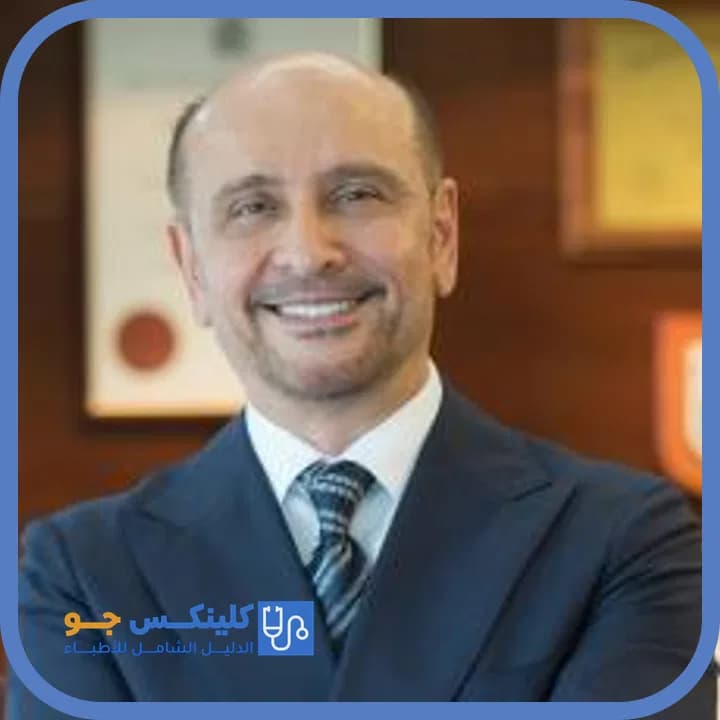
Mutassem Halloush practices ophthalmology at Ayoub Medical Complex, 20 Suleiman Al Hadidi Street in Jabal Amman. His advertised consultations cover retinal and …

Keratoconus is a condition in which the cornea thins progressively and loses its regular spherical shape, bulging forward into a cone. This distorts the image reaching the retina and produces irregular astigmatism and blurred vision that ordinary glasses cannot correct satisfactorily. It usually begins in adolescence or the early twenties and may progress at different rates between individuals.
Management rests on two separate goals that must not be conflated: halting progression and improving vision. To halt progression, corneal cross-linking strengthens the bonds between collagen fibres using riboflavin and ultraviolet light; its primary aim is not to improve sight but to stop the condition worsening. Improving vision uses other means: rigid gas-permeable or scleral contact lenses, intracorneal ring segments implanted to modify curvature, and in advanced cases corneal transplantation.
Regular follow-up with corneal maps is the backbone of management, because the decision to intervene rests on documented measurable progression rather than symptoms alone. Eye rubbing worsens the condition and should be firmly avoided, and seasonal allergy that drives rubbing is treated. Conventional laser vision correction is not performed in keratoconus because it increases thinning. The appropriate plan is set by a cornea specialist according to age, degree of thinning and rate of progression.

Procedure steps
- 1
Diagnosis by corneal mapping
Corneal topography and tomography measure curvature and thinning precisely, and the values are documented as a baseline for later comparison of progression.
- 2
Documenting progression on follow-up
Maps are repeated at intervals to compare measurements; documented progression is what justifies cross-linking, particularly in younger patients.
- 3
Cross-linking to halt progression
Riboflavin is applied to the cornea, then a calculated dose of ultraviolet light strengthens collagen bonds; the aim is preventing deterioration, not improving sight.
- 4
Vision correction with suitable lenses
Rigid gas-permeable or scleral lenses are fitted to vault the irregular surface and give better vision than spectacles can in this condition.
- 5
Ring segments or transplantation when needed
Intracorneal ring segments are implanted to modify curvature in selected cases, and corneal transplantation is considered with severe thinning or vision-limiting scarring.
Before the procedure
Stop contact lenses before assessment for the period your ophthalmologist specifies, since they alter corneal measurements. Bring any previous corneal maps or reports, because comparison over time matters more than a single measurement. Tell your doctor if you rub your eyes or have seasonal allergy or chronic itching, since treating that is an integral part of the plan. If cross-linking is planned, ask about the protocol used, recovery time and when measurements will be repeated, and arrange transport because vision is disturbed for some days afterwards.
After the procedure
Complete avoidance of eye rubbing is the cornerstone at every stage. After cross-linking expect pain, light sensitivity and watering in the first days, with blur that may last weeks before settling; adhere to the drops and the protective lens if prescribed. Avoid swimming, dust and eye make-up until permitted. Keep follow-up and repeat-mapping appointments even if your vision improves, since the goal is monitoring long-term stability. Seek immediate review for severe unrelieved pain, sudden visual deterioration, purulent discharge or increasing redness.
Expected duration
A cross-linking session takes about 30–60 minutes per eye; follow-up extends over months
Doctors who provide Keratoconus Treatment
Osama Al Mheirat practices ophthalmology at Al Bayader Street, Amman. Contact the practice to arrange a consultation, discuss symptoms or review previous invest…
Ibrahim Asseidat is an ophthalmologist on City Eye Center’s medical team in Amman. The centre advertises ophthalmology consultations within its eye-care service…
Dr Mahmoud Al Bataineh sees ophthalmology and eye surgery patients at Saudi Hospital in Khalda, Amman. He holds Jordanian and Arab board certifications. His cli…
Dr. Mohammad Abu Samak is a consultant ophthalmologist with vitreoretinal fellowship training at Henry Ford Hospital in the United States. His clinical work cov…
Saad Abdellatif Al Wreikat practices ophthalmology at Al Hayat Medical Complex, 40 Ibn Khaldoun Street in Jabal Amman. Consultations assess eye symptoms and vis…
Dr Mais Khaled Al Jbour practises ophthalmology with interests in oculoplastic care, tear-drainage conditions, children’s eye care and strabismus. She studied m…
Dr Amer Hajjaj is an ophthalmologist and eye surgeon with Jordanian and Arab board certifications, Fellowship of the International Council of Ophthalmology, and…
Osama Tayeh is an ophthalmologist at Sharman Medical Complex beside Saudi Hospital in Khalda. Clinic reception coordinates eye examinations and enquiries about …
Thaer Shetawi is a consultant ophthalmologist with the Jordanian board qualification and a medicine and surgery degree from Jordan University of Science and Tec…
Dr. Khaled Sharif is a consultant ophthalmologist and medical director of Sharif Eye Centers. His work encompasses refractive assessment and vision correction, …
Ahmed Khalaf Nawaiseh provides ophthalmology consultations on the fourth floor of outpatient building A at the Specialty Hospital in Shmeisani. Advertised care …
Moath Al Hasan practices ophthalmology at Abu Eid Plaza, opposite the Specialty Hospital emergency department in Shmeisani. His clinic advertises refractive, ca…
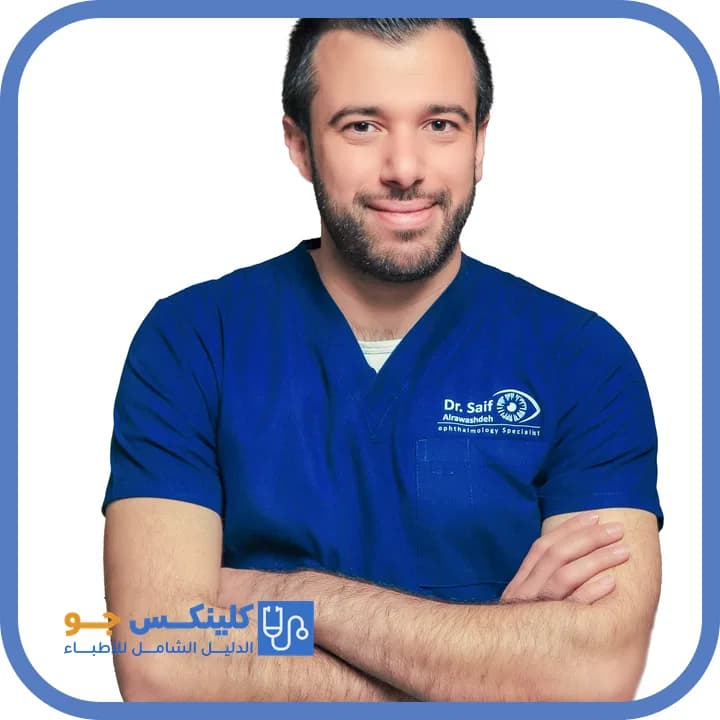
Dr Saif Al Rawashdeh is an ophthalmology specialist and Jordan University of Science and Technology graduate. He holds the Arab Board and an International Counc…
Finding Keratoconus Treatment services in Jordan
Which doctors are listed for Keratoconus Treatment in Jordan?
There are currently 14 doctor profiles linked to Keratoconus Treatment on ClinicsJo. Review the listed services and contact the practice to confirm availability with the doctor and branch you choose.
How can I find an appointment for Keratoconus Treatment?
Start with an available doctor's profile and use the contact or booking options shown there. Confirm the service, practice location and appointment time with the clinic. If this list is empty, broaden your search using the directory links on this page.
What does Keratoconus Treatment cost in Jordan?
Ask the practice for the current price and what it includes. A consultation fee shown on a profile is not necessarily the price of a procedure, tests or follow-up. Confirm any additional charges and insurance arrangements before your visit.
How much does Keratoconus Treatment cost in Jordan?
No clinic on ClinicsJo has published a price for Keratoconus Treatment yet, so we do not quote an estimated figure. What is published is the consultation fee: 10–30 JOD (profiles: 18). The doctor sets the treatment price after assessing your case.
What clinics and doctors have published on ClinicsJo
- Published consultation fee — Majed Al-Zoubi: 10 JOD consultation fee.
- Published consultation fee — Yousef Al-Yaaqbeh: 20 JOD consultation fee.
- Published consultation fee — Omar Abdel Rahim Khudruj: 20 JOD consultation fee.
- Published consultation fee — Osama Tayeh: 20 JOD consultation fee.
- Published consultation fee — Mazen Al Khalayleh: 20 JOD consultation fee.
Other doctor profiles with a published fee: 13.
What sets the price of Keratoconus Treatment?
- The consultation fee and follow-up visits
- Tests and investigations needed
- The chosen treatment approach and its duration
- Medicines or supplies
- Insurance coverage and your share of the cost
Expected duration (from the procedure guide): A cross-linking session takes about 30–60 minutes per eye; follow-up extends over months
How to ask about the price
Before booking, ask the clinic for the all-inclusive price and what it covers, any extra tests or scans, how many follow-up visits are included, the payment options, and whether your insurance is accepted. You can reach them through the contact details on the doctor and clinic profiles on this page.
The figures above were published by the clinics and doctors themselves on ClinicsJo and may change. We do not estimate prices. Confirm the all-inclusive price with the clinic before booking. Offers on ClinicsJo